Fitness C: The Complete Guide to Fitness Industry Technology Council in 2026
Introduction
FIT-C (Fitness Industry Technology Council) is a non-profit membership organization dedicated to bringing together leaders, innovators, and organizations to shape the future of fitness through technology. If you're passionate about fitness and technology, FIT-C is the collaborative hub working to create seamless connections between fitness equipment, devices, and apps, making your fitness journey smoother and more effective. Founded in February 2012, FIT-C tackles the frustrating problem of disconnected fitness technology by developing open standards that allow your favorite gear and apps to work together effortlessly.
Fitness has become a multi-billion dollar industry focused on aesthetics, technology, and community, with modern fitness culture increasingly shaped by these elements.
This comprehensive guide explores how FIT-C is transforming the fitness technology landscape by creating seamless connections between your favorite fitness gear, apps, and equipment. Through strategic partnerships and standardization efforts, FIT-C enhances your workout experience, making it easier to track progress, achieve your fitness goals, and enjoy a more connected fitness journey. You’ll find clear insights into FIT-C’s role, the value it offers to members and stakeholders, and its broader impact on the fitness industry.
What This Guide Covers
This guide provides a complete overview of FIT-C’s mission, technical infrastructure, membership structure, and industry impact. Whether you're a fitness professional, technology developer, or fitness enthusiast, you'll discover how FIT-C is breaking down barriers in fitness technology to make your workout experience smoother and more connected. We’ll explore how the council tackles the frustrating problem of fragmented fitness devices and equipment, creating seamless integration that benefits manufacturers, developers, and most importantly, you—the user. Throughout the guide, you’ll find detailed insights into FIT-C’s initiatives and the real-world benefits they bring to your fitness journey.
Who This Is For
This guide is designed for fitness industry professionals, technology developers, equipment manufacturers, and facility operators like you. Whether you’re evaluating fitness technology integration options or seeking to understand industry standardization efforts, you’ll find strategic insights into how FIT-C shapes modern fitness experiences to make your fitness journey smoother and more connected.The guide will also offer insights into technology integration, such as wearable trackers and fitness apps, and discuss the evolution of fitness culture from military and athletic training to a mainstream lifestyle driven by technology and social media.
Why This Matters
FIT-C’s work directly impacts how people track progress, achieve fitness goals, and experience technology in fitness centers. The council’s standardization efforts eliminate compatibility barriers that previously forced users to choose between incompatible ecosystem options, while enabling innovation that makes fitness more personalized, efficient, and results-oriented. FIT-C helps the industry in a way that fosters a strong sense of community and sparks innovation, creating a connected and forward-thinking fitness environment that benefits everyone involved. Reflecting a broader trend in the fitness world, leading fitness centers today go beyond just providing equipment—they offer holistic support that nurtures your entire fitness journey, both inside and outside the gym. This means you’re not just working out; you’re joining a community that supports your goals, motivates you, and helps you stay accountable every step of the way.
What You’ll Learn:
- FIT-C’s core mission and strategic objectives for fitness technology
- Technical infrastructure and wireless protocol standards
- Membership structure and industry representation
- Real-world applications and integration challenges
Understanding FIT-C and Fitness Technology Standards
FIT-C serves as the fitness industry’s main body for technology standardization, stepping in to solve the confusion caused when different manufacturers created their own separate systems that didn’t work well together. As gyms became more widespread and fitness centers turned into common mechanized spaces, it became clear that a unified approach was needed.
The council was formed to tackle a major problem: fitness equipment and devices from different brands couldn’t communicate effectively, causing frustration for both manufacturers and users. This lack of standardization led to inconsistent data — for example, one wearable device might count steps differently than another, with a CEO once explaining, “Because we define a step differently than you do.” Similarly, calorie burn numbers varied widely between machines, making it hard for you to track your progress accurately no matter what equipment you used. This issue isn’t new; back in the 19th century, there was a renewed focus on physical culture in Europe and the U.S., emphasizing exercise and nutrition as a response to more sedentary lifestyles.
FIT-C’s mission centers on increasing collaboration and innovation while enhancing user experience through responsible technology adoption that serves local residents and fitness center members alike. The development of standards is subject to ongoing industry needs and conditions.
Wireless Protocol Standardization
FIT-C has standardized on specific wireless protocols that are reliable, affordable, and energy-efficient, making it easy for all major brands of fitness equipment to connect and communicate. These protocols include ECOFIT Wireless, ANT+, and Bluetooth.
What does this mean for you? Thanks to these standardized protocols, your cardio machines, strength training devices, and personal fitness trackers can all work together seamlessly. This ensures you can track your progress consistently, no matter where you work out or what equipment you use, helping you stay motivated and on top of your fitness goals.
Data Integration Framework
Building on protocol standardization, FIT-C’s data integration framework enables real-time wellness data collection across diverse fitness technologies. The council’s goal specifically aims to “improve the user experience and mature the collection of real-time wellness data through the creation of interoperability standards for technology-based fitness devices and applications.”
Transition: These technical foundations enable FIT-C to pursue broader strategic objectives that create value for the entire fitness ecosystem.
Core Objectives and Strategic Infrastructure
FIT-C’s strategic framework organizes around four primary focus areas that guide member engagement and industry advancement. As a place where industry leaders meet to collaborate, FIT-C fosters an inclusive and welcoming environment for all members.
One of FIT-C’s key strategic objectives is to support the evolving landscape of community and accountability in fitness, which has shifted toward group classes and peer motivation. FIT-C’s standards help enable these experiences, recognizing that community and shared motivation in modern fitness often manifest through group classes and online challenges.
Resource Mobilization and Development
FIT-C combines and mobilizes resources to drive the fitness industry forward by helping organizations work together instead of each creating their own separate, costly solutions. This collaborative approach means faster innovation and significant cost savings for everyone involved.
For smaller companies, this means they can access expert knowledge and standards without needing huge investments. Larger manufacturers benefit, too, by focusing their energy on creating new and better products instead of fixing compatibility problems. Ultimately, this teamwork makes your fitness experience smoother and more connected, no matter where or how you work out.
Standards Development and Promotion
Unlike fragmented approaches, FIT-C’s standards development focuses on creating technology standards for fitness equipment, third-party applications, APIs, and fitness devices that encourage widespread adoption. This collaborative effort includes participation from major manufacturers like Star Trac, StairMaster, Schwinn, Woodway, Octane, Scifit, Nautilus, and Hammer Strength, along with technology companies such as Intel, Garmin, and MYZONE.
If you’ve ever worked out at an Army fitness center, you know they offer state-of-the-art exercise and total body equipment, including trusted brands like Nautilus and Hammer Strength. This ensures you have access to high-quality workout options that help you stay on track and achieve your fitness goals.
Intellectual Property Protection and Open Forums
FIT-C ensures that intellectual property of participants remains protected during collaborative efforts, addressing concerns that companies might hesitate to join open standards discussions if proprietary innovations could be compromised.
The council establishes open networking environments that allow all sectors of the health, fitness, and technology industry to participate, eliminating barriers for both established companies and new entrants.
Key Points:
- Resource sharing reduces individual company costs and accelerates innovation
- Open standards benefit manufacturers, developers, and end-users equally
- IP protection encourages participation without compromising competitive advantages
Transition: This strategic framework enables FIT-C to build a diverse membership base that represents all segments of the fitness technology ecosystem.
Membership and Industry Impact
FIT-C’s membership structure encompasses diverse stakeholder groups that represent the complete fitness technology value chain. FIT-C’s membership includes participating locations that are independently operated, and these locations may offer unique services and benefits to members.
Members bring valuable expertise, innovation, and collaboration to the organization, while FIT-C brings a range of benefits to its members, including access to resources, networking opportunities, and industry influence. The staff and coaches at member facilities play a crucial role in providing personalized support, designing and monitoring individual workouts, and enhancing the overall member experience. For example, City Club’s Fitness Centers have professional staff available to design and monitor individual workouts for members, which enhances the overall membership experience and fosters personal and business relationships that last a lifetime. Personalized programs at City Club begin with a thorough analysis and establishment of individual goals. The City Club fitness center is open Monday to Friday from 5 am to 7 pm and Saturday from 8 am to 2 pm, providing members with convenient access throughout the week, including Friday.
Army fitness centers are open to all DoD ID card holders and offer various hours of operation, with some locations providing 24/7 access for maximum flexibility.
Additionally, group fitness classes are available at various fitness centers and can help participants achieve their fitness goals in a supportive environment.
Step-by-Step: How FIT-C Creates Industry Value
When to use this: Understanding FIT-C’s value creation process helps industry participants evaluate membership benefits and collaboration opportunities.
- Stakeholder Identification: FIT-C brings together equipment manufacturers, software developers, sensor producers, data tracking applications, asset management software creators, and major fitness facility operators under one collaborative framework.
- Standard Development: Members participate in working groups that design open protocols enabling device interoperability and data sharing across brands and platforms.
- Implementation Support: The council provides resources and education to help member companies implement standards effectively without compromising existing operations.
- Market Expansion: Standardized solutions reduce barriers to entry and enable network effects that accelerate adoption across the entire fitness technology market, valued at $26 billion globally.
Membership Categories Comparison
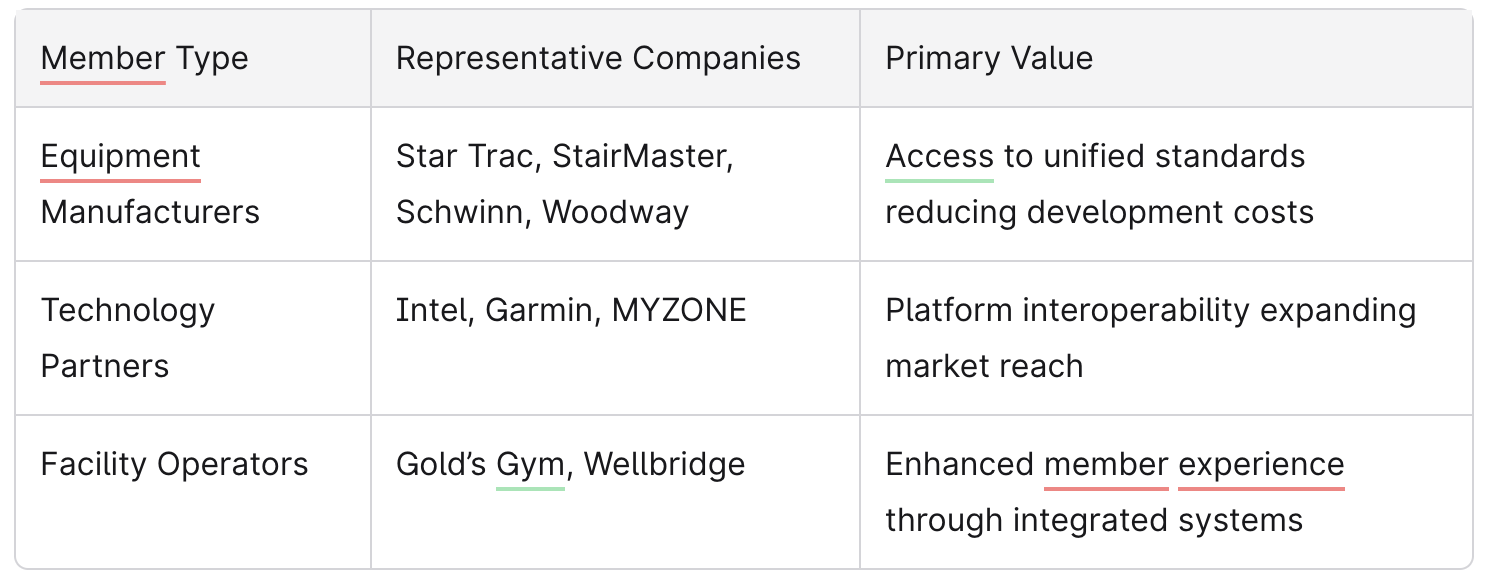
This diverse representation ensures that solutions developed reflect real-world needs across the fitness ecosystem, from equipment design to member experience optimization.
Transition: While FIT-C’s collaborative approach creates significant value, the council continues addressing persistent challenges in fitness technology standardization.
Common Challenges and Solutions
FIT-C’s standardization efforts address several recurring obstacles that impact both industry participants and fitness center members. In today’s fitness industry, the adoption of new technologies is often subject to valid data requirements, as well as specific restrictions and terms that govern their use and integration. When considering the costs of technology adoption, it’s important to note that prices can vary significantly depending on the type of technology, implementation, and location.
Data-driven fitness is becoming a big part of how many people approach their workouts. Devices like Fitbits and Apple Watches track your health stats throughout the day, giving you useful insights to help you improve. At the same time, there’s a growing awareness that fitness isn’t just about the body—it’s about your mind, too. More and more, people are embracing a holistic approach that connects physical exercise with mental well-being, helping you feel healthier and happier overall. This means your fitness journey is not just about numbers or workouts, but about nurturing your whole self.
Group training programs often include a variety of methodologies to enhance fitness, and some group fitness classes focus specifically on heart rate-based interval training to maximize results.
Challenge 1: Inconsistent Data Metrics Across Platforms
Solution: FIT-C develops consensus definitions for key metrics like step counting, caloric expenditure, and heart rate zones, enabling users to track progress consistently regardless of equipment or device brand.
While complete standardization remains complex, the council focuses on educating member companies about best practices and providing resources for implementing consistent measurement approaches.
Challenge 2: Proprietary Technology Integration Barriers
Solution: By promoting open standards like ANT+, Bluetooth, and ECOFIT Wireless, FIT-C eliminates the need for custom integration solutions between different manufacturers’ equipment and software platforms.
This approach particularly benefits fitness centers that can select best-in-class equipment from different manufacturers without worrying about compatibility issues.
Challenge 3: Rapid Technology Evolution Outpacing Standards
Solution: FIT-C maintains flexible standards development processes that can adapt to emerging technologies like AI-powered fitness apps, virtual reality training systems, and advanced biometric monitoring devices.
The council’s forward-looking approach ensures standards remain relevant as fitness technology evolves toward more connected, intelligent, and personalized experiences.
Transition: These ongoing solutions position FIT-C to address future challenges as fitness technology continues expanding into new areas.
Conclusion and Next Steps
FIT-C’s standardization efforts create measurable value for the fitness industry by reducing fragmentation, lowering development costs, and enhancing user experiences across all fitness technology platforms. The council’s collaborative approach enables innovation while ensuring interoperability that benefits manufacturers, facility operators, and fitness enthusiasts equally.
As an example of industry best practices, Anytime Fitness demonstrates how member value can be maximized through innovation and personalization. Memberships at Anytime Fitness include personalized fitness plans, a free fitness consultation, and free access to Apple Fitness+ as part of a collaboration to create a personalized wellness experience. Members benefit from 24-hour access to over 5,500 gyms worldwide. To make the most of these benefits, it is important for new members to be aware of their membership start date and any offer deadlines.
To get started with FIT-C:
- Evaluate membership benefits for your organization’s specific role in the fitness technology ecosystem
- Review current standards particularly wireless protocols and data integration requirements that apply to your products or services
- Connect with existing members in your sector to understand practical implementation experiences and best practices
Related Topics: Consider exploring fitness equipment integration strategies, wireless protocol implementation guides, and emerging trends in connected fitness technology for deeper technical insights.
Fitness C: The Complete Guide to Fitness Industry Technology Council in 2026
Introduction
FIT-C (Fitness Industry Technology Council) is a non-profit membership organization dedicated to bringing together leaders, innovators, and organizations to shape the future of fitness through technology. If you're passionate about fitness and technology, FIT-C is the collaborative hub working to create seamless connections between fitness equipment, devices, and apps, making your fitness journey smoother and more effective. Founded in February 2012, FIT-C tackles the frustrating problem of disconnected fitness technology by developing open standards that allow your favorite gear and apps to work together effortlessly.
Fitness has become a multi-billion dollar industry focused on aesthetics, technology, and community, with modern fitness culture increasingly shaped by these elements.
This comprehensive guide explores how FIT-C is transforming the fitness technology landscape by creating seamless connections between your favorite fitness gear, apps, and equipment. Through strategic partnerships and standardization efforts, FIT-C enhances your workout experience, making it easier to track progress, achieve your fitness goals, and enjoy a more connected fitness journey. You’ll find clear insights into FIT-C’s role, the value it offers to members and stakeholders, and its broader impact on the fitness industry.
What This Guide Covers
This guide provides a complete overview of FIT-C’s mission, technical infrastructure, membership structure, and industry impact. Whether you're a fitness professional, technology developer, or fitness enthusiast, you'll discover how FIT-C is breaking down barriers in fitness technology to make your workout experience smoother and more connected. We’ll explore how the council tackles the frustrating problem of fragmented fitness devices and equipment, creating seamless integration that benefits manufacturers, developers, and most importantly, you—the user. Throughout the guide, you’ll find detailed insights into FIT-C’s initiatives and the real-world benefits they bring to your fitness journey.
Who This Is For
This guide is designed for fitness industry professionals, technology developers, equipment manufacturers, and facility operators like you. Whether you’re evaluating fitness technology integration options or seeking to understand industry standardization efforts, you’ll find strategic insights into how FIT-C shapes modern fitness experiences to make your fitness journey smoother and more connected.The guide will also offer insights into technology integration, such as wearable trackers and fitness apps, and discuss the evolution of fitness culture from military and athletic training to a mainstream lifestyle driven by technology and social media.
Why This Matters
FIT-C’s work directly impacts how people track progress, achieve fitness goals, and experience technology in fitness centers. The council’s standardization efforts eliminate compatibility barriers that previously forced users to choose between incompatible ecosystem options, while enabling innovation that makes fitness more personalized, efficient, and results-oriented. FIT-C helps the industry in a way that fosters a strong sense of community and sparks innovation, creating a connected and forward-thinking fitness environment that benefits everyone involved. Reflecting a broader trend in the fitness world, leading fitness centers today go beyond just providing equipment—they offer holistic support that nurtures your entire fitness journey, both inside and outside the gym. This means you’re not just working out; you’re joining a community that supports your goals, motivates you, and helps you stay accountable every step of the way.
What You’ll Learn:
- FIT-C’s core mission and strategic objectives for fitness technology
- Technical infrastructure and wireless protocol standards
- Membership structure and industry representation
- Real-world applications and integration challenges
Understanding FIT-C and Fitness Technology Standards
FIT-C serves as the fitness industry’s main body for technology standardization, stepping in to solve the confusion caused when different manufacturers created their own separate systems that didn’t work well together. As gyms became more widespread and fitness centers turned into common mechanized spaces, it became clear that a unified approach was needed.
The council was formed to tackle a major problem: fitness equipment and devices from different brands couldn’t communicate effectively, causing frustration for both manufacturers and users. This lack of standardization led to inconsistent data — for example, one wearable device might count steps differently than another, with a CEO once explaining, “Because we define a step differently than you do.” Similarly, calorie burn numbers varied widely between machines, making it hard for you to track your progress accurately no matter what equipment you used. This issue isn’t new; back in the 19th century, there was a renewed focus on physical culture in Europe and the U.S., emphasizing exercise and nutrition as a response to more sedentary lifestyles.
FIT-C’s mission centers on increasing collaboration and innovation while enhancing user experience through responsible technology adoption that serves local residents and fitness center members alike. The development of standards is subject to ongoing industry needs and conditions.
Wireless Protocol Standardization
FIT-C has standardized on specific wireless protocols that are reliable, affordable, and energy-efficient, making it easy for all major brands of fitness equipment to connect and communicate. These protocols include ECOFIT Wireless, ANT+, and Bluetooth.
What does this mean for you? Thanks to these standardized protocols, your cardio machines, strength training devices, and personal fitness trackers can all work together seamlessly. This ensures you can track your progress consistently, no matter where you work out or what equipment you use, helping you stay motivated and on top of your fitness goals.
Data Integration Framework
Building on protocol standardization, FIT-C’s data integration framework enables real-time wellness data collection across diverse fitness technologies. The council’s goal specifically aims to “improve the user experience and mature the collection of real-time wellness data through the creation of interoperability standards for technology-based fitness devices and applications.”
Transition: These technical foundations enable FIT-C to pursue broader strategic objectives that create value for the entire fitness ecosystem.
Core Objectives and Strategic Infrastructure
FIT-C’s strategic framework organizes around four primary focus areas that guide member engagement and industry advancement. As a place where industry leaders meet to collaborate, FIT-C fosters an inclusive and welcoming environment for all members.
One of FIT-C’s key strategic objectives is to support the evolving landscape of community and accountability in fitness, which has shifted toward group classes and peer motivation. FIT-C’s standards help enable these experiences, recognizing that community and shared motivation in modern fitness often manifest through group classes and online challenges.
Resource Mobilization and Development
FIT-C combines and mobilizes resources to drive the fitness industry forward by helping organizations work together instead of each creating their own separate, costly solutions. This collaborative approach means faster innovation and significant cost savings for everyone involved.
For smaller companies, this means they can access expert knowledge and standards without needing huge investments. Larger manufacturers benefit, too, by focusing their energy on creating new and better products instead of fixing compatibility problems. Ultimately, this teamwork makes your fitness experience smoother and more connected, no matter where or how you work out.
Standards Development and Promotion
Unlike fragmented approaches, FIT-C’s standards development focuses on creating technology standards for fitness equipment, third-party applications, APIs, and fitness devices that encourage widespread adoption. This collaborative effort includes participation from major manufacturers like Star Trac, StairMaster, Schwinn, Woodway, Octane, Scifit, Nautilus, and Hammer Strength, along with technology companies such as Intel, Garmin, and MYZONE.
If you’ve ever worked out at an Army fitness center, you know they offer state-of-the-art exercise and total body equipment, including trusted brands like Nautilus and Hammer Strength. This ensures you have access to high-quality workout options that help you stay on track and achieve your fitness goals.
Intellectual Property Protection and Open Forums
FIT-C ensures that intellectual property of participants remains protected during collaborative efforts, addressing concerns that companies might hesitate to join open standards discussions if proprietary innovations could be compromised.
The council establishes open networking environments that allow all sectors of the health, fitness, and technology industry to participate, eliminating barriers for both established companies and new entrants.
Key Points:
- Resource sharing reduces individual company costs and accelerates innovation
- Open standards benefit manufacturers, developers, and end-users equally
- IP protection encourages participation without compromising competitive advantages
Transition: This strategic framework enables FIT-C to build a diverse membership base that represents all segments of the fitness technology ecosystem.
Membership and Industry Impact
FIT-C’s membership structure encompasses diverse stakeholder groups that represent the complete fitness technology value chain. FIT-C’s membership includes participating locations that are independently operated, and these locations may offer unique services and benefits to members.
Members bring valuable expertise, innovation, and collaboration to the organization, while FIT-C brings a range of benefits to its members, including access to resources, networking opportunities, and industry influence. The staff and coaches at member facilities play a crucial role in providing personalized support, designing and monitoring individual workouts, and enhancing the overall member experience. For example, City Club’s Fitness Centers have professional staff available to design and monitor individual workouts for members, which enhances the overall membership experience and fosters personal and business relationships that last a lifetime. Personalized programs at City Club begin with a thorough analysis and establishment of individual goals. The City Club fitness center is open Monday to Friday from 5 am to 7 pm and Saturday from 8 am to 2 pm, providing members with convenient access throughout the week, including Friday.
Army fitness centers are open to all DoD ID card holders and offer various hours of operation, with some locations providing 24/7 access for maximum flexibility.
Additionally, group fitness classes are available at various fitness centers and can help participants achieve their fitness goals in a supportive environment.
Step-by-Step: How FIT-C Creates Industry Value
When to use this: Understanding FIT-C’s value creation process helps industry participants evaluate membership benefits and collaboration opportunities.
- Stakeholder Identification: FIT-C brings together equipment manufacturers, software developers, sensor producers, data tracking applications, asset management software creators, and major fitness facility operators under one collaborative framework.
- Standard Development: Members participate in working groups that design open protocols enabling device interoperability and data sharing across brands and platforms.
- Implementation Support: The council provides resources and education to help member companies implement standards effectively without compromising existing operations.
- Market Expansion: Standardized solutions reduce barriers to entry and enable network effects that accelerate adoption across the entire fitness technology market, valued at $26 billion globally.
Membership Categories Comparison
This diverse representation ensures that solutions developed reflect real-world needs across the fitness ecosystem, from equipment design to member experience optimization.
Transition: While FIT-C’s collaborative approach creates significant value, the council continues addressing persistent challenges in fitness technology standardization.
Common Challenges and Solutions
FIT-C’s standardization efforts address several recurring obstacles that impact both industry participants and fitness center members. In today’s fitness industry, the adoption of new technologies is often subject to valid data requirements, as well as specific restrictions and terms that govern their use and integration. When considering the costs of technology adoption, it’s important to note that prices can vary significantly depending on the type of technology, implementation, and location.
Data-driven fitness is becoming a big part of how many people approach their workouts. Devices like Fitbits and Apple Watches track your health stats throughout the day, giving you useful insights to help you improve. At the same time, there’s a growing awareness that fitness isn’t just about the body—it’s about your mind, too. More and more, people are embracing a holistic approach that connects physical exercise with mental well-being, helping you feel healthier and happier overall. This means your fitness journey is not just about numbers or workouts, but about nurturing your whole self.
Group training programs often include a variety of methodologies to enhance fitness, and some group fitness classes focus specifically on heart rate-based interval training to maximize results.
Challenge 1: Inconsistent Data Metrics Across Platforms
Solution: FIT-C develops consensus definitions for key metrics like step counting, caloric expenditure, and heart rate zones, enabling users to track progress consistently regardless of equipment or device brand.
While complete standardization remains complex, the council focuses on educating member companies about best practices and providing resources for implementing consistent measurement approaches.
Challenge 2: Proprietary Technology Integration Barriers
Solution: By promoting open standards like ANT+, Bluetooth, and ECOFIT Wireless, FIT-C eliminates the need for custom integration solutions between different manufacturers’ equipment and software platforms.
This approach particularly benefits fitness centers that can select best-in-class equipment from different manufacturers without worrying about compatibility issues.
Challenge 3: Rapid Technology Evolution Outpacing Standards
Solution: FIT-C maintains flexible standards development processes that can adapt to emerging technologies like AI-powered fitness apps, virtual reality training systems, and advanced biometric monitoring devices.
The council’s forward-looking approach ensures standards remain relevant as fitness technology evolves toward more connected, intelligent, and personalized experiences.
Transition: These ongoing solutions position FIT-C to address future challenges as fitness technology continues expanding into new areas.
Conclusion and Next Steps
FIT-C’s standardization efforts create measurable value for the fitness industry by reducing fragmentation, lowering development costs, and enhancing user experiences across all fitness technology platforms. The council’s collaborative approach enables innovation while ensuring interoperability that benefits manufacturers, facility operators, and fitness enthusiasts equally.
As an example of industry best practices, Anytime Fitness demonstrates how member value can be maximized through innovation and personalization. Memberships at Anytime Fitness include personalized fitness plans, a free fitness consultation, and free access to Apple Fitness+ as part of a collaboration to create a personalized wellness experience. Members benefit from 24-hour access to over 5,500 gyms worldwide. To make the most of these benefits, it is important for new members to be aware of their membership start date and any offer deadlines.
To get started with FIT-C:
- Evaluate membership benefits for your organization’s specific role in the fitness technology ecosystem
- Review current standards particularly wireless protocols and data integration requirements that apply to your products or services
- Connect with existing members in your sector to understand practical implementation experiences and best practices
Related Topics: Consider exploring fitness equipment integration strategies, wireless protocol implementation guides, and emerging trends in connected fitness technology for deeper technical insights.
.png)