
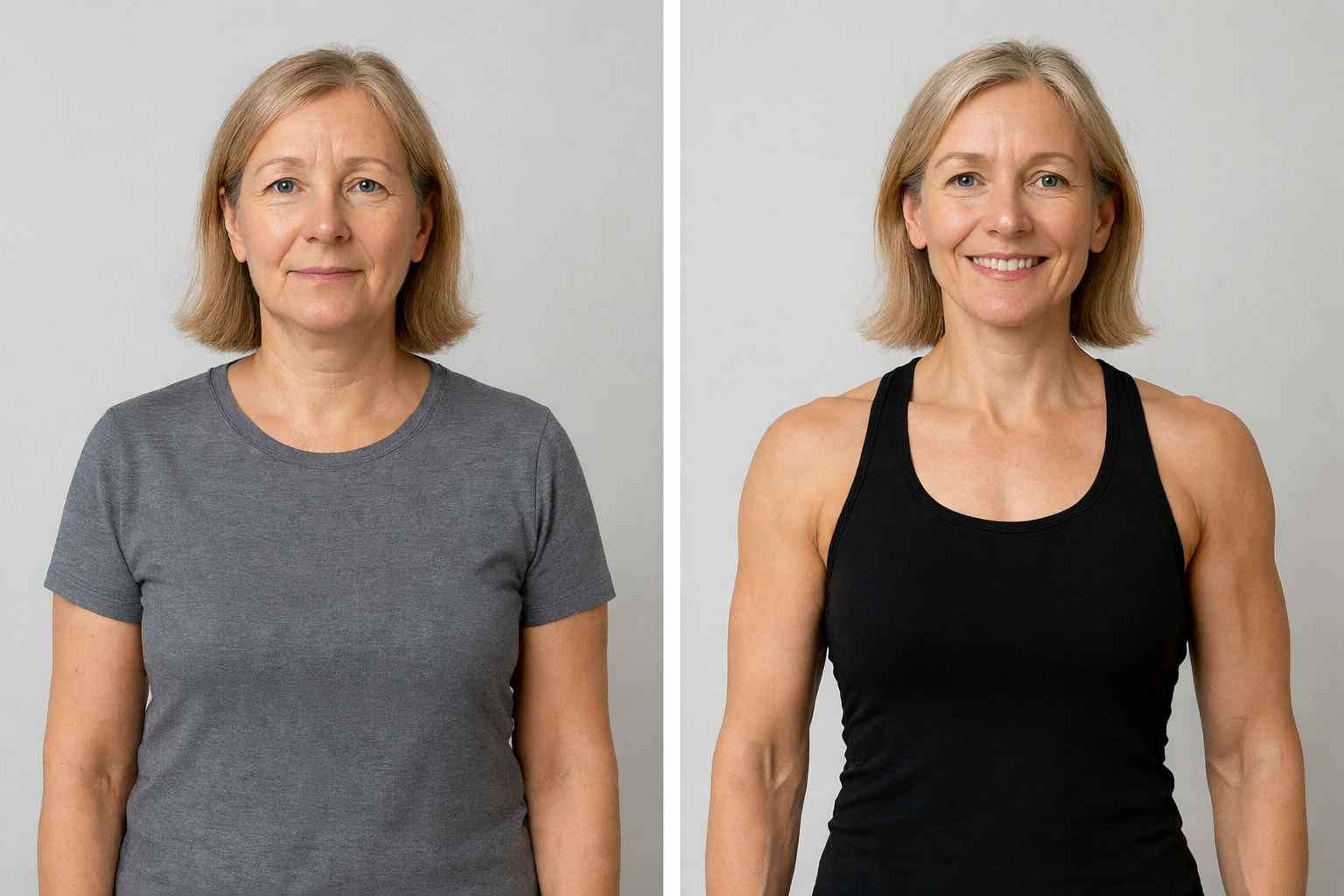
Gym Results: Complete Timeline and Progress Guide into 2026
Introduction
Gym results include strength gains, muscle growth, fat loss, and improved cardiovascular fitness, which typically become noticeable after six weeks of consistent training. Many expect immediate changes but underestimate the time needed for real physical and performance adaptations. Research shows it takes 6 to 10 weeks to see measurable results from your workout routine, including changes in body composition and resting heart rate.
What This Guide Covers
This guide gives you a clear, realistic timeline for different types of gym results, how to measure progress beyond the scale, and factors that affect your speed of progress. You'll also learn how to troubleshoot plateaus and optimize your training plan to keep making progress.
Who This Is For
This guide is for gym beginners starting their fitness journey, experienced lifters returning after a break, and anyone wondering if their current workout routine produces real gym results. Whether your goal is building muscle mass, achieving healthy weight loss, or improving overall fitness level, you’ll find clear timelines and practical tracking methods here.
Why This Matters
Knowing a realistic results timeline prevents frustration when changes happen slowly at first. How long does it take to produce results from your gym routine? Setting proper expectations helps you stay consistent and avoid quitting effective programs too soon. This insight ensures you focus on the right metrics to maximize your training effectiveness and reach your fitness goals.
What You’ll Learn:
- Timeline expectations for strength gains, muscle growth, and fat loss
- How to measure progress accurately using multiple metrics beyond weight
- Factors that accelerate or slow your results
- Solutions for common plateaus and stalled progress
Understanding Gym Results and Timeline Expectations
Gym results mean real, measurable improvements in strength, muscle growth, fat loss, body composition, and cardiovascular fitness that happen through consistent training and proper nutrition. These changes don’t happen overnight. First, your nervous system adapts, improving strength before your muscles visibly grow. Next, muscle fibers change, and finally, you see physical body composition shifts like fat loss and muscle gain. Along the way, you’ll also notice benefits like improved mood, energy levels, and mental health. Knowing this general timeline keeps expectations realistic and helps you stay committed to your workout routine without frustration or quitting early.
Types of Gym Results You Can Expect
When you start a training program, the first results you'll notice are neurological adaptations and strength gains, usually within 2-4 weeks. This means your nervous system is learning to recruit muscle fibers more efficiently, allowing you to lift heavier weights quickly—even before you see much muscle growth. These early strength gains explain why beginners often experience rapid progress.
Next, body composition changes such as fat loss and muscle gain become visible after about 6-12 weeks of consistent training and proper nutrition. You'll likely notice your clothes fitting better, lost inches around your waist, and increased muscle definition. Alongside these physical changes, many experience a better mood and more energy during these initial weeks.
Cardiovascular improvements and aerobic fitness typically develop within 4-8 weeks of regular cardio workouts or high intensity interval training (HIIT). You'll see a lower resting heart rate, improved stamina, and greater overall energy. These health benefits often appear before visible changes, providing immediate benefits that keep you motivated.
Tracking your progress isn't just about the scale. Performance metrics like lifting heavier weights, completing more reps, and improved endurance are key indicators of ongoing progress. Research shows strength gains of 2.5-5 kg on compound movements every 4-6 weeks when training consistently and recovering properly, especially when lifting weights.
Understanding these timelines helps set realistic expectations for your fitness journey and keeps you focused on the right goals to maximize your gym results.
Cardiovascular improvements and aerobic fitness develop within 4-8 weeks of regular cardio workouts or high intensity interval training. Your resting heart rate decreases, you climb stairs with less effort, and overall energy levels improve. These health benefits often appear before dramatic visual changes, providing immediate benefits that support long-term motivation.
Performance metrics and lifting PRs show ongoing improvement throughout your fitness journey. You’ll complete more reps, handle heavier weights, perform better at pull ups, and maintain intensity for longer periods. Research indicates strength gains of 2.5-5 kg on compound movements every four to six weeks demonstrate proper recovery and nutrition support, especially when lifting weights.
Timeline Breakdown by Training Experience
Beginner timeline: Expect rapid initial progress during the first 3-6 months, often called “newbie gains.” You’ll see quick muscle gain, fat loss, and dramatic strength increases as your body adapts to resistance training. This phase delivers noticeable physical changes fast, leveraging your nervous system’s early response to strength training.
Intermediate timeline: From 6 months to 2 years, progress slows but remains steady. Strength gains require progressive overload and periodization to push past plateaus. Body composition improvements demand precise nutrition and training adjustments to keep momentum.
Advanced timeline: After 2+ years, gains become marginal and highly specialized. Progress is measured with detailed tracking, and visible results may take months. Training focuses on specific goals rather than general fitness, requiring refined programming.
Transition: Knowing these timelines clarifies why many factors influence your gym results more as you advance in your training.
Building a Strong Foundation for Lasting Results
To get real gym results that last, you need a solid foundation before chasing quick muscle growth or rapid weight loss. Your workout routine must include strength training, cardio, and flexibility work in balance. This approach builds muscle mass effectively, prevents injury, and ensures steady progress.
Focus your training program on strength training exercises that target multiple muscle groups at once—think squats, deadlifts, and presses. These compound movements are key for building muscle and strength. Incorporate progressive overload by gradually increasing weights, reps, or intensity to continuously challenge your muscles, driving muscle growth and improving body composition.
Nutrition is equally crucial. Fuel your workouts and recovery with a diet rich in protein, healthy fats, and complex carbohydrates to support muscle gain and healthy weight loss. Don’t underestimate rest and recovery—muscles need time to repair and grow stronger. Prioritize quality sleep and schedule rest days to avoid burnout and plateaus.
By focusing on structured training, smart nutrition, and proper recovery, you set yourself up for sustainable gym results and steady progress toward your fitness goals. This foundation works when you commit to the basics and stay consistent.
Key Factors That Determine Your Fitness Progress
Your results depend on several key factors—some you control, others you need to work with. Understanding these helps set realistic expectations and optimize your progress.
Training Variables and Program Design
Progressive overload is essential: you must consistently increase weight, reps, or training volume to stimulate muscle growth and strength gains. Without this, your body won’t adapt or improve. Training frequency, intensity, and volume matter too—working multiple muscle groups 2-3 times per week generally yields better results than less frequent sessions. How you structure rest periods, select exercises targeting specific muscle fibers, and design your overall training plan all influence how quickly you see results.
Consistency beats perfection. The best workout routine is the one you follow regularly. Research shows adherence above 85% is needed for meaningful gym results; falling below 70% makes even the best plans ineffective.
Nutrition and Recovery Factors
Your calorie intake directly impacts whether you gain muscle mass or lose fat. To build muscle, you need to consume enough calories and protein; to achieve healthy weight loss, a calorie deficit is essential. Nutrition works behind the scenes to support your workout routine—no matter how effective your training is, a poor diet can stall or even reverse your gym results.
Protein intake is critical, with recommendations typically ranging from 1.6 to 2.2 grams per kilogram of body weight daily. Without enough protein, muscle growth and strength gains will be limited, even if your training is on point. Likewise, excessive calorie restriction can hinder both muscle gain and fat loss.
Sleep quality and stress management also play a significant role in your progress. Poor sleep disrupts hormone balance, increasing cortisol and reducing growth hormone release, which slows muscle growth and fat loss. Prioritizing better sleep improves your mood, energy levels, and workout performance, all of which contribute to consistent training and better results.
Protein requirements for muscle development typically range from 1.6-2.2 grams per kilogram of body weight daily. If you don’t consume enough protein, your muscle growth will stall no matter how good your training is. On the other hand, cutting calories too much can also hurt your muscle gain and strength progress.
Sleep quality and stress management play a huge role in your gym results. Poor sleep messes with growth hormone release and raises cortisol levels, which slows down muscle growth and fat loss. Getting better sleep boosts your mood, energy levels, and workout performance, helping you train consistently and see real progress.
Individual Biological Factors
Age, gender, and genetics directly impact how quickly you see gym results. Younger people usually experience faster muscle growth, while women often notice strength gains before visible muscle development due to hormonal differences. These factors are beyond your control but crucial to understand when setting realistic expectations for your fitness journey.
Previous training history affects your baseline level and rate of improvement. People with athletic backgrounds often see faster initial progress due to muscle memory, while complete beginners need more time to develop proper movement patterns before focusing on progressive overload. This understanding helps set realistic expectations and keeps you motivated on your fitness journey.
Transition: Recognizing these individual factors helps explain why tracking progress accurately becomes essential for maintaining motivation and adjusting your approach. This article dives straight into how your gym results develop over time, what to expect at each stage of your fitness journey, and how to measure your progress effectively. Whether your goal is muscle growth, healthy weight loss, or improved aerobic fitness, you'll find clear timelines, practical advice on workout routines, nutrition, and recovery, plus strategies to overcome common plateaus. We keep the focus on key terms like strength training, progressive overload, body composition, and cardio workouts, ensuring you get detailed, actionable insights that help you produce results and stay consistent. Links to trusted resources and personal trainer tips are included to guide you further on your path to better mood, energy levels, and overall fitness success.
Cardio and Weight Loss Strategies for All Levels
Cardio workouts are an essential part of any fitness routine, especially if your goal is to lose weight or improve your overall body composition. Beginners should start with low-impact activities like brisk walking, cycling, or light jogging to build aerobic fitness and increase energy without overwhelming the body. As your fitness level improves, progressively incorporate more challenging cardio workouts such as high-intensity interval training (HIIT) or circuit routines. These workouts engage multiple muscle groups and maximize calorie burn, accelerating fat loss and boosting aerobic fitness.
To achieve healthy weight loss, you must create a calorie deficit by burning more calories through physical activity and mindful eating than you consume daily. Combining regular cardio workouts with strength training is crucial to lose weight effectively while preserving muscle mass, resulting in a leaner, stronger physique. Remember to include rest days and active recovery in your training plan to allow your body time to repair and adapt, ensuring consistent progress and preventing burnout.
Balancing cardio and strength training is essential for improving body composition and achieving lasting gym results. Stay consistent with your workouts and make gradual adjustments to your routine to ensure steady progress in weight loss, muscle gain, and overall fitness. This proven approach helps you maintain motivation and reach your fitness goals effectively throughout your fitness journey.
High-Intensity Workouts: Maximizing Efficiency and Results
High-intensity workouts are a powerful tool for anyone looking to maximize gym results in less time. These sessions, like HIIT, alternate short bursts of intense exercise with brief rest periods, pushing your muscles and cardiovascular system to adapt quickly. This method accelerates muscle growth and boosts muscle mass while significantly improving aerobic fitness and calorie burning—ideal for busy people who want effective results fast.
Incorporating high-intensity strength training exercises such as heavy squats, deadlifts, or circuit training challenges multiple muscle groups simultaneously and stimulates muscle fibers for greater strength gains. To keep progressing, applying progressive overload by gradually increasing intensity, weight, or reps in your workouts is essential. This approach ensures continuous improvement and helps you achieve your fitness goals efficiently.
High-intensity workouts is suitable for all different fitness levels, because they can be scaled to match where you are right now in your fitness journey. Whether you are looking to build muscle, improve your fitness level, or simply make your workouts more efficient and effective, adding high-intensity sessions to your routine can make a big difference in the results you get. Everyone can do this type of training when they have the right guidance and encouragement.
Fitness Goal Setting and Motivation Techniques
Setting clear fitness goals is a crucial step in any successful fitness journey. We work closely with clients to define specific, measurable, and realistic goals that align with their current fitness level and long-term aspirations. For example, this might include increasing squat weight by 10 kg, completing a set number of pull ups, or losing a targeted amount of body fat within a set timeframe that fits their lifestyle and training program.
We always break larger goals into smaller milestones to keep our clients motivated and focused on achievable steps. Working with a personal trainer or finding a workout partner provides essential accountability and support, helping you stay on track even when motivation dips. We consistently track progress through workout logs, progress photos, and performance metrics, allowing us to celebrate your achievements and adjust your training plan as needed.
Our motivation techniques include positive self-talk, visualization, and reward systems to keep you engaged. We understand setbacks are normal, so by staying patient, consistent, and adaptable, we equip you to reach your fitness goals and enjoy the journey as a true partnership.
Tracking and Measuring Your Progress Effectively
Tracking your gym results accurately is crucial to stay motivated and know you're making real progress. Everyone's journey is unique—weight loss, muscle gain, and body composition changes happen at different rates depending on your starting point and routine. Don’t rely solely on the scale; instead, use multiple methods to measure your progress objectively and avoid frustration.
Proper measurement provides objective data to confirm your gym results are on track, especially during phases when progress feels slow or invisible. It's important to remember that not everyone will lose the same amount of weight or inches, even if following similar routines, due to individual differences in starting points and body composition.
Step-by-Step Progress Tracking System
When to use this system: If you want clear, objective data to track your progress beyond just how you feel or look.
- Establish baseline measurements: Start by recording your body weight, body fat percentage, and key circumference measurements (waist, hips, chest, arms, thighs). Also, log your strength numbers for major lifts. Take consistent progress photos in the same lighting and clothing for accurate comparison.
- Set a tracking schedule: Weigh yourself weekly at the same time of day, take body measurements monthly, and record all workouts including weights, sets, and reps. Track daily energy levels and sleep quality on a simple 1-5 scale to monitor recovery.
- Monitor performance metrics: Keep detailed logs of your lifting numbers, cardio benchmarks (time, distance, heart rate), and subjective feedback like mood boosts after workouts. Note when you can do more reps at the same weight or finish exercises with less rest.
- Review and adjust regularly: Every four weeks, analyze your collected data across all metrics. Celebrate any improvements and identify areas needing attention or adjustment to your training or nutrition.
Comparison: Scale Weight vs Body Composition Tracking

Body composition tracking provides the most comprehensive picture because it distinguishes between muscle gain and fat loss, while scale weight alone can mask positive changes when you’re simultaneously building muscle and losing fat.
Transition: Even with proper tracking, you’ll likely encounter common challenges that require specific solutions.
Common Challenges and Solutions
Most people experience predictable obstacles during their fitness journey that can be addressed with targeted adjustments to training or expectations.
Challenge 1: Results Plateauing After 8-12 Weeks
Solution: To break through plateaus, adjust your workout routine by applying progressive overload and incorporating program periodization. This means consistently increasing the weight, reps, or intensity every 4-6 weeks to provide your muscles with the new stimulus they need to keep adapting and growing. Additionally, schedule deload weeks with reduced training volume to allow your nervous system to recover and prepare for further progress. These strategies are essential to prevent stagnation and continue making meaningful gym results.
Challenge 2: Not Seeing Expected Visual Changes Despite Strength Gains
Solution: Understand that strength gains often come before visible muscle growth due to neural adaptations. To achieve your body composition goals, adjust your nutrition by maintaining a calorie deficit for fat loss while ensuring adequate protein intake to support muscle gain. Remember, body recomposition—gaining muscle while losing fat—may not change your overall weight but will improve how your clothes fit and your physical performance. Use diverse measurement methods beyond just appearance, like tracking lifting weights, body measurements, and progress photos, to accurately monitor your gym results and stay motivated.
Challenge 3: Inconsistent Progress Due to Schedule Disruptions
Solution: Life happens, but it doesn’t have to stop your gym results. Create flexible workout plans that fit your busy schedule by focusing on the minimum effective dose—shorter sessions targeting multiple muscle groups with bodyweight or resistance training exercises. Even when your free time is limited, consistency matters more than duration or intensity. Regular, manageable workouts will keep your strength gains, muscle growth, and fat loss on track better than sporadic intense sessions.
Transition: Knowing how to adjust for common challenges like schedule disruptions helps you maintain steady progress and realistic expectations on your fitness journey.
Staying Motivated and Engaged Throughout Your Fitness Journey
Staying motivated is crucial for achieving lasting gym results. Find workouts you enjoy that challenge you to improve. Mixing up your routine, setting fresh fitness goals, and trying new exercises keep your workout routine exciting and prevent plateaus.
Track your progress by logging when you lift heavier weights, do more reps, run further, or notice your clothes fit better. These tangible wins boost motivation and reinforce consistent training. Equally important is listening to your body and scheduling rest days—recovery is essential for muscle growth, strength gains, and overall progress.
Remember, every fitness journey has ups and downs. Stay patient, positive, and willing to push beyond your comfort zone. Consistent training, support from others, and focusing on your personal fitness goals will keep you engaged and motivated. Ultimately, the goal is to make lasting changes to your body composition, energy levels, and mental health—this is what real gym results are all about.
Conclusion and Next Steps
Your results timeline depends on training consistency, proper nutrition, adequate recovery, and realistic expectations based on your experience level. Most meaningful changes become apparent within 6-10 weeks of consistent effort, but different types of results emerge at different rates—strength gains appear first, followed by performance improvements, then visible body composition changes. Additional health benefits, such as burning calories during workouts and improvements in blood pressure from regular cardiovascular exercise, can also be tracked over time.
Q&A: Your Gym Results Questions Answered
Q: How soon will I see real changes from my workout routine?
A: Most people start noticing strength gains and better energy levels within the first 2 to 4 weeks. Visible changes in muscle tone and body composition usually take about 6 to 10 weeks of consistent training and proper nutrition. Patience is key—your body is adapting even when you don’t see it yet.
Q: What if I’m not seeing progress after a few weeks?
A: Don’t get discouraged! Progress isn’t always linear. Review your training consistency, nutrition, and recovery habits. Sometimes small tweaks—like increasing weights gradually (progressive overload) or improving sleep quality—can reignite progress. Tracking multiple metrics beyond the scale helps you see improvements you might otherwise miss.
Q: Can I speed up my results?
A: While there’s no magic shortcut, focusing on compound strength training exercises that engage multiple muscle groups, eating enough protein and healthy fats, and prioritizing recovery will maximize your results. Working with a personal trainer can provide tailored guidance and accountability to keep you on track.
Q: How important is nutrition in seeing gym results?
A: Nutrition is just as important as your workouts. To build muscle, you need a calorie surplus with sufficient protein intake. To lose weight, a calorie deficit combined with resistance training helps preserve muscle mass. Fueling your body properly supports recovery and energy for your workouts.
Q: What if I have limited free time for workouts?
A: Quality beats quantity. High-intensity interval training (HIIT) and focused strength sessions can be very effective in shorter time frames. Consistency over time matters more than long sessions occasionally. Even 20-30 minutes per workout, done regularly, can produce great results.
Q: How do I stay motivated during slow progress phases?
A: Celebrate small wins like lifting heavier weights, improved endurance, or better sleep. Setting realistic, measurable goals and tracking your progress keeps motivation high. Surround yourself with supportive people or consider working with a personal trainer for extra encouragement.
Remember, your fitness journey is unique to you. Trust the process, stay consistent, and enjoy the positive changes in your body and mind along the way.
To get started:
- Set baseline measurements this week including weight, key circumference measurements, and strength benchmarks for major exercises
- Choose 2-3 tracking methods that fit your lifestyle, such as weekly weigh-ins, monthly progress photos, and workout logs
- Commit to 8-week minimum before making major program changes, allowing sufficient time for adaptations to manifest
Related Topics: Consider exploring workout programming principles for long-term progression, nutrition planning strategies for body composition goals, and advanced training methods once you’ve established consistent habits and realistic expectations about your fitness journey timeline.
Gym Results: Complete Timeline and Progress Guide into 2026
Introduction
Gym results include strength gains, muscle growth, fat loss, and improved cardiovascular fitness, which typically become noticeable after six weeks of consistent training. Many expect immediate changes but underestimate the time needed for real physical and performance adaptations. Research shows it takes 6 to 10 weeks to see measurable results from your workout routine, including changes in body composition and resting heart rate.
What This Guide Covers
This guide gives you a clear, realistic timeline for different types of gym results, how to measure progress beyond the scale, and factors that affect your speed of progress. You'll also learn how to troubleshoot plateaus and optimize your training plan to keep making progress.
Who This Is For
This guide is for gym beginners starting their fitness journey, experienced lifters returning after a break, and anyone wondering if their current workout routine produces real gym results. Whether your goal is building muscle mass, achieving healthy weight loss, or improving overall fitness level, you’ll find clear timelines and practical tracking methods here.
Why This Matters
Knowing a realistic results timeline prevents frustration when changes happen slowly at first. How long does it take to produce results from your gym routine? Setting proper expectations helps you stay consistent and avoid quitting effective programs too soon. This insight ensures you focus on the right metrics to maximize your training effectiveness and reach your fitness goals.
What You’ll Learn:
- Timeline expectations for strength gains, muscle growth, and fat loss
- How to measure progress accurately using multiple metrics beyond weight
- Factors that accelerate or slow your results
- Solutions for common plateaus and stalled progress
Understanding Gym Results and Timeline Expectations
Gym results mean real, measurable improvements in strength, muscle growth, fat loss, body composition, and cardiovascular fitness that happen through consistent training and proper nutrition. These changes don’t happen overnight. First, your nervous system adapts, improving strength before your muscles visibly grow. Next, muscle fibers change, and finally, you see physical body composition shifts like fat loss and muscle gain. Along the way, you’ll also notice benefits like improved mood, energy levels, and mental health. Knowing this general timeline keeps expectations realistic and helps you stay committed to your workout routine without frustration or quitting early.
Types of Gym Results You Can Expect
When you start a training program, the first results you'll notice are neurological adaptations and strength gains, usually within 2-4 weeks. This means your nervous system is learning to recruit muscle fibers more efficiently, allowing you to lift heavier weights quickly—even before you see much muscle growth. These early strength gains explain why beginners often experience rapid progress.
Next, body composition changes such as fat loss and muscle gain become visible after about 6-12 weeks of consistent training and proper nutrition. You'll likely notice your clothes fitting better, lost inches around your waist, and increased muscle definition. Alongside these physical changes, many experience a better mood and more energy during these initial weeks.
Cardiovascular improvements and aerobic fitness typically develop within 4-8 weeks of regular cardio workouts or high intensity interval training (HIIT). You'll see a lower resting heart rate, improved stamina, and greater overall energy. These health benefits often appear before visible changes, providing immediate benefits that keep you motivated.
Tracking your progress isn't just about the scale. Performance metrics like lifting heavier weights, completing more reps, and improved endurance are key indicators of ongoing progress. Research shows strength gains of 2.5-5 kg on compound movements every 4-6 weeks when training consistently and recovering properly, especially when lifting weights.
Understanding these timelines helps set realistic expectations for your fitness journey and keeps you focused on the right goals to maximize your gym results.
Cardiovascular improvements and aerobic fitness develop within 4-8 weeks of regular cardio workouts or high intensity interval training. Your resting heart rate decreases, you climb stairs with less effort, and overall energy levels improve. These health benefits often appear before dramatic visual changes, providing immediate benefits that support long-term motivation.
Performance metrics and lifting PRs show ongoing improvement throughout your fitness journey. You’ll complete more reps, handle heavier weights, perform better at pull ups, and maintain intensity for longer periods. Research indicates strength gains of 2.5-5 kg on compound movements every four to six weeks demonstrate proper recovery and nutrition support, especially when lifting weights.
Timeline Breakdown by Training Experience
Beginner timeline: Expect rapid initial progress during the first 3-6 months, often called “newbie gains.” You’ll see quick muscle gain, fat loss, and dramatic strength increases as your body adapts to resistance training. This phase delivers noticeable physical changes fast, leveraging your nervous system’s early response to strength training.
Intermediate timeline: From 6 months to 2 years, progress slows but remains steady. Strength gains require progressive overload and periodization to push past plateaus. Body composition improvements demand precise nutrition and training adjustments to keep momentum.
Advanced timeline: After 2+ years, gains become marginal and highly specialized. Progress is measured with detailed tracking, and visible results may take months. Training focuses on specific goals rather than general fitness, requiring refined programming.
Transition: Knowing these timelines clarifies why many factors influence your gym results more as you advance in your training.
Building a Strong Foundation for Lasting Results
To get real gym results that last, you need a solid foundation before chasing quick muscle growth or rapid weight loss. Your workout routine must include strength training, cardio, and flexibility work in balance. This approach builds muscle mass effectively, prevents injury, and ensures steady progress.
Focus your training program on strength training exercises that target multiple muscle groups at once—think squats, deadlifts, and presses. These compound movements are key for building muscle and strength. Incorporate progressive overload by gradually increasing weights, reps, or intensity to continuously challenge your muscles, driving muscle growth and improving body composition.
Nutrition is equally crucial. Fuel your workouts and recovery with a diet rich in protein, healthy fats, and complex carbohydrates to support muscle gain and healthy weight loss. Don’t underestimate rest and recovery—muscles need time to repair and grow stronger. Prioritize quality sleep and schedule rest days to avoid burnout and plateaus.
By focusing on structured training, smart nutrition, and proper recovery, you set yourself up for sustainable gym results and steady progress toward your fitness goals. This foundation works when you commit to the basics and stay consistent.
Key Factors That Determine Your Fitness Progress
Your results depend on several key factors—some you control, others you need to work with. Understanding these helps set realistic expectations and optimize your progress.
Training Variables and Program Design
Progressive overload is essential: you must consistently increase weight, reps, or training volume to stimulate muscle growth and strength gains. Without this, your body won’t adapt or improve. Training frequency, intensity, and volume matter too—working multiple muscle groups 2-3 times per week generally yields better results than less frequent sessions. How you structure rest periods, select exercises targeting specific muscle fibers, and design your overall training plan all influence how quickly you see results.
Consistency beats perfection. The best workout routine is the one you follow regularly. Research shows adherence above 85% is needed for meaningful gym results; falling below 70% makes even the best plans ineffective.
Nutrition and Recovery Factors
Your calorie intake directly impacts whether you gain muscle mass or lose fat. To build muscle, you need to consume enough calories and protein; to achieve healthy weight loss, a calorie deficit is essential. Nutrition works behind the scenes to support your workout routine—no matter how effective your training is, a poor diet can stall or even reverse your gym results.
Protein intake is critical, with recommendations typically ranging from 1.6 to 2.2 grams per kilogram of body weight daily. Without enough protein, muscle growth and strength gains will be limited, even if your training is on point. Likewise, excessive calorie restriction can hinder both muscle gain and fat loss.
Sleep quality and stress management also play a significant role in your progress. Poor sleep disrupts hormone balance, increasing cortisol and reducing growth hormone release, which slows muscle growth and fat loss. Prioritizing better sleep improves your mood, energy levels, and workout performance, all of which contribute to consistent training and better results.
Protein requirements for muscle development typically range from 1.6-2.2 grams per kilogram of body weight daily. If you don’t consume enough protein, your muscle growth will stall no matter how good your training is. On the other hand, cutting calories too much can also hurt your muscle gain and strength progress.
Sleep quality and stress management play a huge role in your gym results. Poor sleep messes with growth hormone release and raises cortisol levels, which slows down muscle growth and fat loss. Getting better sleep boosts your mood, energy levels, and workout performance, helping you train consistently and see real progress.
Individual Biological Factors
Age, gender, and genetics directly impact how quickly you see gym results. Younger people usually experience faster muscle growth, while women often notice strength gains before visible muscle development due to hormonal differences. These factors are beyond your control but crucial to understand when setting realistic expectations for your fitness journey.
Previous training history affects your baseline level and rate of improvement. People with athletic backgrounds often see faster initial progress due to muscle memory, while complete beginners need more time to develop proper movement patterns before focusing on progressive overload. This understanding helps set realistic expectations and keeps you motivated on your fitness journey.
Transition: Recognizing these individual factors helps explain why tracking progress accurately becomes essential for maintaining motivation and adjusting your approach. This article dives straight into how your gym results develop over time, what to expect at each stage of your fitness journey, and how to measure your progress effectively. Whether your goal is muscle growth, healthy weight loss, or improved aerobic fitness, you'll find clear timelines, practical advice on workout routines, nutrition, and recovery, plus strategies to overcome common plateaus. We keep the focus on key terms like strength training, progressive overload, body composition, and cardio workouts, ensuring you get detailed, actionable insights that help you produce results and stay consistent. Links to trusted resources and personal trainer tips are included to guide you further on your path to better mood, energy levels, and overall fitness success.
Cardio and Weight Loss Strategies for All Levels
Cardio workouts are an essential part of any fitness routine, especially if your goal is to lose weight or improve your overall body composition. Beginners should start with low-impact activities like brisk walking, cycling, or light jogging to build aerobic fitness and increase energy without overwhelming the body. As your fitness level improves, progressively incorporate more challenging cardio workouts such as high-intensity interval training (HIIT) or circuit routines. These workouts engage multiple muscle groups and maximize calorie burn, accelerating fat loss and boosting aerobic fitness.
To achieve healthy weight loss, you must create a calorie deficit by burning more calories through physical activity and mindful eating than you consume daily. Combining regular cardio workouts with strength training is crucial to lose weight effectively while preserving muscle mass, resulting in a leaner, stronger physique. Remember to include rest days and active recovery in your training plan to allow your body time to repair and adapt, ensuring consistent progress and preventing burnout.
Balancing cardio and strength training is essential for improving body composition and achieving lasting gym results. Stay consistent with your workouts and make gradual adjustments to your routine to ensure steady progress in weight loss, muscle gain, and overall fitness. This proven approach helps you maintain motivation and reach your fitness goals effectively throughout your fitness journey.
High-Intensity Workouts: Maximizing Efficiency and Results
High-intensity workouts are a powerful tool for anyone looking to maximize gym results in less time. These sessions, like HIIT, alternate short bursts of intense exercise with brief rest periods, pushing your muscles and cardiovascular system to adapt quickly. This method accelerates muscle growth and boosts muscle mass while significantly improving aerobic fitness and calorie burning—ideal for busy people who want effective results fast.
Incorporating high-intensity strength training exercises such as heavy squats, deadlifts, or circuit training challenges multiple muscle groups simultaneously and stimulates muscle fibers for greater strength gains. To keep progressing, applying progressive overload by gradually increasing intensity, weight, or reps in your workouts is essential. This approach ensures continuous improvement and helps you achieve your fitness goals efficiently.
High-intensity workouts is suitable for all different fitness levels, because they can be scaled to match where you are right now in your fitness journey. Whether you are looking to build muscle, improve your fitness level, or simply make your workouts more efficient and effective, adding high-intensity sessions to your routine can make a big difference in the results you get. Everyone can do this type of training when they have the right guidance and encouragement.
Fitness Goal Setting and Motivation Techniques
Setting clear fitness goals is a crucial step in any successful fitness journey. We work closely with clients to define specific, measurable, and realistic goals that align with their current fitness level and long-term aspirations. For example, this might include increasing squat weight by 10 kg, completing a set number of pull ups, or losing a targeted amount of body fat within a set timeframe that fits their lifestyle and training program.
We always break larger goals into smaller milestones to keep our clients motivated and focused on achievable steps. Working with a personal trainer or finding a workout partner provides essential accountability and support, helping you stay on track even when motivation dips. We consistently track progress through workout logs, progress photos, and performance metrics, allowing us to celebrate your achievements and adjust your training plan as needed.
Our motivation techniques include positive self-talk, visualization, and reward systems to keep you engaged. We understand setbacks are normal, so by staying patient, consistent, and adaptable, we equip you to reach your fitness goals and enjoy the journey as a true partnership.
Tracking and Measuring Your Progress Effectively
Tracking your gym results accurately is crucial to stay motivated and know you're making real progress. Everyone's journey is unique—weight loss, muscle gain, and body composition changes happen at different rates depending on your starting point and routine. Don’t rely solely on the scale; instead, use multiple methods to measure your progress objectively and avoid frustration.
Proper measurement provides objective data to confirm your gym results are on track, especially during phases when progress feels slow or invisible. It's important to remember that not everyone will lose the same amount of weight or inches, even if following similar routines, due to individual differences in starting points and body composition.
Step-by-Step Progress Tracking System
When to use this system: If you want clear, objective data to track your progress beyond just how you feel or look.
- Establish baseline measurements: Start by recording your body weight, body fat percentage, and key circumference measurements (waist, hips, chest, arms, thighs). Also, log your strength numbers for major lifts. Take consistent progress photos in the same lighting and clothing for accurate comparison.
- Set a tracking schedule: Weigh yourself weekly at the same time of day, take body measurements monthly, and record all workouts including weights, sets, and reps. Track daily energy levels and sleep quality on a simple 1-5 scale to monitor recovery.
- Monitor performance metrics: Keep detailed logs of your lifting numbers, cardio benchmarks (time, distance, heart rate), and subjective feedback like mood boosts after workouts. Note when you can do more reps at the same weight or finish exercises with less rest.
- Review and adjust regularly: Every four weeks, analyze your collected data across all metrics. Celebrate any improvements and identify areas needing attention or adjustment to your training or nutrition.
Comparison: Scale Weight vs Body Composition Tracking

Body composition tracking provides the most comprehensive picture because it distinguishes between muscle gain and fat loss, while scale weight alone can mask positive changes when you’re simultaneously building muscle and losing fat.
Transition: Even with proper tracking, you’ll likely encounter common challenges that require specific solutions.
Common Challenges and Solutions
Most people experience predictable obstacles during their fitness journey that can be addressed with targeted adjustments to training or expectations.
Challenge 1: Results Plateauing After 8-12 Weeks
Solution: To break through plateaus, adjust your workout routine by applying progressive overload and incorporating program periodization. This means consistently increasing the weight, reps, or intensity every 4-6 weeks to provide your muscles with the new stimulus they need to keep adapting and growing. Additionally, schedule deload weeks with reduced training volume to allow your nervous system to recover and prepare for further progress. These strategies are essential to prevent stagnation and continue making meaningful gym results.
Challenge 2: Not Seeing Expected Visual Changes Despite Strength Gains
Solution: Understand that strength gains often come before visible muscle growth due to neural adaptations. To achieve your body composition goals, adjust your nutrition by maintaining a calorie deficit for fat loss while ensuring adequate protein intake to support muscle gain. Remember, body recomposition—gaining muscle while losing fat—may not change your overall weight but will improve how your clothes fit and your physical performance. Use diverse measurement methods beyond just appearance, like tracking lifting weights, body measurements, and progress photos, to accurately monitor your gym results and stay motivated.
Challenge 3: Inconsistent Progress Due to Schedule Disruptions
Solution: Life happens, but it doesn’t have to stop your gym results. Create flexible workout plans that fit your busy schedule by focusing on the minimum effective dose—shorter sessions targeting multiple muscle groups with bodyweight or resistance training exercises. Even when your free time is limited, consistency matters more than duration or intensity. Regular, manageable workouts will keep your strength gains, muscle growth, and fat loss on track better than sporadic intense sessions.
Transition: Knowing how to adjust for common challenges like schedule disruptions helps you maintain steady progress and realistic expectations on your fitness journey.
Staying Motivated and Engaged Throughout Your Fitness Journey
Staying motivated is crucial for achieving lasting gym results. Find workouts you enjoy that challenge you to improve. Mixing up your routine, setting fresh fitness goals, and trying new exercises keep your workout routine exciting and prevent plateaus.
Track your progress by logging when you lift heavier weights, do more reps, run further, or notice your clothes fit better. These tangible wins boost motivation and reinforce consistent training. Equally important is listening to your body and scheduling rest days—recovery is essential for muscle growth, strength gains, and overall progress.
Remember, every fitness journey has ups and downs. Stay patient, positive, and willing to push beyond your comfort zone. Consistent training, support from others, and focusing on your personal fitness goals will keep you engaged and motivated. Ultimately, the goal is to make lasting changes to your body composition, energy levels, and mental health—this is what real gym results are all about.
Conclusion and Next Steps
Your results timeline depends on training consistency, proper nutrition, adequate recovery, and realistic expectations based on your experience level. Most meaningful changes become apparent within 6-10 weeks of consistent effort, but different types of results emerge at different rates—strength gains appear first, followed by performance improvements, then visible body composition changes. Additional health benefits, such as burning calories during workouts and improvements in blood pressure from regular cardiovascular exercise, can also be tracked over time.
Q&A: Your Gym Results Questions Answered
Q: How soon will I see real changes from my workout routine?
A: Most people start noticing strength gains and better energy levels within the first 2 to 4 weeks. Visible changes in muscle tone and body composition usually take about 6 to 10 weeks of consistent training and proper nutrition. Patience is key—your body is adapting even when you don’t see it yet.
Q: What if I’m not seeing progress after a few weeks?
A: Don’t get discouraged! Progress isn’t always linear. Review your training consistency, nutrition, and recovery habits. Sometimes small tweaks—like increasing weights gradually (progressive overload) or improving sleep quality—can reignite progress. Tracking multiple metrics beyond the scale helps you see improvements you might otherwise miss.
Q: Can I speed up my results?
A: While there’s no magic shortcut, focusing on compound strength training exercises that engage multiple muscle groups, eating enough protein and healthy fats, and prioritizing recovery will maximize your results. Working with a personal trainer can provide tailored guidance and accountability to keep you on track.
Q: How important is nutrition in seeing gym results?
A: Nutrition is just as important as your workouts. To build muscle, you need a calorie surplus with sufficient protein intake. To lose weight, a calorie deficit combined with resistance training helps preserve muscle mass. Fueling your body properly supports recovery and energy for your workouts.
Q: What if I have limited free time for workouts?
A: Quality beats quantity. High-intensity interval training (HIIT) and focused strength sessions can be very effective in shorter time frames. Consistency over time matters more than long sessions occasionally. Even 20-30 minutes per workout, done regularly, can produce great results.
Q: How do I stay motivated during slow progress phases?
A: Celebrate small wins like lifting heavier weights, improved endurance, or better sleep. Setting realistic, measurable goals and tracking your progress keeps motivation high. Surround yourself with supportive people or consider working with a personal trainer for extra encouragement.
Remember, your fitness journey is unique to you. Trust the process, stay consistent, and enjoy the positive changes in your body and mind along the way.
To get started:
- Set baseline measurements this week including weight, key circumference measurements, and strength benchmarks for major exercises
- Choose 2-3 tracking methods that fit your lifestyle, such as weekly weigh-ins, monthly progress photos, and workout logs
- Commit to 8-week minimum before making major program changes, allowing sufficient time for adaptations to manifest
Related Topics: Consider exploring workout programming principles for long-term progression, nutrition planning strategies for body composition goals, and advanced training methods once you’ve established consistent habits and realistic expectations about your fitness journey timeline.

.png)
