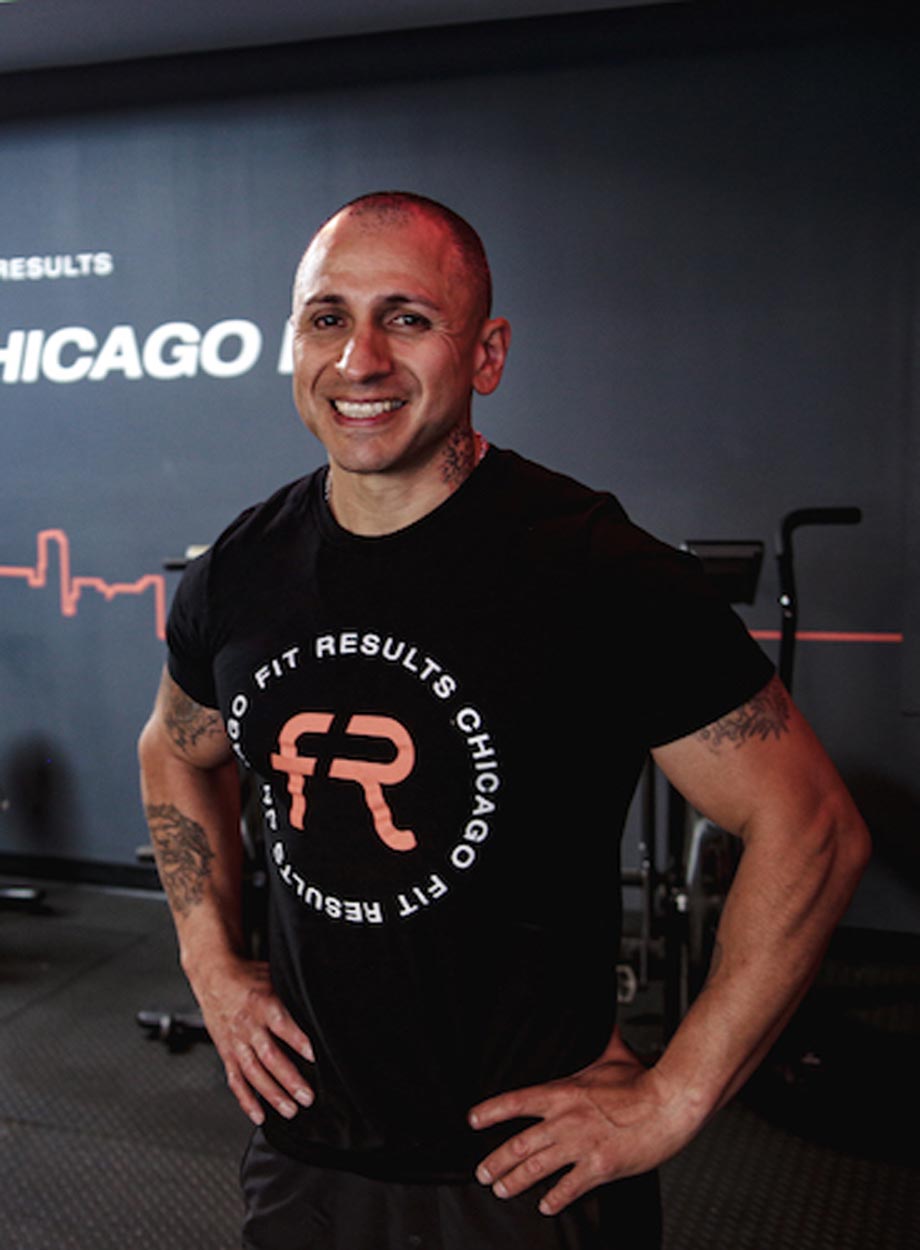
Make Your Progress Stick: Personal Training Membership for Yearly Training in Chicago

A yearly personal training membership is a 12-month commitment to structured coaching, periodized programming, and consistent progress tracking designed to turn short-term effort into lasting results. An annual plan pairs the access and routine of a gym membership with targeted, coach-led training focused on measurable outcomes like strength gains, fat loss, injury recovery, and improved mobility. Amenities such as towel service, locker rooms, and nutrition coaching are available at different club locations, enhancing the membership experience and providing added value for members. Personal trainers develop customized nutrition plans that focus on specific needs, tastes, and dietary restrictions.
In Chicago, many people struggle to turn brief motivation into consistent progress; a year-long membership fixes that by combining assessment, programming, and community support into one clear roadmap. Assessments often include the use of the Evolt 360 body composition scanner to establish fitness baselines and track progress. Once an initial assessment is completed, members can schedule follow-up scans to track their progress over time. Fitness technologies and apps are integrated to help members monitor their results beyond the scale and stay connected with trainers. Digital integration in personal training can include access to fitness apps, on-demand video libraries, and automated check-ins. The Anytime Fitness App acts as a coach in your pocket for personalized training support.
Booking a consultation requires scheduling an appointment to ensure personalized service and availability. Members can always visit the front desk or speak to staff at the desk for assistance with scheduling, accessing new services like EGYM sessions, or getting questions answered.
Each club location may offer unique amenities and services, so choosing a convenient location can help ensure consistency in attending sessions. Many fitness centers offer buddy training packages, allowing two participants to train together using shared session packages. Below we break down the core benefits, common program formats, how group classes fit into an annual plan, transparent pricing, what to look for in Chicago trainers, and real member outcomes. Read on for practical steps to choose the right plan, evaluate cost-per-session value, and use community and expert guidance to stay consistent all year. A gym's convenient location can ensure consistency in attending sessions.
Introduction to Personal Training
Personal training is one of the most effective ways to reach your fitness goals. With a committed personal trainer, you get a customized workout plan tailored to your needs, abilities, and goals. Whether you're new or breaking through a plateau, personal training sessions provide focused attention, expert feedback, and motivation to keep you on track. Your trainer works with you as a partner to set and achieve goals, building strength and confidence. Investing in personal training means building a foundation for long-term health in a supportive gym environment that encourages accountability and motivation. Working with a certified trainer enhances safety and injury prevention through real-time feedback on form and technique. Working with a certified trainer enhances safety and injury prevention through real-time feedback on form and technique.
Getting Started with Fitness Training
Starting your fitness journey can feel overwhelming, especially if you're new or returning to the gym. At Fit Results, our certified personal trainers make your first steps smooth and empowering. We begin with a free one-on-one consultation to discuss your fitness goals, health history, and specific needs. This helps us create a customized workout plan tailored to your current fitness level and objectives—whether building strength, improving cardio, or enhancing overall health. Success stories from personal training clients often highlight significant weight loss and improved fitness levels.
Our fitness training programs meet you where you are, using top equipment and proven methods to deliver real results. From your first session, you'll receive expert guidance to ensure proper technique and ongoing motivation. Our trainers adjust your plan as you progress, helping you build a routine that fits your lifestyle and drives you toward your goals.
What to Expect from a Personal Training Session
When you sign up for a personal training session at Fit Results, expect a personalized, results-focused experience. Each session starts with a progress check and goal review. Our certified personal trainers guide you through a customized workout tailored to your fitness level and objectives—whether weight loss, muscle building, or overall health.
Your trainer ensures proper form and technique to maximize results and minimize injury risk. Using science-based methods, workouts stay effective and engaging, whether you're a beginner or experienced. Choose one-on-one sessions or small group training with a friend for motivation and accountability. Every session challenges you and moves you closer to your goals with dedicated support and partnership.
Fitness Journey and Mental Health
At Fit Results, we believe that your fitness journey is about more than just physical transformation—it's also about helping your mental health and overall wellbeing. Our certified personal trainers understand that motivation, confidence, and emotional resilience is just as important as strength and endurance. That's why we take a approach to fitness training that is holistic, supporting you through every high and low along the way.
Our community-driven environment has encouraged members to connect, share experiences, and support one another, creating a positive space where everyone can move ahead in life. We focus on progress, not perfection, helping you set realistic goals and celebrate every achievement—no matter how small it is. By focusing on mental health and building a sense of belonging, we help you to overcome obstacles, stay consistent, and achieve lasting success. With expert trainers, top-tier equipment, and a supportive community by your side, you'll be equipped to reach your desired goals and maintain a healthy, balanced lifestyle for years to come like a partnership.
What Are the Key Benefits of a Yearly Personal Trainer Membership?
A yearly personal training membership delivers the consistency, professional oversight, and program continuity that produce lasting fitness adaptations instead of short-lived changes. One of the key perks of a personal training membership is access to digital tools for progress tracking and wearable device integration, which are standard features in 2025 for enhancing your training experience and monitoring results. Regular sessions and scheduled reassessments create a steady progression you can measure, while qualified trainers make sure exercise selection and intensity match your health and goals. Community features—group classes and peer accountability—boost adherence and motivation, and integrated nutrition or behavior coaching helps sustain weight loss and performance gains. The comparison below links specific benefits to outcomes so you can decide which features matter most for a long-term plan. As of 2025, personal training memberships provide structured, results-oriented partnerships often operating on a subscription model. Some gyms provide free initial consultations or welcome workouts to help new members get started with personal training.
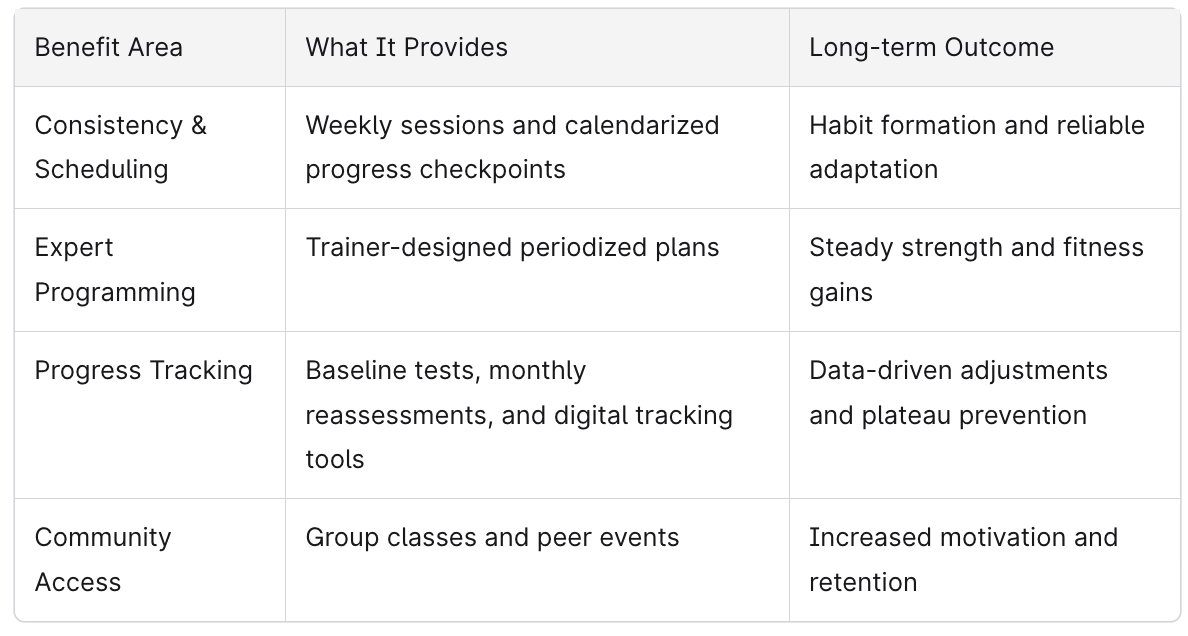
Put together, consistent training, expert programming, and community access create cumulative progress that most single-service approaches don’t deliver. Knowing how these benefits connect makes it easier to see how an annual membership supports long-term goals through assessment, progression, and reassessment.
If you’re ready to take action: Fit Results offers yearly personal trainer memberships that combine individualized programs, group classes, and a supportive community—explore memberships and book a consultation to find the best plan for your goals.
How Does a Yearly Membership Support Long-Term Fitness Goals?
A yearly membership supports long-term goals through a three-step system: assessment, periodized programming, and ongoing reassessment with adjustments. First, trainers establish a baseline with movement screens, strength tests, and goal interviews to set realistic milestones and spot limitations; as part of this process, trainers may use the scale alongside other tools to measure physical progress and set specific goals for each client. That foundation guides exercise choice and loading. Second, programs use periodization—phased cycles of volume and intensity—so adaptations build safely over months while lowering injury risk. Third, scheduled reassessments and coach feedback close the loop, allowing trainers to tweak nutrition, session frequency, or exercises to keep progress moving and avoid plateaus.
This stepwise approach produces measurable outcomes like incremental strength gains, steady fat loss, and improved movement quality—outcomes that we explore next when discussing how weight loss and strength show up across the first year.
What Weight Loss and Strength Building Advantages Does It Offer?
An annual program supports weight loss and strength gain by combining progressive resistance training, calibrated conditioning, and behavior-focused nutrition to create a sustainable energy deficit while encouraging muscle adaptation. Resistance work increases muscular capacity and resting metabolism, phased conditioning burns calories efficiently, and nutrition guidance timed to training phases helps preserve lean mass. Beginners usually notice meaningful changes in 8–12 weeks; more experienced clients progress through microcycles that target steady strength improvements over months. When habit formation, accountability, and scheduled maintenance are built into a year-long plan, gains are easier to keep and rebound is less likely than after short-term programs.
These mechanisms explain why an annual approach outperforms ad-hoc training: progressive overload plus consistent nutrition produces both fat loss and strength increases together, which brings us to choosing the right program format for your needs. You should feel comfortable with a trainer whose motivation style suits you, whether they are a cheerleader or a coach.
Creating a Holistic Fitness Plan
A really good fitness journey goes way beyond just doing workouts—it's about putting together a complete fitness plan that takes care of your body, mind, and how you live your life. When you work with a certified personal trainer that has experience, you can build a plan that looks at what you want to achieve, where you're at right now with fitness, and any health issues you might be dealing with. This approach brings together the physical training, eating strategies, and mental health support to help you get the results you're looking for, whether that's losing weight, building muscle, or just getting healthier overall. When you focus on the whole person, a complete plan gives you the power to make changes that stick, get past whatever's in your way, and keep a balanced, healthy way of living. Your personal trainer will help you set goals that make sense, keep track of how you're doing, and change your plan when it's needed—making sure that every part of your health and fitness has support along the way.
Which Personal Training Programs Are Included in Chicago's Annual Memberships?
Annual memberships usually include several formats—one-on-one personal training, semi-private or small-group sessions, group training, hybrid coaching, and specialized tracks for rehab or beginners—so members can pick the setup that fits budget, goals, and scheduling. Group training and small group training are structured, coach-led sessions designed to enhance motivation and results, with small group training offering a more affordable option (typically $20 to $50 per person per session). Personal training sessions are scheduled with a certified trainer to provide real-time feedback and support, whether in one-on-one or small-group formats. Session frequency commonly ranges from one to four times per week depending on the tier, while hybrid options mix in-person coaching with remote check-ins and customized plans. Programs are laid out in goal-based phases (foundation, build, peak, maintenance) and delivered in-person, virtually, or both; that flexibility helps members stay consistent through busy weeks or setbacks. The table below clarifies program types, target audiences, and typical session formats to help you choose the right year-long commitment.
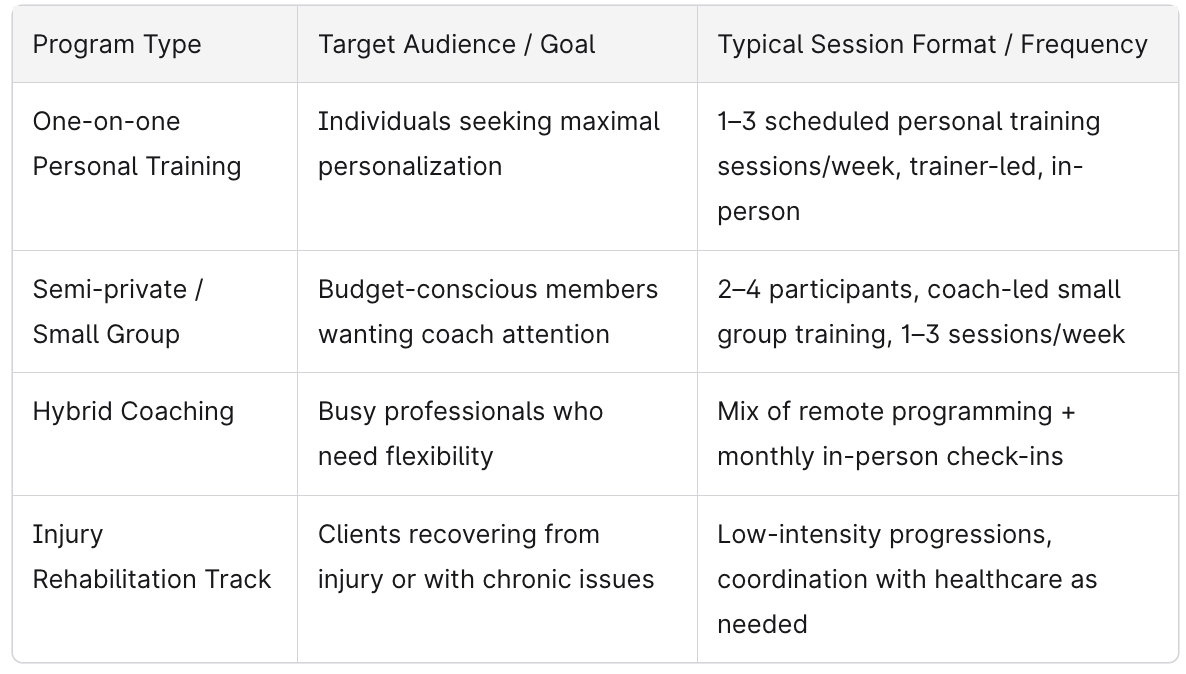
Matching program format to your goals and constraints ensures steady progress over the year. Next we cover how beginners and rehab clients are onboarded and kept safe as they advance.
What Customized Plans Are Available for Beginners and Injury Rehabilitation?
Beginner and rehab tracks start with thorough onboarding: intake forms, movement screens, and baseline mobility checks that guide initial exercise selection and load limits. Beginners progress gradually, emphasizing movement quality and basic strength patterns—typically moving from fundamentals in weeks 1–4 to strength accumulation in weeks 5–12 with measurable milestones. Rehab plans prioritize pain-free movement, collaboration with medical providers when needed, and conservative load increases to rebuild tissue resilience without provoking setbacks. Regular check-ins and targeted mobility work anchor both tracks, allowing safe progression into more intense strength or performance phases later in the year.
These onboarding and safety practices make long-term membership benefits accessible from any starting point, leading into how expert trainers tailor plans to individual needs.
How Do Expert Trainers Tailor Programs to Individual Needs?
Expert trainers combine movement screens, strength tests, lifestyle interviews, and sometimes health-history review to build individualized plans that balance frequency, intensity, and exercise selection. Providing comprehensive details about each personalized training program—including warmups, nutrition, and scheduling—ensures clients understand the full scope and customization of their plan. Personalization tools include volume (sets/reps), intensity (load), exercise choice (compound vs. accessory), and recovery strategies; trainers adjust these to suit goals like hypertrophy, fat loss, or mobility. Ongoing communication—session notes, message check-ins, and monthly reassessments—keeps programming responsive when life stressors or minor injuries arise. Simple modifications (reducing range of motion, swapping single-leg work for bilateral lifts) maintain progress while protecting vulnerable areas, and group classes add variety that supports long-term adherence.
The Importance of Proper Form and Technique
Mastering proper form and technique is essential for a safe and effective fitness journey. Every exercise—whether a squat, press, or stretch—should be performed with correct alignment and movement quality. A certified personal trainer provides expert guidance to help you avoid injuries and maximize workout results. Focusing on proper form builds strength efficiently, improves fitness levels, and helps you achieve your goals confidently. Prioritizing technique protects your body and ensures each session moves you closer to your desired results. With professional support, every workout counts toward lifelong fitness success.
How Do Group Fitness Classes Enhance Your Yearly Membership Experience?
Group classes bring variety, social accountability, and efficient conditioning that complement one-on-one training and improve adherence over a year. Classes introduce different movement patterns—HIIT, strength circuits, mobility sessions—that prevent overuse and stimulate multiple energy systems, while peer dynamics encourage regular attendance and friendly competition. Many members combine personal training with a weekly rotation of classes to reduce boredom, boost cardio capacity, and increase total weekly volume without a big cost jump. Group fitness classes at Fit Results are also designed to be fun and engaging, making it easier for members to stay motivated and look forward to their workouts. The list below outlines core class benefits and how each supports a sustainable yearly progression.
- Motivation and Accountability: Regular classes build habit and social reinforcement.
- Variety and Cross-Training: Different formats reduce overuse and broaden capability.
- Cost Efficiency: Classes deliver coach-led training at a lower per-person cost than private sessions.
- Community Events and Challenges: Group initiatives increase engagement and retention.
After trying classes, members often slot specific types into personal training cycles to support strength and rehab goals.
What Types of Group Classes Are Offered in Chicago?
Chicago fitness centers commonly offer strength-focused classes, high-intensity interval training (HIIT), mobility and recovery sessions, and specialty workshops like kettlebell technique or posture. These group classes use equipment such as free weights, resistance bands, kettlebells, and cardio machines to provide diverse training. When choosing a gym, consider equipment variety and maintenance, as these impact gym culture. Strength classes focus on compound lifts and progressive overload, HIIT supports fat loss with cardio conditioning, and mobility sessions improve joint health. A typical weekly plan might combine two personal training sessions with two classes—one strength and one mobility—to balance training throughout the year.
These options allow members to vary focus and intensity safely within their annual plan, supporting motivation through community features. Functional training is a type of personal training designed to improve the quality of real-life activities.
How Does Community Support Boost Fitness Motivation?
Community support increases motivation through structured accountability, shared goals, and social reinforcement that improve attendance and adherence over long programs. Group challenges, member rituals, and peer coaching create short-term goals and social rewards that help members move past plateaus and competing priorities. Trainers and peers play an active role in watching each other's progress, offering encouragement and feedback that help members stay motivated and accountable. Facilities that track engagement (attendance, class streaks, challenge completions) can proactively re-engage members when motivation drops. Real-world data shows members involved in active communities keep training longer and report stronger motivation—making community-building a vital complement to individualized coaching.
Consistent community support naturally leads to questions about cost and value; the next section covers pricing transparency and membership tiers.
Science-Based Fitness: Evidence-Backed Approaches in Chicago
When it comes to getting real results, science-based fitness drives progress in your fitness journey. In Chicago, personal training programs and fitness classes rely on proven methods and the latest research, combined with trainers' experience. Certified personal trainers use strategies like progressive overload, HIIT, and targeted cardio to build strength, improve health, and help you reach your goals efficiently. These programs are tailored to your needs, ensuring every exercise and session is purposeful and effective. A science-based approach provides structured routines that maximize results, reduce injury risk, and maintain motivation. With expert trainers guiding your fitness journey, your efforts are supported by the best practices to help you succeed. Trainers with reputable certifications include NASM, ACE, ACSM, and degrees in related fields like Kinesiology. Working with a personal trainer can increase the success of reaching fitness goals by more than 30%.
What Are the Pricing and Membership Options for Annual Personal Training in Chicago?
Annual personal training memberships commonly use tiered models balancing session frequency, class access, and support services to fit various budgets and goals. Tiers range from budget group-first plans (class-heavy with limited private sessions), mid-tier hybrids (regular private sessions plus class access), to premium packages focused on frequent one-on-one coaching with full access and priority booking. Many 2025 fitness centers use layered memberships where personal training is an add-on, with options to cancel sessions or memberships before billing. Cost-per-session estimates help compare value: group plans offer the lowest cost, hybrids are mid-range, and premium plans have the highest cost but most personalization. The table below summarizes common tiers, included services, and sample costs.
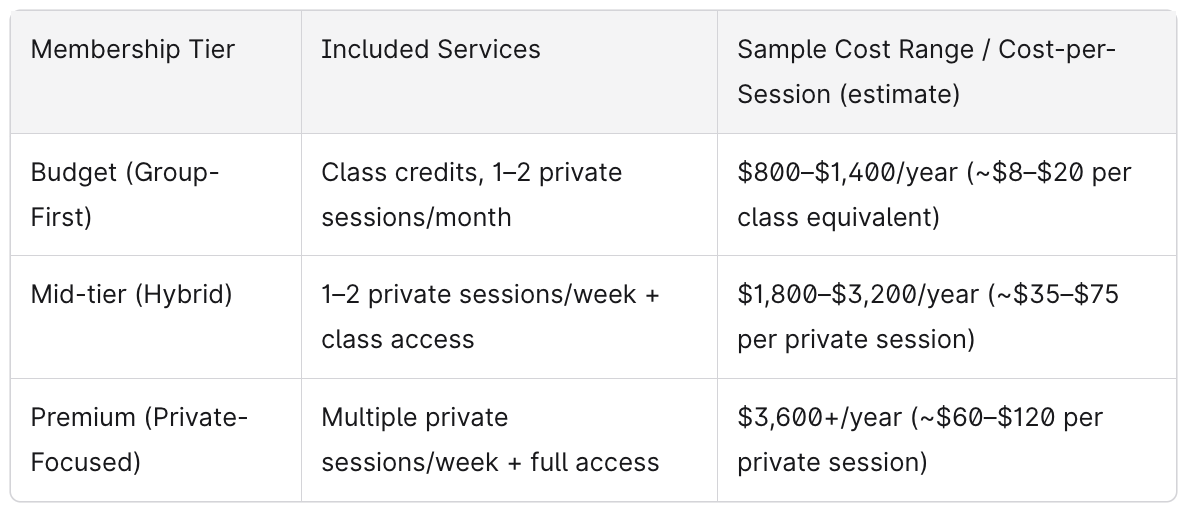
To calculate value: divide annual cost by the total sessions (classes + private sessions) you expect to use to get a cost-per-session, then weigh personalization against budget. For transparent pricing and help choosing a plan, Fit Results lists membership packages and offers consultations—explore memberships and book a consultation to review options and find the best fit. Members should review any membership restrictions and eligibility criteria before enrolling to ensure they qualify for specific packages or promotions.
How Transparent Are Membership Costs and Packages?
Transparent facilities list what’s included (number of private sessions, class access, assessments), billing cadence (annual or monthly), and common add-ons like specialty workshops or nutrition coaching so there are no surprise fees. When evaluating value, divide total annual cost by expected sessions and compare that cost-per-session to how often you plan to train. Many providers offer trial periods, bundles, or financing to spread cost across months—ask about pause policies and reassessment cadence to understand flexibility. Always check the valid terms and eligibility criteria for any free consultation or promotional offer to ensure you qualify. Clear pricing makes it easier to choose a tier that fits both budget and goals.
With cost structure clear, you can look at affordable strategies and which tiers suit different members.
Are There Affordable Plans for Different Budgets?
Affordable plans typically emphasize group classes, semi-private sessions, or hybrid remote coaching to lower per-session costs while keeping consistent progress through scheduled check-ins. Low-cost plans fit members who want routine and community without frequent one-on-one time; mid-tier plans balance personalization and value; premium plans suit clients needing intensive hands-on coaching. Quick guidance:
- Budget: Best for motivated self-starters who use classes for accountability.
- Mid-tier: Best for clients seeking steady progress with regular trainer input.
- Premium: Best for clients with performance goals, rehab needs, or time for frequent coaching.
Choosing an affordable plan means matching your expected session frequency to the membership inclusions so cost-per-session reflects the value of the personalization you need.
Who Are the Best Personal Trainers in Chicago for Yearly Memberships?
The best trainers for year-long members combine recognized certifications, specializations that match client needs (rehab, strength, weight loss), and a track record of delivering long-term results. Look for trainers who document progression strategies, use objective metrics (strength tests, body-composition trends), and pursue continuing education in areas like corrective exercise and periodization. Trainers should offer personalized plans, accountability, and additional support like meal planning beyond workouts. Beyond credentials, coaching style, communication, and availability are crucial fit factors that affect long-term adherence and success. The checklist below helps you vet trainers when considering an annual commitment.
- Certifications and Continuing Education: Current certifications and recent specialized training show technical competence.
- Client Outcomes and Programming Examples: Trainers who describe phased programs and measurable outcomes demonstrate planning skill.
- Coaching Style and Communication: Compatibility in motivation style and scheduling flexibility supports retention.
- Rehab and Specialization Fit: For injury-prone clients, prioritize trainers with rehab experience and collaborative practices.
What Qualifications and Specializations Do Chicago Trainers Have?
Credible trainers commonly hold national certifications in strength and conditioning, corrective exercise, or clinical exercise physiology, and they pursue continuing education in mobility, nutrition coaching, and related fields. Specialties include injury rehabilitation, strength and conditioning, weight-loss programming, and endurance training—each brings different program emphases and assessment tools. Look for experience indicators such as documented case progressions, client metrics, and references when available; these show a trainer’s ability to manage year-long transformations and align membership goals with appropriate expertise.
How Can Trainer Profiles Help You Choose the Right Fit?
Trainer profiles give a snapshot of certifications, client focus, coaching philosophy, and typical session formats so you can match strengths to your needs. Read profiles for evidence of periodized planning, rehab capability, and communication style; compare profiles to align availability and pricing with your expected training frequency. Use trial sessions and consultations to assess rapport, teaching clarity, and responsiveness—those qualitative factors often determine long-term fit. Bring concrete goals and a brief movement history to consultations so both parties can evaluate compatibility and plan a year you can commit to.
Interconnected Technology and Fitness: Apps, Wearables, and Progress Tracking
Technology has transformed personal training and fitness profoundly. Today, interconnected tools like fitness apps, wearable devices, and progress tracking software make it easier to monitor workouts, set goals, and stay motivated. Many Chicago gyms integrate these technologies, giving you real-time access to your customized workout plan, performance data, and trainer feedback. Whether tracking steps, logging workouts, or reviewing progress, technology keeps you connected to your fitness journey and accountable. These digital tools enhance your training experience, support motivation, and help you achieve your goals efficiently. They also encourage bringing a friend or loved one to stay motivated and accountable together.
What Success Stories and Testimonials Highlight the Impact of Yearly Memberships?
Yearly membership outcomes focus on measurable improvements—sustained fat loss, meaningful strength gains, and durable habit change—supported by continuous coaching and community engagement. Case summaries follow common timelines: foundational mobility and habit-building in the first 8–12 weeks, strength or endurance accumulation across months 3–9, and maintenance or peak performance in months 9–12. Testimonials emphasize numbers and quality-of-life changes: more energy, less pain, and a sense of belonging that keeps people active well after their initial goals are met. Short examples below show typical annual progressions and the program elements that drove results.
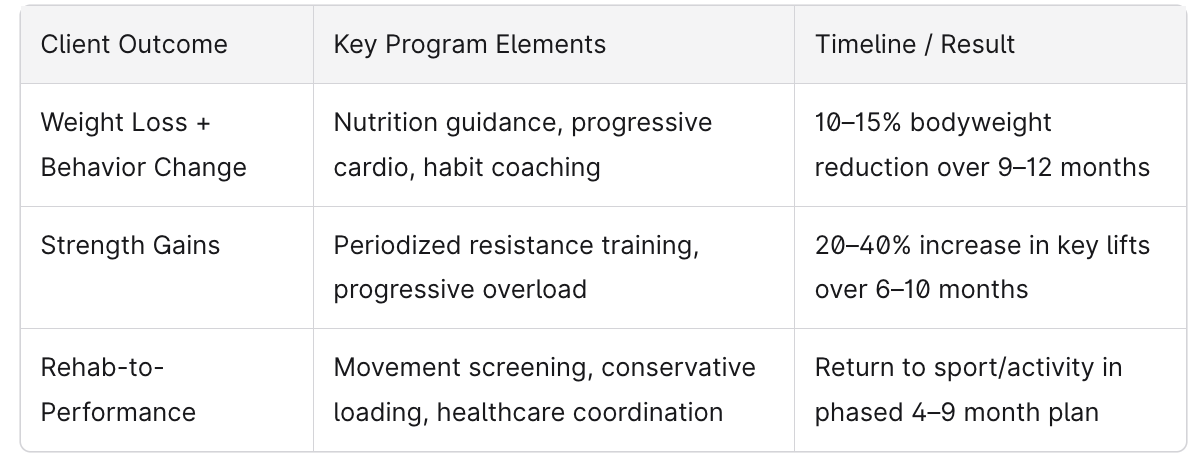
These patterns show that individualized programming, consistent sessions, and community accountability produce results that last beyond the first year. After reviewing these examples, many readers choose to explore memberships and book a consultation to design a tailored year-long plan and start measurable change.
How Have Clients Achieved Weight Loss and Strength Gains?
Clients who see major weight loss and strength gains follow integrated plans that pair progressive resistance training, targeted conditioning, and nutrition strategies that create a manageable calorie deficit without sacrificing lean mass. Early phases focus on consistency and movement quality; mid-phases introduce heavier compound lifts and more intense conditioning; late phases emphasize recovery and maintenance to lock in gains. Progress is tracked with baseline tests and periodic reassessments so trainers can fine-tune calorie targets, session load, and recovery—this objective approach explains why annual memberships produce durable change rather than short-term spikes.
What Do Members Say About Their Community and Support Experience?
Members consistently point to community as a key reason they stick with training, citing accountability partners, group challenges, and social rituals that make training part of weekly life. Common themes in feedback include better adherence, higher morale during setbacks, and friendships that turn exercise into a sustainable habit rather than a chore. These social supports complement individualized coaching by providing external reinforcement for behavior change and often lead to longer retention and improved well-being. Many members say that expert trainers plus an engaged community are the deciding factors in committing to a yearly plan.
When expert programming, clear pricing, and social accountability come together, year-long memberships deliver lasting transformations that reach beyond the gym.
Frequently Asked Questions
1. How can I stay motivated throughout my yearly personal training membership?
Staying motivated across a year comes down to clear goals, community, and regular measurement. Set specific, short- and long-term goals with your trainer, join group classes to build routine and accountability, and schedule regular progress check-ins so you can see small wins. Mix up workouts to avoid boredom and celebrate milestones—those small wins keep momentum over twelve months.
2. What should I look for in a personal trainer when choosing a yearly membership?
Look for a trainer with solid credentials, a track record of long-term client outcomes, and a coaching style that fits you. Ask about their approach to periodization, how they track progress, and how they handle injuries or schedule changes. A good rapport and reliable communication are just as important as certifications—those factors determine whether you’ll stick with the plan.
3. Are there specific nutrition plans included in the yearly membership?
Many yearly memberships include nutrition guidance, which can range from habit-based coaching to personalized meal plans. Ask what level of support is included—ongoing coaching, one-off consultations, or detailed meal plans—and how nutrition is integrated with your training phases. The best programs focus on sustainable habits that support your goals alongside your workouts.
4. How do I know if a yearly membership is worth the investment?
To judge value, list what’s included (private sessions, classes, assessments), estimate how often you’ll use those services, and divide the annual cost by total sessions to get a cost-per-session. Then weigh that against expected outcomes: improved health, consistency, and accountability. If structured support helps you train regularly and reach goals you otherwise wouldn’t, the investment often pays off.
5. Can I switch programs or trainers during my yearly membership?
Most facilities allow program or trainer changes within the membership terms. If your initial fit isn’t working, talk to the team about options—many gyms welcome adjustments to keep members progressing. Clear communication helps make transitions smooth and keeps your year-long plan on track.
6. What happens if I need to pause my membership due to unforeseen circumstances?
If you need to pause your membership, check the membership agreement for freeze or pause policies—terms vary by facility. Many centers offer limited freezes for medical or personal reasons; contact the membership team as soon as possible to understand required documentation and options so you can return when ready.
7. How can I track my progress effectively throughout the year?
Track progress with baseline tests, regular reassessments, and simple tools: training logs, progress photos, and body-composition or strength measurements. Use apps or trainer notes to record sessions and metrics, and schedule monthly or quarterly check-ins to adjust programming. Structured tracking makes small gains visible and helps trainers refine plans as you move through the year.
Conclusion
Committing to a yearly personal training membership in Chicago gives you consistent coaching, expert programming, and community support—three elements that together drive long-term fitness success. When personalized training is paired with group classes and smart tracking, members achieve sustainable weight loss, meaningful strength gains, and better overall well-being. Take the first step: explore our membership options and book a consultation with Fit Results to build a year-long plan that helps you reach and keep your goals.
Make Your Progress Stick: Personal Training Membership for Yearly Training in Chicago
A yearly personal training membership is a 12-month commitment to structured coaching, periodized programming, and consistent progress tracking designed to turn short-term effort into lasting results. An annual plan pairs the access and routine of a gym membership with targeted, coach-led training focused on measurable outcomes like strength gains, fat loss, injury recovery, and improved mobility. Amenities such as towel service, locker rooms, and nutrition coaching are available at different club locations, enhancing the membership experience and providing added value for members. Personal trainers develop customized nutrition plans that focus on specific needs, tastes, and dietary restrictions.
In Chicago, many people struggle to turn brief motivation into consistent progress; a year-long membership fixes that by combining assessment, programming, and community support into one clear roadmap. Assessments often include the use of the Evolt 360 body composition scanner to establish fitness baselines and track progress. Once an initial assessment is completed, members can schedule follow-up scans to track their progress over time. Fitness technologies and apps are integrated to help members monitor their results beyond the scale and stay connected with trainers. Digital integration in personal training can include access to fitness apps, on-demand video libraries, and automated check-ins. The Anytime Fitness App acts as a coach in your pocket for personalized training support.
Booking a consultation requires scheduling an appointment to ensure personalized service and availability. Members can always visit the front desk or speak to staff at the desk for assistance with scheduling, accessing new services like EGYM sessions, or getting questions answered.
Each club location may offer unique amenities and services, so choosing a convenient location can help ensure consistency in attending sessions. Many fitness centers offer buddy training packages, allowing two participants to train together using shared session packages. Below we break down the core benefits, common program formats, how group classes fit into an annual plan, transparent pricing, what to look for in Chicago trainers, and real member outcomes. Read on for practical steps to choose the right plan, evaluate cost-per-session value, and use community and expert guidance to stay consistent all year. A gym's convenient location can ensure consistency in attending sessions.
Introduction to Personal Training
Personal training is one of the most effective ways to reach your fitness goals. With a committed personal trainer, you get a customized workout plan tailored to your needs, abilities, and goals. Whether you're new or breaking through a plateau, personal training sessions provide focused attention, expert feedback, and motivation to keep you on track. Your trainer works with you as a partner to set and achieve goals, building strength and confidence. Investing in personal training means building a foundation for long-term health in a supportive gym environment that encourages accountability and motivation. Working with a certified trainer enhances safety and injury prevention through real-time feedback on form and technique. Working with a certified trainer enhances safety and injury prevention through real-time feedback on form and technique.
Getting Started with Fitness Training
Starting your fitness journey can feel overwhelming, especially if you're new or returning to the gym. At Fit Results, our certified personal trainers make your first steps smooth and empowering. We begin with a free one-on-one consultation to discuss your fitness goals, health history, and specific needs. This helps us create a customized workout plan tailored to your current fitness level and objectives—whether building strength, improving cardio, or enhancing overall health. Success stories from personal training clients often highlight significant weight loss and improved fitness levels.
Our fitness training programs meet you where you are, using top equipment and proven methods to deliver real results. From your first session, you'll receive expert guidance to ensure proper technique and ongoing motivation. Our trainers adjust your plan as you progress, helping you build a routine that fits your lifestyle and drives you toward your goals.
What to Expect from a Personal Training Session
When you sign up for a personal training session at Fit Results, expect a personalized, results-focused experience. Each session starts with a progress check and goal review. Our certified personal trainers guide you through a customized workout tailored to your fitness level and objectives—whether weight loss, muscle building, or overall health.
Your trainer ensures proper form and technique to maximize results and minimize injury risk. Using science-based methods, workouts stay effective and engaging, whether you're a beginner or experienced. Choose one-on-one sessions or small group training with a friend for motivation and accountability. Every session challenges you and moves you closer to your goals with dedicated support and partnership.
Fitness Journey and Mental Health
At Fit Results, we believe that your fitness journey is about more than just physical transformation—it's also about helping your mental health and overall wellbeing. Our certified personal trainers understand that motivation, confidence, and emotional resilience is just as important as strength and endurance. That's why we take a approach to fitness training that is holistic, supporting you through every high and low along the way.
Our community-driven environment has encouraged members to connect, share experiences, and support one another, creating a positive space where everyone can move ahead in life. We focus on progress, not perfection, helping you set realistic goals and celebrate every achievement—no matter how small it is. By focusing on mental health and building a sense of belonging, we help you to overcome obstacles, stay consistent, and achieve lasting success. With expert trainers, top-tier equipment, and a supportive community by your side, you'll be equipped to reach your desired goals and maintain a healthy, balanced lifestyle for years to come like a partnership.
What Are the Key Benefits of a Yearly Personal Trainer Membership?
A yearly personal training membership delivers the consistency, professional oversight, and program continuity that produce lasting fitness adaptations instead of short-lived changes. One of the key perks of a personal training membership is access to digital tools for progress tracking and wearable device integration, which are standard features in 2025 for enhancing your training experience and monitoring results. Regular sessions and scheduled reassessments create a steady progression you can measure, while qualified trainers make sure exercise selection and intensity match your health and goals. Community features—group classes and peer accountability—boost adherence and motivation, and integrated nutrition or behavior coaching helps sustain weight loss and performance gains. The comparison below links specific benefits to outcomes so you can decide which features matter most for a long-term plan. As of 2025, personal training memberships provide structured, results-oriented partnerships often operating on a subscription model. Some gyms provide free initial consultations or welcome workouts to help new members get started with personal training.
Put together, consistent training, expert programming, and community access create cumulative progress that most single-service approaches don’t deliver. Knowing how these benefits connect makes it easier to see how an annual membership supports long-term goals through assessment, progression, and reassessment.
If you’re ready to take action: Fit Results offers yearly personal trainer memberships that combine individualized programs, group classes, and a supportive community—explore memberships and book a consultation to find the best plan for your goals.
How Does a Yearly Membership Support Long-Term Fitness Goals?
A yearly membership supports long-term goals through a three-step system: assessment, periodized programming, and ongoing reassessment with adjustments. First, trainers establish a baseline with movement screens, strength tests, and goal interviews to set realistic milestones and spot limitations; as part of this process, trainers may use the scale alongside other tools to measure physical progress and set specific goals for each client. That foundation guides exercise choice and loading. Second, programs use periodization—phased cycles of volume and intensity—so adaptations build safely over months while lowering injury risk. Third, scheduled reassessments and coach feedback close the loop, allowing trainers to tweak nutrition, session frequency, or exercises to keep progress moving and avoid plateaus.
This stepwise approach produces measurable outcomes like incremental strength gains, steady fat loss, and improved movement quality—outcomes that we explore next when discussing how weight loss and strength show up across the first year.
What Weight Loss and Strength Building Advantages Does It Offer?
An annual program supports weight loss and strength gain by combining progressive resistance training, calibrated conditioning, and behavior-focused nutrition to create a sustainable energy deficit while encouraging muscle adaptation. Resistance work increases muscular capacity and resting metabolism, phased conditioning burns calories efficiently, and nutrition guidance timed to training phases helps preserve lean mass. Beginners usually notice meaningful changes in 8–12 weeks; more experienced clients progress through microcycles that target steady strength improvements over months. When habit formation, accountability, and scheduled maintenance are built into a year-long plan, gains are easier to keep and rebound is less likely than after short-term programs.
These mechanisms explain why an annual approach outperforms ad-hoc training: progressive overload plus consistent nutrition produces both fat loss and strength increases together, which brings us to choosing the right program format for your needs. You should feel comfortable with a trainer whose motivation style suits you, whether they are a cheerleader or a coach.
Creating a Holistic Fitness Plan
A really good fitness journey goes way beyond just doing workouts—it's about putting together a complete fitness plan that takes care of your body, mind, and how you live your life. When you work with a certified personal trainer that has experience, you can build a plan that looks at what you want to achieve, where you're at right now with fitness, and any health issues you might be dealing with. This approach brings together the physical training, eating strategies, and mental health support to help you get the results you're looking for, whether that's losing weight, building muscle, or just getting healthier overall. When you focus on the whole person, a complete plan gives you the power to make changes that stick, get past whatever's in your way, and keep a balanced, healthy way of living. Your personal trainer will help you set goals that make sense, keep track of how you're doing, and change your plan when it's needed—making sure that every part of your health and fitness has support along the way.
Which Personal Training Programs Are Included in Chicago's Annual Memberships?
Annual memberships usually include several formats—one-on-one personal training, semi-private or small-group sessions, group training, hybrid coaching, and specialized tracks for rehab or beginners—so members can pick the setup that fits budget, goals, and scheduling. Group training and small group training are structured, coach-led sessions designed to enhance motivation and results, with small group training offering a more affordable option (typically $20 to $50 per person per session). Personal training sessions are scheduled with a certified trainer to provide real-time feedback and support, whether in one-on-one or small-group formats. Session frequency commonly ranges from one to four times per week depending on the tier, while hybrid options mix in-person coaching with remote check-ins and customized plans. Programs are laid out in goal-based phases (foundation, build, peak, maintenance) and delivered in-person, virtually, or both; that flexibility helps members stay consistent through busy weeks or setbacks. The table below clarifies program types, target audiences, and typical session formats to help you choose the right year-long commitment.
Matching program format to your goals and constraints ensures steady progress over the year. Next we cover how beginners and rehab clients are onboarded and kept safe as they advance.
What Customized Plans Are Available for Beginners and Injury Rehabilitation?
Beginner and rehab tracks start with thorough onboarding: intake forms, movement screens, and baseline mobility checks that guide initial exercise selection and load limits. Beginners progress gradually, emphasizing movement quality and basic strength patterns—typically moving from fundamentals in weeks 1–4 to strength accumulation in weeks 5–12 with measurable milestones. Rehab plans prioritize pain-free movement, collaboration with medical providers when needed, and conservative load increases to rebuild tissue resilience without provoking setbacks. Regular check-ins and targeted mobility work anchor both tracks, allowing safe progression into more intense strength or performance phases later in the year.
These onboarding and safety practices make long-term membership benefits accessible from any starting point, leading into how expert trainers tailor plans to individual needs.
How Do Expert Trainers Tailor Programs to Individual Needs?
Expert trainers combine movement screens, strength tests, lifestyle interviews, and sometimes health-history review to build individualized plans that balance frequency, intensity, and exercise selection. Providing comprehensive details about each personalized training program—including warmups, nutrition, and scheduling—ensures clients understand the full scope and customization of their plan. Personalization tools include volume (sets/reps), intensity (load), exercise choice (compound vs. accessory), and recovery strategies; trainers adjust these to suit goals like hypertrophy, fat loss, or mobility. Ongoing communication—session notes, message check-ins, and monthly reassessments—keeps programming responsive when life stressors or minor injuries arise. Simple modifications (reducing range of motion, swapping single-leg work for bilateral lifts) maintain progress while protecting vulnerable areas, and group classes add variety that supports long-term adherence.
The Importance of Proper Form and Technique
Mastering proper form and technique is essential for a safe and effective fitness journey. Every exercise—whether a squat, press, or stretch—should be performed with correct alignment and movement quality. A certified personal trainer provides expert guidance to help you avoid injuries and maximize workout results. Focusing on proper form builds strength efficiently, improves fitness levels, and helps you achieve your goals confidently. Prioritizing technique protects your body and ensures each session moves you closer to your desired results. With professional support, every workout counts toward lifelong fitness success.
How Do Group Fitness Classes Enhance Your Yearly Membership Experience?
Group classes bring variety, social accountability, and efficient conditioning that complement one-on-one training and improve adherence over a year. Classes introduce different movement patterns—HIIT, strength circuits, mobility sessions—that prevent overuse and stimulate multiple energy systems, while peer dynamics encourage regular attendance and friendly competition. Many members combine personal training with a weekly rotation of classes to reduce boredom, boost cardio capacity, and increase total weekly volume without a big cost jump. Group fitness classes at Fit Results are also designed to be fun and engaging, making it easier for members to stay motivated and look forward to their workouts. The list below outlines core class benefits and how each supports a sustainable yearly progression.
- Motivation and Accountability: Regular classes build habit and social reinforcement.
- Variety and Cross-Training: Different formats reduce overuse and broaden capability.
- Cost Efficiency: Classes deliver coach-led training at a lower per-person cost than private sessions.
- Community Events and Challenges: Group initiatives increase engagement and retention.
After trying classes, members often slot specific types into personal training cycles to support strength and rehab goals.
What Types of Group Classes Are Offered in Chicago?
Chicago fitness centers commonly offer strength-focused classes, high-intensity interval training (HIIT), mobility and recovery sessions, and specialty workshops like kettlebell technique or posture. These group classes use equipment such as free weights, resistance bands, kettlebells, and cardio machines to provide diverse training. When choosing a gym, consider equipment variety and maintenance, as these impact gym culture. Strength classes focus on compound lifts and progressive overload, HIIT supports fat loss with cardio conditioning, and mobility sessions improve joint health. A typical weekly plan might combine two personal training sessions with two classes—one strength and one mobility—to balance training throughout the year.
These options allow members to vary focus and intensity safely within their annual plan, supporting motivation through community features. Functional training is a type of personal training designed to improve the quality of real-life activities.
How Does Community Support Boost Fitness Motivation?
Community support increases motivation through structured accountability, shared goals, and social reinforcement that improve attendance and adherence over long programs. Group challenges, member rituals, and peer coaching create short-term goals and social rewards that help members move past plateaus and competing priorities. Trainers and peers play an active role in watching each other's progress, offering encouragement and feedback that help members stay motivated and accountable. Facilities that track engagement (attendance, class streaks, challenge completions) can proactively re-engage members when motivation drops. Real-world data shows members involved in active communities keep training longer and report stronger motivation—making community-building a vital complement to individualized coaching.
Consistent community support naturally leads to questions about cost and value; the next section covers pricing transparency and membership tiers.
Science-Based Fitness: Evidence-Backed Approaches in Chicago
When it comes to getting real results, science-based fitness drives progress in your fitness journey. In Chicago, personal training programs and fitness classes rely on proven methods and the latest research, combined with trainers' experience. Certified personal trainers use strategies like progressive overload, HIIT, and targeted cardio to build strength, improve health, and help you reach your goals efficiently. These programs are tailored to your needs, ensuring every exercise and session is purposeful and effective. A science-based approach provides structured routines that maximize results, reduce injury risk, and maintain motivation. With expert trainers guiding your fitness journey, your efforts are supported by the best practices to help you succeed. Trainers with reputable certifications include NASM, ACE, ACSM, and degrees in related fields like Kinesiology. Working with a personal trainer can increase the success of reaching fitness goals by more than 30%.
What Are the Pricing and Membership Options for Annual Personal Training in Chicago?
Annual personal training memberships commonly use tiered models balancing session frequency, class access, and support services to fit various budgets and goals. Tiers range from budget group-first plans (class-heavy with limited private sessions), mid-tier hybrids (regular private sessions plus class access), to premium packages focused on frequent one-on-one coaching with full access and priority booking. Many 2025 fitness centers use layered memberships where personal training is an add-on, with options to cancel sessions or memberships before billing. Cost-per-session estimates help compare value: group plans offer the lowest cost, hybrids are mid-range, and premium plans have the highest cost but most personalization. The table below summarizes common tiers, included services, and sample costs.
To calculate value: divide annual cost by the total sessions (classes + private sessions) you expect to use to get a cost-per-session, then weigh personalization against budget. For transparent pricing and help choosing a plan, Fit Results lists membership packages and offers consultations—explore memberships and book a consultation to review options and find the best fit. Members should review any membership restrictions and eligibility criteria before enrolling to ensure they qualify for specific packages or promotions.
How Transparent Are Membership Costs and Packages?
Transparent facilities list what’s included (number of private sessions, class access, assessments), billing cadence (annual or monthly), and common add-ons like specialty workshops or nutrition coaching so there are no surprise fees. When evaluating value, divide total annual cost by expected sessions and compare that cost-per-session to how often you plan to train. Many providers offer trial periods, bundles, or financing to spread cost across months—ask about pause policies and reassessment cadence to understand flexibility. Always check the valid terms and eligibility criteria for any free consultation or promotional offer to ensure you qualify. Clear pricing makes it easier to choose a tier that fits both budget and goals.
With cost structure clear, you can look at affordable strategies and which tiers suit different members.
Are There Affordable Plans for Different Budgets?
Affordable plans typically emphasize group classes, semi-private sessions, or hybrid remote coaching to lower per-session costs while keeping consistent progress through scheduled check-ins. Low-cost plans fit members who want routine and community without frequent one-on-one time; mid-tier plans balance personalization and value; premium plans suit clients needing intensive hands-on coaching. Quick guidance:
- Budget: Best for motivated self-starters who use classes for accountability.
- Mid-tier: Best for clients seeking steady progress with regular trainer input.
- Premium: Best for clients with performance goals, rehab needs, or time for frequent coaching.
Choosing an affordable plan means matching your expected session frequency to the membership inclusions so cost-per-session reflects the value of the personalization you need.
Who Are the Best Personal Trainers in Chicago for Yearly Memberships?
The best trainers for year-long members combine recognized certifications, specializations that match client needs (rehab, strength, weight loss), and a track record of delivering long-term results. Look for trainers who document progression strategies, use objective metrics (strength tests, body-composition trends), and pursue continuing education in areas like corrective exercise and periodization. Trainers should offer personalized plans, accountability, and additional support like meal planning beyond workouts. Beyond credentials, coaching style, communication, and availability are crucial fit factors that affect long-term adherence and success. The checklist below helps you vet trainers when considering an annual commitment.
- Certifications and Continuing Education: Current certifications and recent specialized training show technical competence.
- Client Outcomes and Programming Examples: Trainers who describe phased programs and measurable outcomes demonstrate planning skill.
- Coaching Style and Communication: Compatibility in motivation style and scheduling flexibility supports retention.
- Rehab and Specialization Fit: For injury-prone clients, prioritize trainers with rehab experience and collaborative practices.
What Qualifications and Specializations Do Chicago Trainers Have?
Credible trainers commonly hold national certifications in strength and conditioning, corrective exercise, or clinical exercise physiology, and they pursue continuing education in mobility, nutrition coaching, and related fields. Specialties include injury rehabilitation, strength and conditioning, weight-loss programming, and endurance training—each brings different program emphases and assessment tools. Look for experience indicators such as documented case progressions, client metrics, and references when available; these show a trainer’s ability to manage year-long transformations and align membership goals with appropriate expertise.
How Can Trainer Profiles Help You Choose the Right Fit?
Trainer profiles give a snapshot of certifications, client focus, coaching philosophy, and typical session formats so you can match strengths to your needs. Read profiles for evidence of periodized planning, rehab capability, and communication style; compare profiles to align availability and pricing with your expected training frequency. Use trial sessions and consultations to assess rapport, teaching clarity, and responsiveness—those qualitative factors often determine long-term fit. Bring concrete goals and a brief movement history to consultations so both parties can evaluate compatibility and plan a year you can commit to.
Interconnected Technology and Fitness: Apps, Wearables, and Progress Tracking
Technology has transformed personal training and fitness profoundly. Today, interconnected tools like fitness apps, wearable devices, and progress tracking software make it easier to monitor workouts, set goals, and stay motivated. Many Chicago gyms integrate these technologies, giving you real-time access to your customized workout plan, performance data, and trainer feedback. Whether tracking steps, logging workouts, or reviewing progress, technology keeps you connected to your fitness journey and accountable. These digital tools enhance your training experience, support motivation, and help you achieve your goals efficiently. They also encourage bringing a friend or loved one to stay motivated and accountable together.
What Success Stories and Testimonials Highlight the Impact of Yearly Memberships?
Yearly membership outcomes focus on measurable improvements—sustained fat loss, meaningful strength gains, and durable habit change—supported by continuous coaching and community engagement. Case summaries follow common timelines: foundational mobility and habit-building in the first 8–12 weeks, strength or endurance accumulation across months 3–9, and maintenance or peak performance in months 9–12. Testimonials emphasize numbers and quality-of-life changes: more energy, less pain, and a sense of belonging that keeps people active well after their initial goals are met. Short examples below show typical annual progressions and the program elements that drove results.
These patterns show that individualized programming, consistent sessions, and community accountability produce results that last beyond the first year. After reviewing these examples, many readers choose to explore memberships and book a consultation to design a tailored year-long plan and start measurable change.
How Have Clients Achieved Weight Loss and Strength Gains?
Clients who see major weight loss and strength gains follow integrated plans that pair progressive resistance training, targeted conditioning, and nutrition strategies that create a manageable calorie deficit without sacrificing lean mass. Early phases focus on consistency and movement quality; mid-phases introduce heavier compound lifts and more intense conditioning; late phases emphasize recovery and maintenance to lock in gains. Progress is tracked with baseline tests and periodic reassessments so trainers can fine-tune calorie targets, session load, and recovery—this objective approach explains why annual memberships produce durable change rather than short-term spikes.
What Do Members Say About Their Community and Support Experience?
Members consistently point to community as a key reason they stick with training, citing accountability partners, group challenges, and social rituals that make training part of weekly life. Common themes in feedback include better adherence, higher morale during setbacks, and friendships that turn exercise into a sustainable habit rather than a chore. These social supports complement individualized coaching by providing external reinforcement for behavior change and often lead to longer retention and improved well-being. Many members say that expert trainers plus an engaged community are the deciding factors in committing to a yearly plan.
When expert programming, clear pricing, and social accountability come together, year-long memberships deliver lasting transformations that reach beyond the gym.
Frequently Asked Questions
1. How can I stay motivated throughout my yearly personal training membership?
Staying motivated across a year comes down to clear goals, community, and regular measurement. Set specific, short- and long-term goals with your trainer, join group classes to build routine and accountability, and schedule regular progress check-ins so you can see small wins. Mix up workouts to avoid boredom and celebrate milestones—those small wins keep momentum over twelve months.
2. What should I look for in a personal trainer when choosing a yearly membership?
Look for a trainer with solid credentials, a track record of long-term client outcomes, and a coaching style that fits you. Ask about their approach to periodization, how they track progress, and how they handle injuries or schedule changes. A good rapport and reliable communication are just as important as certifications—those factors determine whether you’ll stick with the plan.
3. Are there specific nutrition plans included in the yearly membership?
Many yearly memberships include nutrition guidance, which can range from habit-based coaching to personalized meal plans. Ask what level of support is included—ongoing coaching, one-off consultations, or detailed meal plans—and how nutrition is integrated with your training phases. The best programs focus on sustainable habits that support your goals alongside your workouts.
4. How do I know if a yearly membership is worth the investment?
To judge value, list what’s included (private sessions, classes, assessments), estimate how often you’ll use those services, and divide the annual cost by total sessions to get a cost-per-session. Then weigh that against expected outcomes: improved health, consistency, and accountability. If structured support helps you train regularly and reach goals you otherwise wouldn’t, the investment often pays off.
5. Can I switch programs or trainers during my yearly membership?
Most facilities allow program or trainer changes within the membership terms. If your initial fit isn’t working, talk to the team about options—many gyms welcome adjustments to keep members progressing. Clear communication helps make transitions smooth and keeps your year-long plan on track.
6. What happens if I need to pause my membership due to unforeseen circumstances?
If you need to pause your membership, check the membership agreement for freeze or pause policies—terms vary by facility. Many centers offer limited freezes for medical or personal reasons; contact the membership team as soon as possible to understand required documentation and options so you can return when ready.
7. How can I track my progress effectively throughout the year?
Track progress with baseline tests, regular reassessments, and simple tools: training logs, progress photos, and body-composition or strength measurements. Use apps or trainer notes to record sessions and metrics, and schedule monthly or quarterly check-ins to adjust programming. Structured tracking makes small gains visible and helps trainers refine plans as you move through the year.
Conclusion
Committing to a yearly personal training membership in Chicago gives you consistent coaching, expert programming, and community support—three elements that together drive long-term fitness success. When personalized training is paired with group classes and smart tracking, members achieve sustainable weight loss, meaningful strength gains, and better overall well-being. Take the first step: explore our membership options and book a consultation with Fit Results to build a year-long plan that helps you reach and keep your goals.
.png)