

Maximizing Your Workouts: How to Get the Most from Your Personal Training Sessions

Get Real Results from Personal Training
Feeling stuck after months of personal training is common — but it isn’t permanent. Pinpointing what’s holding you back and applying targeted fixes often restarts progress and rebuilds confidence. This guide answers the question “why am I not seeing results from personal training” and gives clear, practical steps: how to get more from each session, set realistic SMART goals, track meaningful progress beyond the scale, and adapt programs for complete beginners or those with injuries. You’ll learn how consistency, nutrition, recovery, and communication move the needle, which tracking methods reveal real change, and how a local Chicago partner — Fit Results — structures assessments, nutrition, and accountability to tackle these barriers. Keep reading for checklists, session strategies, SMART examples, tracking comparisons, and an overview of the Fit Results Second Chance Program to help you regain momentum quickly.
Why Am I Not Seeing Results from Personal Training?
Most stalls come from a gap between the plan and day-to-day habits: missed sessions, off-target nutrition, unrealistic timelines, technical flaws, or poor recovery all block progress. Missing workouts reduces the training stimulus, calorie imbalances neutralize fat loss, and sloppy technique limits strength gains while raising injury risk. Use the short diagnostic checklist below to find the most likely limiter and try simple fixes before switching programs. Identifying the dominant factor makes the next step tactical and measurable.
- Inconsistent attendance: Are you skipping appointments or constantly rescheduling?
- Nutrition mismatch: Are your calories and protein aligned with your goal — fat loss, maintenance, or muscle gain?
- Unrealistic goals: Do your expectations match the time and effort required for change?
- Form and programming issues: Is progression tracked (weights, reps, complexity) and is technique coached?
- Recovery deficits: Are sleep, stress, and rest days supporting adaptation?
These five checks point to what to fix first. Once you identify the biggest limiter, pick a concrete action — re-lock your schedule, tweak calories, or request technique-focused coaching — and measure the result.
What Common Factors Cause Fitness Frustration and Plateaus?
Several predictable issues create plateaus — and each has a fast, practical correction trainers and clients can use. First, inconsistent frequency lowers cumulative load; commit to regular sessions with a minimum weekly cadence or add home maintenance to bridge gaps. Second, nutrition problems — especially low protein or unnoticed calorie surplus — stall body-composition goals; track intake for two weeks to diagnose. Third, program stagnation happens when volume or intensity hasn’t progressed; small weekly overloads or a planned deload will re-sensitize adaptation. Fourth, poor technique limits muscle recruitment and exposes weak links; ask for cues and regressions until movement quality improves. Finally, recovery and stress blunt gains; improving sleep and scheduling active recovery days often restores momentum. Building a strong commitment to these habits and regular appointments with your trainer fosters accountability and sustained progress.
Each fix is measurable: log sessions, track protein, increase load by 2–5% weekly when appropriate, and monitor sleep. Those simple metrics make conversations with your trainer objective and let you adjust the program based on data rather than frustration. A good trainer will adapt their approach based on your feedback and progress.
How Does Nutrition Impact Personal Training Progress?
Nutrition sets the foundation for training results. Calories and macronutrients determine whether you build muscle, lose fat, or stay the same. Too little protein impairs repair and growth; a chronic calorie surplus masks fat loss; sustained calorie deficits without enough protein reduce workout quality. It's important to be honest about your diet, as dietary habits play a crucial role in your results. Coaches use coachable metrics — daily protein targets (around 0.7–1.0 g per pound), a short calorie-tracking window, and sensible meal timing around sessions — to align eating with goals and keep you moving in the right direction. Small, consistent nutrition changes combined with solid programming often produce outsized improvements: boosting protein and stabilizing meal timing helps preserve strength during a fat-loss phase, for example.
If tracking shows a mismatch, try a focused reset: four weeks of macronutrient targets plus weekly check-ins. Share that data with your trainer so programming tweaks are precise rather than guesswork, and your trainer can guide you in the right direction with nutrition advice tailored to your needs.
How Can I Maximize My Personal Training Sessions for Lasting Results?
Maximizing each training session means preparing intentionally, engaging fully during the workout, and following through between visits with homework that supports the plan. Preparation looks like good sleep, a pre-session snack high in carbohydrates and protein 30–90 minutes before your workout, and bringing notes on recent workouts and recovery so your trainer can adjust sets, loads, or progressions. Arriving early to your personal training sessions allows you to complete warm-ups beforehand, maximizing your workout time. In-session, focus on technique, trust your trainer's expertise, and be proactive about communicating any discomfort or pain. Be honest about soreness, schedule issues, or any challenges you face—this honesty fosters a better partnership and helps your trainer adapt the session. Record weights/reps to track progressive overload. Between sessions, complete conditioning or mobility homework and log adherence so your trainer can adapt volume or intensity to your actual behavior.
- Prepare: Aim for 7–9 hours of sleep and eat a small snack high in carbohydrates and protein 30–90 minutes before training. Arrive early to your personal training sessions to complete warm-ups beforehand.
- Engage: Trust your trainer's expertise, but always communicate any discomfort or pain. Tell your trainer about pain, fatigue, or schedule limits so the session can be adapted. Honesty about your efforts and challenges fosters a better partnership.
- Record: Log weights, reps, and perceived effort each set to measure progress.
- Follow-through: Do assigned mobility, conditioning, and nutrition tasks and report back.
- Review: Use weekly check-ins to adjust micro-cycles and goals based on objective progress.
These behaviors compound into measurable gains. When you make them routine, your trainer can use real data to fine-tune the plan and keep progress steady — which brings us to why consistency and accountability matter.
What Role Does Consistency and Accountability Play in Fitness Success?
Consistency and accountability are the behavioral framework that turns workouts into results. Adaptation needs repeated, progressive stimulus plus habit formation. Regular attendance sets a training baseline your body can respond to, while accountability tools — trainer check-ins, locked bookings, or a training partner — help you show up when motivation dips. Most clients attend two to three personal training sessions per week and often supplement these with additional workouts on their own to maximize progress. Habit strategies like stacking training onto existing routines, setting reminders, and celebrating micro-wins (for example, a 5% strength gain) lower friction and boost adherence. Your trainer should celebrate your achievements to boost your confidence and motivation. Data shows clients who track attendance and review progress regularly sustain change longer because objective feedback replaces doubt.
Consistent habits create predictable data for programming, which is why clear communication with your trainer matters: it lets them refine load, volume, and recovery in ways that preserve momentum and cut down future frustration.
How to Communicate Effectively with Your Personal Trainer?
Clear, concise updates give trainers the context they need to adjust programming quickly and safely. Report sleep, stress, soreness, nutrition adherence, and schedule constraints at the start of sessions. Use short, specific phrases: “I slept six hours and felt sore after yesterday’s legs session,” or “workload at the office increased — can we lower volume this week?” Ask for explicit coaching when you need it — squat cues, tempo adjustments, or load reductions while keeping tempo for hypertrophy. Agree on measurable checkpoints (a four-week strength test, for example) and how you’ll track progress to remove ambiguity.
When both client and trainer speak in objective terms and use shared metrics, changes become mechanical rather than emotional — and that keeps the program focused on steady, sustainable progress.
How Do I Find the Right Personal Trainer for My Needs?
Finding the right personal trainer can make all the difference in your fitness journey. Finding the right personal trainer is something that will change your life and help you move ahead. The best trainer for you will not only help you set and achieve your fitness goals, but also ensure you're using proper form and following workout routine that is tailored to your unique needs and situation. Start by looking for certified personal trainer—someone who has the credentials and expertise to guide you safely and effectively. Someone that is passionate about helping others and committed to help you when you need encouragement and fitness expertise. Consider their experience with clients that share your fitness level and goals, whether you're aiming for weight loss, gaining muscle, or simply building healthier lifestyle.
Good trainer will take the time to understand your unique situation and create plan that fits your schedule, preferences, and any limitations you may have. Good trainer has compassionate and empathetic attitude that will help you when you need it most. Pay attention to their communication style and how comfortable you feel during your initial interactions. The right trainer should be approachable, supportive, and genuinely invested in your progress. The right trainer helps everyone the same and encourages you to bring friend or loved one in order to help staying motivated. Location and availability are also important—choose someone whose schedule and gym location align with yours, so you can maintain consistency in your routine.
Ultimately, the right personal trainer will act as partner in your fitness journey. The right personal trainer does not leave anyone behind because of excuses. The right trainer will help you build confidence, stay motivated, and make steady progress toward your goals. We set goals and we achieve them together like partnership. Finding the right trainer is about finding someone that is committed to help you move ahead in life through fitness.
Key Qualities to Look for in a Personal Trainer
When you choosing a personal trainer, certain qualities that set great trainers apart from others. First thing, you make sure your trainer is a certified personal trainer that has credentials from respected organizations like the American Council on Exercise (ACE) or the National Academy of Sports Medicine (NASM). This certification means they has a solid foundation in exercise science, sports medicine, and safe training practices that will help you.
Experience matters too much. You look for a trainer that has successfully worked with clients who share your fitness goals—whether that's weight loss, gaining muscle, or improving overall fitness like you want. A good trainer will design a workout routine that's personalized to your needs, taking into account your current fitness level, any injuries you have, and your long-term objectives that you want to achieve. They should be able to demonstrate and coach proper form for every exercise, helping you prevent injury and get the most out of each session that you do.
Support and motivation are also key factors that matter. The best trainers are encouraging, patient, and able to adapt their approach to keep you engaged and progressing in your fitness journey. They'll track your progress, adjust your routine as needed, and celebrate your achievements along the way with you. Ultimately, a good trainer is someone who listens to you, communicates clearly with you, and is committed to helping you create lasting change in your life. A trainer does not leave anyone behind because of excuses. You set goals and you achieve them together like a partnership.
Questions to Ask Before Committing
Before you commit to working with a personal trainer, it's really important that you ask some key questions to make sure they are the right fit for what you need. You want to start by asking about their certification and experience: "What certifications do you hold, and how long have you been a personal trainer?" You need to find out if they have experience working with clients that has similar goals or fitness backgrounds like yours.
You should ask about their approach to training: "How do you design workout routines for your clients?" and "What steps do you take to ensure proper form and prevent injury?" It's also really helpful when you discuss their availability and scheduling policies: "How often can we meet for scheduled sessions?" and "What is your policy for rescheduling or missed sessions?" These things matter because you want someone who is committed to help you succeed.
Don't forget to ask about pricing and packages: "What are your rates, and what's included in each package?" and "Are there options for different budgets or training frequencies?" Finally, you want to ask how they track progress and adjust programs: "How will you help me track my progress and make changes as I improve?" These questions will help you find a trainer that is passionate about helping you reach your goals and fits your schedule and expectations. This will set you up for a successful fitness journey that changes your life.
What Is the Fit Results Second Chance Program and How Does It Help Overcome Obstacles?
The Second Chance Program is a focused restart for clients who’ve stalled or lost momentum. It begins with a targeted assessment, then applies nutrition resets and a tighter accountability cadence to diagnose root causes — missed sessions, nutrition lapses, or programming plateaus — and correct them with measurable interventions and progress tracking. Components include an initial assessment, a personalized plan emphasizing progressive overload and technique to help clients achieve their own goals, integrated nutrition support, and frequent check-ins to solve barriers fast. The goal is clear, data-backed improvements on a short, practical timeline so clients regain confidence and see measurable progress. A supportive trainer can help you feel more comfortable and less intimidated during workouts.
Below is a breakdown showing how each element contributes to the restart.
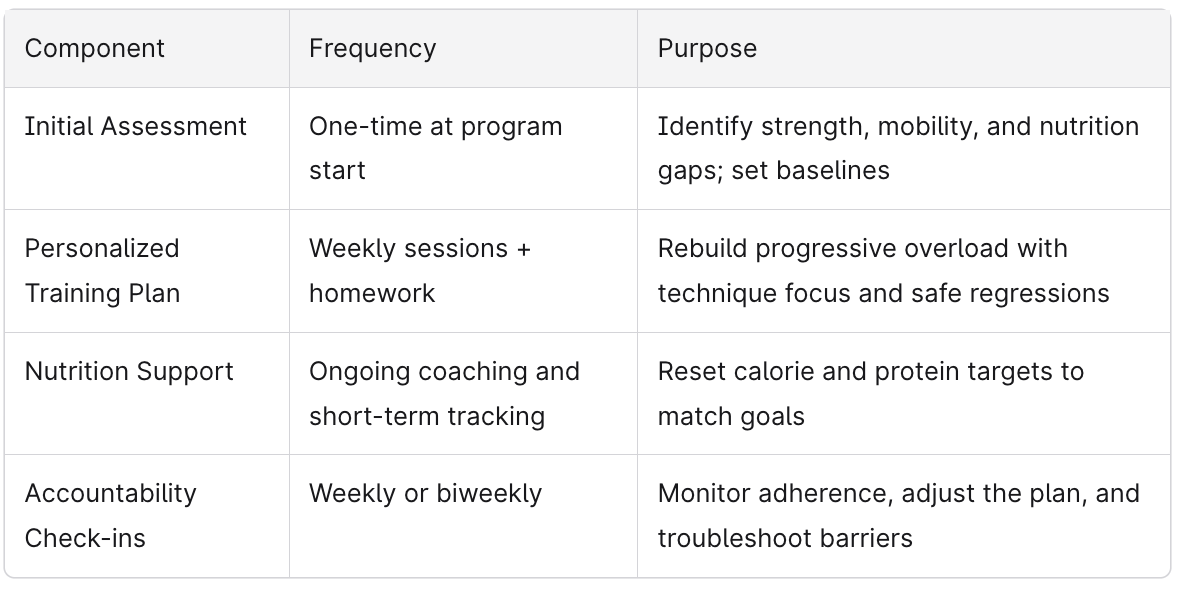
These elements combine into a clear, repeatable process that reduces guesswork and speeds measurable change. The section below explains how the program targets plateaus in practical steps.
How Does the Second Chance Program Address Fitness Plateaus and Frustration?
The program starts by diagnosing which domain — training stimulus, nutrition, recovery, or adherence — is limiting progress, then applies a focused intervention: adjust overload, reset nutrition, or optimize recovery. Stepping outside your comfort zone is often necessary to overcome plateaus, as daily challenges that push your boundaries can lead to lasting behavioral change. A typical timeline might begin with a movement assessment and baseline strength tests, followed by two weeks of technique-focused sessions to correct motor patterns, plus a parallel two-week nutrition tracking window to recalibrate intake. Regular check-ins review objective metrics and troubleshoot real barriers like scheduling conflicts or sleep loss. These deliberate, time-bound steps turn vague problems into solvable actions and deliver quick feedback to reduce frustration.
By keeping interventions specific and measurable, the program improves the chances of sustained progress and rebuilds client confidence. Clients often notice a boost in confidence that resonates beyond the gym, positively affecting their daily lives and interactions. The next section highlights typical client outcomes from this pathway.
What Success Stories Demonstrate the Program’s Effectiveness?
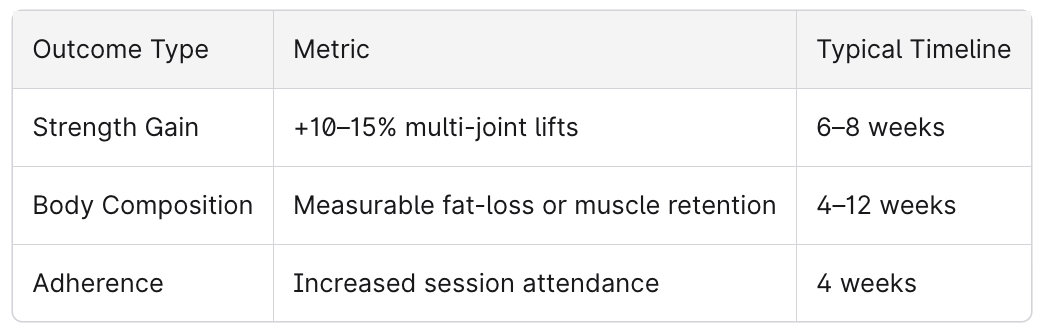
Success in the Second Chance Program shows up as objective gains — stronger lifts, body-composition shifts, better adherence — plus improved confidence, consistency, and more energy. Typical anonymized examples: a client who added 10–15% to squat and deadlift within eight weeks after technique work and progressive overload; another who broke a three-month fat-loss stall by stabilizing protein intake and returning to a three-day training cadence. These results are often paired with higher session attendance and better day-to-day energy. While individual outcomes vary, the program emphasizes short, measurable milestones that rebuild momentum and reduce the frustration cycle.
Regular exercise through personal training also triggers endorphin release, creating natural stress relief and supporting overall well-being.
These examples help clients decide whether a targeted restart is the right move versus switching programs entirely.
How Do I Set Realistic Fitness Goals to Avoid Frustration?
Realistic goals give clarity, measurable milestones, and an adaptable path that fits your life. Setting specific goals is essential—SMART goals — Specific, Measurable, Achievable, Relevant, Time-bound — turn ambitions into actionable plans trainers can build around. Start with one primary outcome (for example, increase deadlift 1RM, lose body fat, or run a 10K) and break it into progressive sub-goals with clear metrics and target dates. Short cycles (4–8 weeks) allow frequent reassessment and prevent the overwhelm of long-term timelines. Use data from regular reassessments to update goals so expectations stay realistic and motivating.
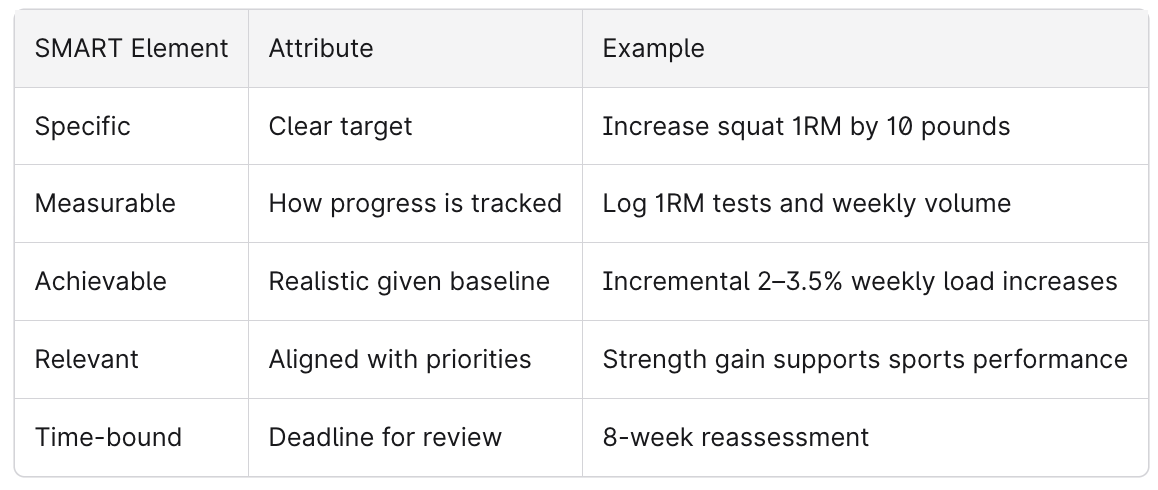
This table shows how each SMART element maps to a measurable plan. Below are concrete examples to make those ideas practical.
What Are SMART Goals and How Do They Apply to Personal Training?
SMART goals make vague desires program-ready by spelling out what success looks like, how you’ll measure it, and when you’ll review it. That clarity lets trainers choose the right volume, intensity, and progression model. Example strength SMART goal: “Increase deadlift 1RM by 10 pounds in 8 weeks through a progressive overload plan with weekly volume tracking.” Example fat-loss SMART goal: “Lose 6 pounds of body fat in 12 weeks while keeping protein at target and training three times per week.” Specific metrics and time frames create clear checkpoints and reduce ambiguity that leads to frustration.
Setting SMART goals up front also builds a natural cadence for reassessments, which Fit Results uses to keep plans realistic and sustainable.
How Does Fit Results Help Clients Adjust Goals for Sustainable Progress?
Fit Results uses collaborative 4–8 week reassessments where objective measures — strength benchmarks, body-composition trends, and adherence data — guide whether to advance, maintain, or recalibrate goals. Trainers review session logs and client notes to recommend small, evidence-based changes like altering weekly volume, shifting calorie targets, or swapping exercises to fit lifestyle. This iterative approach prioritizes sustainability: goals are progressed only after prior milestones are met, which lowers burnout risk and reduces plateaus. Regular, measurable checkpoints keep goals relevant and achievable.
That goal-management system links directly to the tracking methods used to measure progress beyond body weight, described next.
How Can I Track My Fitness Progress Beyond the Scale?
Non-scale metrics give a fuller picture because strength, measurements, photos, and performance often change before body weight does. Use a mix of objective performance tests, periodic body-composition checks, circumference measurements, and progress photos to capture multi-dimensional progress. Tracking improvements across different physical activities—such as strength training, endurance workouts, or flexibility exercises—can provide a more complete understanding of your overall fitness gains.
Below is a comparison of common tracking methods, their attributes, and when to use each so you can pick a monitoring strategy that fits your goals.
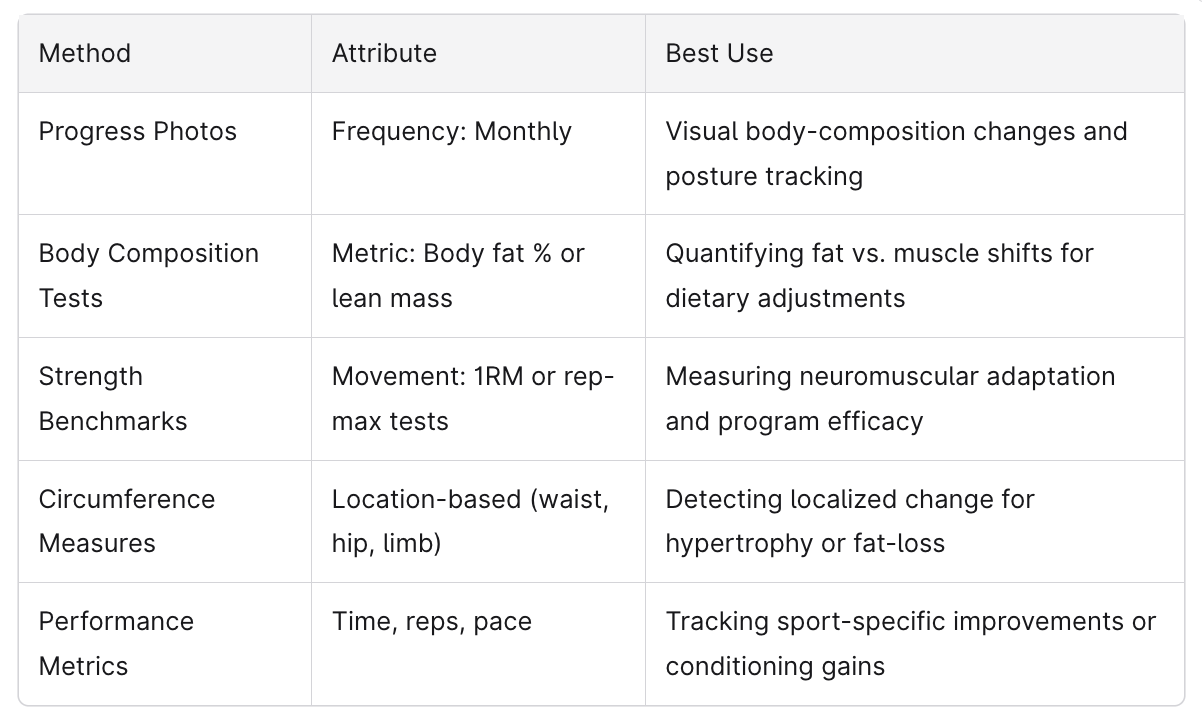
This comparison clarifies which tools reveal specific types of change and when to prioritize them. The sections below explain how trainers typically use these measures and why they matter for breaking plateaus.
What Methods Does Fit Results Use to Measure Non-Scale Victories?
Fit Results blends performance benchmarks, monthly progress photos, and periodic circumference checks to capture non-scale wins that show real physiological change, not daily weight swings. Strength tests — short submaximal progressions or monthly rep-max checks — reveal neuromuscular gains, while body-composition data and photos document fat loss or muscle gain over time. Trainers combine these measures with session logs and adherence data to interpret trends and adjust programming. This multi-metric approach reduces reliance on the scale and gives clients steady, motivating evidence of progress.
Using several measures also allows trainers to spot regressions early and make tactical adjustments to break plateaus and keep momentum.
Why Is Tracking Progress Important to Overcome Plateaus?
Tracking gives both psychological and practical advantages: it provides objective proof of small wins that sustain motivation and produces timely data to spot negative trends before they become entrenched. Psychologically, seeing strength or technical improvements reduces perceived failure when the scale lags. Practically, regular data collection — weekly session logs and monthly photos, for example — lets trainers adjust load, volume, or calories in a targeted way, avoiding months of ineffective effort. Consistent tracking makes adaptations timely and evidence-based rather than reactive and demoralizing.
This tracking foundation supports safe program changes when injuries or beginner status require special handling, which we cover next.
How Can Personal Training Be Modified for Injuries and Beginners to Prevent Frustration?
For injuries and beginners, the priority is safety, early wins, and gradual exposure so clients feel successful while minimizing setbacks. Trainers start with a safety-first consult to identify restrictions, then design plans that emphasize range-of-motion work, pain-free loading, and neuromuscular re-education. It is important that trainers hold credentials from reputable organizations such as a conditioning association, national strength organizations, or the American College of Sports Medicine to ensure safe and effective programming. For beginners, early phases focus on motor learning, frequent low-intensity practice, and habit-building rather than chasing heavy loads. The aim is steady, measurable improvements — better range of motion, less pain, or weekly strength gains — that build training capacity over time.
- Use substitute exercises that reduce joint stress while keeping movement patterns (e.g., step-ups instead of heavy squats).
- Apply tempo and range-of-motion limits to control load and protect healing tissues.
- Increase frequency of low-load practice to speed neuromuscular learning.
- Include mobility and soft-tissue work in warm-ups to reduce pain and improve session quality.
- Schedule more frequent check-ins to monitor symptoms and adapt progression quickly.
- Incorporate active recovery practices, such as stretching or light walking, which are integral to prevent overtraining and promote muscle growth.
These adjustments create short-term wins — improved movement, less pain, small strength increases — that feed into an 8–12 week roadmap for beginners and rehab-focused clients, outlined in the next section.
What Injury-Specific Adjustments Do Fit Results Trainers Provide?
Fit Results trainers offer exercise substitutions, reduced range-of-motion progressions, and rehab-aware programming, and they coordinate with medical providers when needed. For common issues like knee pain, shoulder impingement, or low-back sensitivity, trainers prescribe regressions such as unilateral leg work, scapular-focused press patterns, or neutral-spine loading to maintain strength without aggravation. Progressions are conservative and tracked with symptom checks and objective markers like pain-free range-of-motion thresholds. When appropriate, trainers recommend medical consultation and adjust timelines based on response, with the goal of restoring function and confidence step by step.
These injury-aware protocols create a clear path back to full training and help beginners manage expectations during the early progress phases described next.
How Do Beginners Manage Expectations and Early Progress?
Beginners often see rapid neuromuscular gains in the first 4–8 weeks — better coordination and movement efficiency — followed by steadier strength and size improvements. Framing progress around these phases reduces frustration and helps beginners feel confident in their abilities as they see tangible improvements. A sample 8–12 week beginner roadmap starts with motor learning and consistent sessions, moves into progressive overload with small weekly increases, and later adds varied stimulus for continued gains. Track simple metrics — attendance, perceived exertion, and small weight increases — to celebrate early wins and help beginners feel motivated to continue. Clear communication about typical timelines helps beginners stay patient and consistent.
If you’re ready to restart, a targeted plan or a complimentary consultation can give you the assessment and steps to act now.
The Fit Results approach — personalized assessments, nutrition integration, structured accountability, and community support — helps Chicago clients (South Loop, Logan Square) overcome stalled progress. To discuss a tailored plan, explore the Second Chance Program, or learn how trainer-led accountability can maximize your training, request a complimentary consultation.
Why Is Variety Important in Personal Training?
Variety is a cornerstone for effective personal training. Doing the same exercises repeatedly can leads to plateaus, where your body stops responding and progress stalls. By introducing new challenges and mixing up your workout routine, a personal trainer helps you continue to build muscle, improve your fitness level, and stays motivated. Variety also keeps workouts interesting, making it easier to stick with your training over the long haul.
A good trainer will creates a routine that incorporates different types of exercises, equipment, and training styles—such as strength training, endurance workouts, and functional movements. This approach not only challenges your body in new ways but also helps prevent overuse injuries that can occur from repeating the same exercises too often. By regularly updating your workouts, your trainer ensures you're always moving forward, breaking through plateaus, and enjoying your fitness journey.
Ultimately, variety in personal training is about more than just keeping things fresh—it's a proven strategy to maximize results, prevent injury, and help you achieve your fitness goals efficiently and safely. Whether you're a complete beginner or an experienced athlete, a creative and knowledgeable trainer will helps you create a dynamic routine that keeps you engaged and progressing.
Frequently Asked Questions
1. How can I stay motivated during my personal training journey?
Motivation fluctuates — that’s normal. Break big goals into small, achievable milestones and celebrate those wins. Track workouts and nutrition so you can see real progress, and lean on a supportive training community or accountability partner when needed. Vary your routine to keep things interesting, and focus on consistency over perfection.
2. What should I do if I feel overwhelmed by my training program?
If the program feels like too much, tell your trainer. They can simplify the plan, lower intensity, or shift focus to fundamentals until you feel ready to progress. Add rest days or active recovery and prioritize movement quality over load. Stepping back briefly to reassess is often the fastest way to move forward sustainably.
3. How often should I reassess my fitness goals?
Every 4 to 8 weeks is a good rhythm for reassessment. That window gives you enough time to see measurable change while staying flexible. Use those check-ins to review strength, body-composition trends, and adherence, then update targets based on real data.
4. What are some signs that I need to change my training program?
Red flags include persistent plateaus, boredom, low motivation, or recurring pain. If you’re frequently skipping workouts or not recovering between sessions, it’s time to reassess. Regular communication with your trainer will help you decide if the program needs a tweak or a reset.
5. How can I effectively track my nutrition alongside my training?
Use a food diary or tracking app to log meals and focus on macronutrients, especially protein. Set daily targets based on your goals and review intake weekly to spot patterns. Share this data with your trainer so nutrition and programming work together.
6. What role does recovery play in my training success?
Recovery is essential. It’s when your body repairs and adapts. Prioritize sleep, plan rest days, include active recovery, and fuel properly after workouts. Listening to your body and adjusting volume based on fatigue prevents injuries and keeps progress steady.
7. How can I ensure my personal training sessions are effective?
Come prepared with clear goals and any relevant context (sleep, soreness, schedule). Communicate honestly during sessions, track weights and perceived effort, and complete assigned homework. Consistent follow-through is what turns sessions into long-term results.
Conclusion
Seeing real results from personal training starts with diagnosing the true limiter — attendance, nutrition, programming, or recovery — and applying targeted, measurable fixes. With consistent sessions, focused nutrition, clear communication, and structured accountability, you can restart progress and build momentum. Fit Results offers personalized assessments and a clear accountability framework to help you do that. Ready to make a practical, measurable restart? Request a complimentary consultation today.
Maximizing Your Workouts: How to Get the Most from Your Personal Training Sessions

Get Real Results from Personal Training
Feeling stuck after months of personal training is common — but it isn’t permanent. Pinpointing what’s holding you back and applying targeted fixes often restarts progress and rebuilds confidence. This guide answers the question “why am I not seeing results from personal training” and gives clear, practical steps: how to get more from each session, set realistic SMART goals, track meaningful progress beyond the scale, and adapt programs for complete beginners or those with injuries. You’ll learn how consistency, nutrition, recovery, and communication move the needle, which tracking methods reveal real change, and how a local Chicago partner — Fit Results — structures assessments, nutrition, and accountability to tackle these barriers. Keep reading for checklists, session strategies, SMART examples, tracking comparisons, and an overview of the Fit Results Second Chance Program to help you regain momentum quickly.
Why Am I Not Seeing Results from Personal Training?
Most stalls come from a gap between the plan and day-to-day habits: missed sessions, off-target nutrition, unrealistic timelines, technical flaws, or poor recovery all block progress. Missing workouts reduces the training stimulus, calorie imbalances neutralize fat loss, and sloppy technique limits strength gains while raising injury risk. Use the short diagnostic checklist below to find the most likely limiter and try simple fixes before switching programs. Identifying the dominant factor makes the next step tactical and measurable.
- Inconsistent attendance: Are you skipping appointments or constantly rescheduling?
- Nutrition mismatch: Are your calories and protein aligned with your goal — fat loss, maintenance, or muscle gain?
- Unrealistic goals: Do your expectations match the time and effort required for change?
- Form and programming issues: Is progression tracked (weights, reps, complexity) and is technique coached?
- Recovery deficits: Are sleep, stress, and rest days supporting adaptation?
These five checks point to what to fix first. Once you identify the biggest limiter, pick a concrete action — re-lock your schedule, tweak calories, or request technique-focused coaching — and measure the result.
What Common Factors Cause Fitness Frustration and Plateaus?
Several predictable issues create plateaus — and each has a fast, practical correction trainers and clients can use. First, inconsistent frequency lowers cumulative load; commit to regular sessions with a minimum weekly cadence or add home maintenance to bridge gaps. Second, nutrition problems — especially low protein or unnoticed calorie surplus — stall body-composition goals; track intake for two weeks to diagnose. Third, program stagnation happens when volume or intensity hasn’t progressed; small weekly overloads or a planned deload will re-sensitize adaptation. Fourth, poor technique limits muscle recruitment and exposes weak links; ask for cues and regressions until movement quality improves. Finally, recovery and stress blunt gains; improving sleep and scheduling active recovery days often restores momentum. Building a strong commitment to these habits and regular appointments with your trainer fosters accountability and sustained progress.
Each fix is measurable: log sessions, track protein, increase load by 2–5% weekly when appropriate, and monitor sleep. Those simple metrics make conversations with your trainer objective and let you adjust the program based on data rather than frustration. A good trainer will adapt their approach based on your feedback and progress.
How Does Nutrition Impact Personal Training Progress?
Nutrition sets the foundation for training results. Calories and macronutrients determine whether you build muscle, lose fat, or stay the same. Too little protein impairs repair and growth; a chronic calorie surplus masks fat loss; sustained calorie deficits without enough protein reduce workout quality. It's important to be honest about your diet, as dietary habits play a crucial role in your results. Coaches use coachable metrics — daily protein targets (around 0.7–1.0 g per pound), a short calorie-tracking window, and sensible meal timing around sessions — to align eating with goals and keep you moving in the right direction. Small, consistent nutrition changes combined with solid programming often produce outsized improvements: boosting protein and stabilizing meal timing helps preserve strength during a fat-loss phase, for example.
If tracking shows a mismatch, try a focused reset: four weeks of macronutrient targets plus weekly check-ins. Share that data with your trainer so programming tweaks are precise rather than guesswork, and your trainer can guide you in the right direction with nutrition advice tailored to your needs.
How Can I Maximize My Personal Training Sessions for Lasting Results?
Maximizing each training session means preparing intentionally, engaging fully during the workout, and following through between visits with homework that supports the plan. Preparation looks like good sleep, a pre-session snack high in carbohydrates and protein 30–90 minutes before your workout, and bringing notes on recent workouts and recovery so your trainer can adjust sets, loads, or progressions. Arriving early to your personal training sessions allows you to complete warm-ups beforehand, maximizing your workout time. In-session, focus on technique, trust your trainer's expertise, and be proactive about communicating any discomfort or pain. Be honest about soreness, schedule issues, or any challenges you face—this honesty fosters a better partnership and helps your trainer adapt the session. Record weights/reps to track progressive overload. Between sessions, complete conditioning or mobility homework and log adherence so your trainer can adapt volume or intensity to your actual behavior.
- Prepare: Aim for 7–9 hours of sleep and eat a small snack high in carbohydrates and protein 30–90 minutes before training. Arrive early to your personal training sessions to complete warm-ups beforehand.
- Engage: Trust your trainer's expertise, but always communicate any discomfort or pain. Tell your trainer about pain, fatigue, or schedule limits so the session can be adapted. Honesty about your efforts and challenges fosters a better partnership.
- Record: Log weights, reps, and perceived effort each set to measure progress.
- Follow-through: Do assigned mobility, conditioning, and nutrition tasks and report back.
- Review: Use weekly check-ins to adjust micro-cycles and goals based on objective progress.
These behaviors compound into measurable gains. When you make them routine, your trainer can use real data to fine-tune the plan and keep progress steady — which brings us to why consistency and accountability matter.
What Role Does Consistency and Accountability Play in Fitness Success?
Consistency and accountability are the behavioral framework that turns workouts into results. Adaptation needs repeated, progressive stimulus plus habit formation. Regular attendance sets a training baseline your body can respond to, while accountability tools — trainer check-ins, locked bookings, or a training partner — help you show up when motivation dips. Most clients attend two to three personal training sessions per week and often supplement these with additional workouts on their own to maximize progress. Habit strategies like stacking training onto existing routines, setting reminders, and celebrating micro-wins (for example, a 5% strength gain) lower friction and boost adherence. Your trainer should celebrate your achievements to boost your confidence and motivation. Data shows clients who track attendance and review progress regularly sustain change longer because objective feedback replaces doubt.
Consistent habits create predictable data for programming, which is why clear communication with your trainer matters: it lets them refine load, volume, and recovery in ways that preserve momentum and cut down future frustration.
How to Communicate Effectively with Your Personal Trainer?
Clear, concise updates give trainers the context they need to adjust programming quickly and safely. Report sleep, stress, soreness, nutrition adherence, and schedule constraints at the start of sessions. Use short, specific phrases: “I slept six hours and felt sore after yesterday’s legs session,” or “workload at the office increased — can we lower volume this week?” Ask for explicit coaching when you need it — squat cues, tempo adjustments, or load reductions while keeping tempo for hypertrophy. Agree on measurable checkpoints (a four-week strength test, for example) and how you’ll track progress to remove ambiguity.
When both client and trainer speak in objective terms and use shared metrics, changes become mechanical rather than emotional — and that keeps the program focused on steady, sustainable progress.
How Do I Find the Right Personal Trainer for My Needs?
Finding the right personal trainer can make all the difference in your fitness journey. Finding the right personal trainer is something that will change your life and help you move ahead. The best trainer for you will not only help you set and achieve your fitness goals, but also ensure you're using proper form and following workout routine that is tailored to your unique needs and situation. Start by looking for certified personal trainer—someone who has the credentials and expertise to guide you safely and effectively. Someone that is passionate about helping others and committed to help you when you need encouragement and fitness expertise. Consider their experience with clients that share your fitness level and goals, whether you're aiming for weight loss, gaining muscle, or simply building healthier lifestyle.
Good trainer will take the time to understand your unique situation and create plan that fits your schedule, preferences, and any limitations you may have. Good trainer has compassionate and empathetic attitude that will help you when you need it most. Pay attention to their communication style and how comfortable you feel during your initial interactions. The right trainer should be approachable, supportive, and genuinely invested in your progress. The right trainer helps everyone the same and encourages you to bring friend or loved one in order to help staying motivated. Location and availability are also important—choose someone whose schedule and gym location align with yours, so you can maintain consistency in your routine.
Ultimately, the right personal trainer will act as partner in your fitness journey. The right personal trainer does not leave anyone behind because of excuses. The right trainer will help you build confidence, stay motivated, and make steady progress toward your goals. We set goals and we achieve them together like partnership. Finding the right trainer is about finding someone that is committed to help you move ahead in life through fitness.
Key Qualities to Look for in a Personal Trainer
When you choosing a personal trainer, certain qualities that set great trainers apart from others. First thing, you make sure your trainer is a certified personal trainer that has credentials from respected organizations like the American Council on Exercise (ACE) or the National Academy of Sports Medicine (NASM). This certification means they has a solid foundation in exercise science, sports medicine, and safe training practices that will help you.
Experience matters too much. You look for a trainer that has successfully worked with clients who share your fitness goals—whether that's weight loss, gaining muscle, or improving overall fitness like you want. A good trainer will design a workout routine that's personalized to your needs, taking into account your current fitness level, any injuries you have, and your long-term objectives that you want to achieve. They should be able to demonstrate and coach proper form for every exercise, helping you prevent injury and get the most out of each session that you do.
Support and motivation are also key factors that matter. The best trainers are encouraging, patient, and able to adapt their approach to keep you engaged and progressing in your fitness journey. They'll track your progress, adjust your routine as needed, and celebrate your achievements along the way with you. Ultimately, a good trainer is someone who listens to you, communicates clearly with you, and is committed to helping you create lasting change in your life. A trainer does not leave anyone behind because of excuses. You set goals and you achieve them together like a partnership.
Questions to Ask Before Committing
Before you commit to working with a personal trainer, it's really important that you ask some key questions to make sure they are the right fit for what you need. You want to start by asking about their certification and experience: "What certifications do you hold, and how long have you been a personal trainer?" You need to find out if they have experience working with clients that has similar goals or fitness backgrounds like yours.
You should ask about their approach to training: "How do you design workout routines for your clients?" and "What steps do you take to ensure proper form and prevent injury?" It's also really helpful when you discuss their availability and scheduling policies: "How often can we meet for scheduled sessions?" and "What is your policy for rescheduling or missed sessions?" These things matter because you want someone who is committed to help you succeed.
Don't forget to ask about pricing and packages: "What are your rates, and what's included in each package?" and "Are there options for different budgets or training frequencies?" Finally, you want to ask how they track progress and adjust programs: "How will you help me track my progress and make changes as I improve?" These questions will help you find a trainer that is passionate about helping you reach your goals and fits your schedule and expectations. This will set you up for a successful fitness journey that changes your life.
What Is the Fit Results Second Chance Program and How Does It Help Overcome Obstacles?
The Second Chance Program is a focused restart for clients who’ve stalled or lost momentum. It begins with a targeted assessment, then applies nutrition resets and a tighter accountability cadence to diagnose root causes — missed sessions, nutrition lapses, or programming plateaus — and correct them with measurable interventions and progress tracking. Components include an initial assessment, a personalized plan emphasizing progressive overload and technique to help clients achieve their own goals, integrated nutrition support, and frequent check-ins to solve barriers fast. The goal is clear, data-backed improvements on a short, practical timeline so clients regain confidence and see measurable progress. A supportive trainer can help you feel more comfortable and less intimidated during workouts.
Below is a breakdown showing how each element contributes to the restart.

These elements combine into a clear, repeatable process that reduces guesswork and speeds measurable change. The section below explains how the program targets plateaus in practical steps.
How Does the Second Chance Program Address Fitness Plateaus and Frustration?
The program starts by diagnosing which domain — training stimulus, nutrition, recovery, or adherence — is limiting progress, then applies a focused intervention: adjust overload, reset nutrition, or optimize recovery. Stepping outside your comfort zone is often necessary to overcome plateaus, as daily challenges that push your boundaries can lead to lasting behavioral change. A typical timeline might begin with a movement assessment and baseline strength tests, followed by two weeks of technique-focused sessions to correct motor patterns, plus a parallel two-week nutrition tracking window to recalibrate intake. Regular check-ins review objective metrics and troubleshoot real barriers like scheduling conflicts or sleep loss. These deliberate, time-bound steps turn vague problems into solvable actions and deliver quick feedback to reduce frustration.
By keeping interventions specific and measurable, the program improves the chances of sustained progress and rebuilds client confidence. Clients often notice a boost in confidence that resonates beyond the gym, positively affecting their daily lives and interactions. The next section highlights typical client outcomes from this pathway.
What Success Stories Demonstrate the Program’s Effectiveness?
Success in the Second Chance Program shows up as objective gains — stronger lifts, body-composition shifts, better adherence — plus improved confidence, consistency, and more energy. Typical anonymized examples: a client who added 10–15% to squat and deadlift within eight weeks after technique work and progressive overload; another who broke a three-month fat-loss stall by stabilizing protein intake and returning to a three-day training cadence. These results are often paired with higher session attendance and better day-to-day energy. While individual outcomes vary, the program emphasizes short, measurable milestones that rebuild momentum and reduce the frustration cycle.
Regular exercise through personal training also triggers endorphin release, creating natural stress relief and supporting overall well-being.
These examples help clients decide whether a targeted restart is the right move versus switching programs entirely.

How Do I Set Realistic Fitness Goals to Avoid Frustration?
Realistic goals give clarity, measurable milestones, and an adaptable path that fits your life. Setting specific goals is essential—SMART goals — Specific, Measurable, Achievable, Relevant, Time-bound — turn ambitions into actionable plans trainers can build around. Start with one primary outcome (for example, increase deadlift 1RM, lose body fat, or run a 10K) and break it into progressive sub-goals with clear metrics and target dates. Short cycles (4–8 weeks) allow frequent reassessment and prevent the overwhelm of long-term timelines. Use data from regular reassessments to update goals so expectations stay realistic and motivating.

This table shows how each SMART element maps to a measurable plan. Below are concrete examples to make those ideas practical.
What Are SMART Goals and How Do They Apply to Personal Training?
SMART goals make vague desires program-ready by spelling out what success looks like, how you’ll measure it, and when you’ll review it. That clarity lets trainers choose the right volume, intensity, and progression model. Example strength SMART goal: “Increase deadlift 1RM by 10 pounds in 8 weeks through a progressive overload plan with weekly volume tracking.” Example fat-loss SMART goal: “Lose 6 pounds of body fat in 12 weeks while keeping protein at target and training three times per week.” Specific metrics and time frames create clear checkpoints and reduce ambiguity that leads to frustration.
Setting SMART goals up front also builds a natural cadence for reassessments, which Fit Results uses to keep plans realistic and sustainable.
How Does Fit Results Help Clients Adjust Goals for Sustainable Progress?
Fit Results uses collaborative 4–8 week reassessments where objective measures — strength benchmarks, body-composition trends, and adherence data — guide whether to advance, maintain, or recalibrate goals. Trainers review session logs and client notes to recommend small, evidence-based changes like altering weekly volume, shifting calorie targets, or swapping exercises to fit lifestyle. This iterative approach prioritizes sustainability: goals are progressed only after prior milestones are met, which lowers burnout risk and reduces plateaus. Regular, measurable checkpoints keep goals relevant and achievable.
That goal-management system links directly to the tracking methods used to measure progress beyond body weight, described next.
How Can I Track My Fitness Progress Beyond the Scale?
Non-scale metrics give a fuller picture because strength, measurements, photos, and performance often change before body weight does. Use a mix of objective performance tests, periodic body-composition checks, circumference measurements, and progress photos to capture multi-dimensional progress. Tracking improvements across different physical activities—such as strength training, endurance workouts, or flexibility exercises—can provide a more complete understanding of your overall fitness gains.
Below is a comparison of common tracking methods, their attributes, and when to use each so you can pick a monitoring strategy that fits your goals.

This comparison clarifies which tools reveal specific types of change and when to prioritize them. The sections below explain how trainers typically use these measures and why they matter for breaking plateaus.
What Methods Does Fit Results Use to Measure Non-Scale Victories?
Fit Results blends performance benchmarks, monthly progress photos, and periodic circumference checks to capture non-scale wins that show real physiological change, not daily weight swings. Strength tests — short submaximal progressions or monthly rep-max checks — reveal neuromuscular gains, while body-composition data and photos document fat loss or muscle gain over time. Trainers combine these measures with session logs and adherence data to interpret trends and adjust programming. This multi-metric approach reduces reliance on the scale and gives clients steady, motivating evidence of progress.
Using several measures also allows trainers to spot regressions early and make tactical adjustments to break plateaus and keep momentum.
Why Is Tracking Progress Important to Overcome Plateaus?
Tracking gives both psychological and practical advantages: it provides objective proof of small wins that sustain motivation and produces timely data to spot negative trends before they become entrenched. Psychologically, seeing strength or technical improvements reduces perceived failure when the scale lags. Practically, regular data collection — weekly session logs and monthly photos, for example — lets trainers adjust load, volume, or calories in a targeted way, avoiding months of ineffective effort. Consistent tracking makes adaptations timely and evidence-based rather than reactive and demoralizing.
This tracking foundation supports safe program changes when injuries or beginner status require special handling, which we cover next.
How Can Personal Training Be Modified for Injuries and Beginners to Prevent Frustration?
For injuries and beginners, the priority is safety, early wins, and gradual exposure so clients feel successful while minimizing setbacks. Trainers start with a safety-first consult to identify restrictions, then design plans that emphasize range-of-motion work, pain-free loading, and neuromuscular re-education. It is important that trainers hold credentials from reputable organizations such as a conditioning association, national strength organizations, or the American College of Sports Medicine to ensure safe and effective programming. For beginners, early phases focus on motor learning, frequent low-intensity practice, and habit-building rather than chasing heavy loads. The aim is steady, measurable improvements — better range of motion, less pain, or weekly strength gains — that build training capacity over time.
- Use substitute exercises that reduce joint stress while keeping movement patterns (e.g., step-ups instead of heavy squats).
- Apply tempo and range-of-motion limits to control load and protect healing tissues.
- Increase frequency of low-load practice to speed neuromuscular learning.
- Include mobility and soft-tissue work in warm-ups to reduce pain and improve session quality.
- Schedule more frequent check-ins to monitor symptoms and adapt progression quickly.
- Incorporate active recovery practices, such as stretching or light walking, which are integral to prevent overtraining and promote muscle growth.
These adjustments create short-term wins — improved movement, less pain, small strength increases — that feed into an 8–12 week roadmap for beginners and rehab-focused clients, outlined in the next section.
What Injury-Specific Adjustments Do Fit Results Trainers Provide?
Fit Results trainers offer exercise substitutions, reduced range-of-motion progressions, and rehab-aware programming, and they coordinate with medical providers when needed. For common issues like knee pain, shoulder impingement, or low-back sensitivity, trainers prescribe regressions such as unilateral leg work, scapular-focused press patterns, or neutral-spine loading to maintain strength without aggravation. Progressions are conservative and tracked with symptom checks and objective markers like pain-free range-of-motion thresholds. When appropriate, trainers recommend medical consultation and adjust timelines based on response, with the goal of restoring function and confidence step by step.
These injury-aware protocols create a clear path back to full training and help beginners manage expectations during the early progress phases described next.
How Do Beginners Manage Expectations and Early Progress?
Beginners often see rapid neuromuscular gains in the first 4–8 weeks — better coordination and movement efficiency — followed by steadier strength and size improvements. Framing progress around these phases reduces frustration and helps beginners feel confident in their abilities as they see tangible improvements. A sample 8–12 week beginner roadmap starts with motor learning and consistent sessions, moves into progressive overload with small weekly increases, and later adds varied stimulus for continued gains. Track simple metrics — attendance, perceived exertion, and small weight increases — to celebrate early wins and help beginners feel motivated to continue. Clear communication about typical timelines helps beginners stay patient and consistent.
If you’re ready to restart, a targeted plan or a complimentary consultation can give you the assessment and steps to act now.
The Fit Results approach — personalized assessments, nutrition integration, structured accountability, and community support — helps Chicago clients (South Loop, Logan Square) overcome stalled progress. To discuss a tailored plan, explore the Second Chance Program, or learn how trainer-led accountability can maximize your training, request a complimentary consultation.
Why Is Variety Important in Personal Training?
Variety is a cornerstone for effective personal training. Doing the same exercises repeatedly can leads to plateaus, where your body stops responding and progress stalls. By introducing new challenges and mixing up your workout routine, a personal trainer helps you continue to build muscle, improve your fitness level, and stays motivated. Variety also keeps workouts interesting, making it easier to stick with your training over the long haul.
A good trainer will creates a routine that incorporates different types of exercises, equipment, and training styles—such as strength training, endurance workouts, and functional movements. This approach not only challenges your body in new ways but also helps prevent overuse injuries that can occur from repeating the same exercises too often. By regularly updating your workouts, your trainer ensures you're always moving forward, breaking through plateaus, and enjoying your fitness journey.
Ultimately, variety in personal training is about more than just keeping things fresh—it's a proven strategy to maximize results, prevent injury, and help you achieve your fitness goals efficiently and safely. Whether you're a complete beginner or an experienced athlete, a creative and knowledgeable trainer will helps you create a dynamic routine that keeps you engaged and progressing.
Frequently Asked Questions
1. How can I stay motivated during my personal training journey?
Motivation fluctuates — that’s normal. Break big goals into small, achievable milestones and celebrate those wins. Track workouts and nutrition so you can see real progress, and lean on a supportive training community or accountability partner when needed. Vary your routine to keep things interesting, and focus on consistency over perfection.
2. What should I do if I feel overwhelmed by my training program?
If the program feels like too much, tell your trainer. They can simplify the plan, lower intensity, or shift focus to fundamentals until you feel ready to progress. Add rest days or active recovery and prioritize movement quality over load. Stepping back briefly to reassess is often the fastest way to move forward sustainably.
3. How often should I reassess my fitness goals?
Every 4 to 8 weeks is a good rhythm for reassessment. That window gives you enough time to see measurable change while staying flexible. Use those check-ins to review strength, body-composition trends, and adherence, then update targets based on real data.
4. What are some signs that I need to change my training program?
Red flags include persistent plateaus, boredom, low motivation, or recurring pain. If you’re frequently skipping workouts or not recovering between sessions, it’s time to reassess. Regular communication with your trainer will help you decide if the program needs a tweak or a reset.
5. How can I effectively track my nutrition alongside my training?
Use a food diary or tracking app to log meals and focus on macronutrients, especially protein. Set daily targets based on your goals and review intake weekly to spot patterns. Share this data with your trainer so nutrition and programming work together.
6. What role does recovery play in my training success?
Recovery is essential. It’s when your body repairs and adapts. Prioritize sleep, plan rest days, include active recovery, and fuel properly after workouts. Listening to your body and adjusting volume based on fatigue prevents injuries and keeps progress steady.
7. How can I ensure my personal training sessions are effective?
Come prepared with clear goals and any relevant context (sleep, soreness, schedule). Communicate honestly during sessions, track weights and perceived effort, and complete assigned homework. Consistent follow-through is what turns sessions into long-term results.
Conclusion
Seeing real results from personal training starts with diagnosing the true limiter — attendance, nutrition, programming, or recovery — and applying targeted, measurable fixes. With consistent sessions, focused nutrition, clear communication, and structured accountability, you can restart progress and build momentum. Fit Results offers personalized assessments and a clear accountability framework to help you do that. Ready to make a practical, measurable restart? Request a complimentary consultation today.


.png)
