Personal Training at Fit Results: Best Yearly Trainer Memberships in Chicago — A Practical Guide to Lasting Fitness
Introduction to Your Fitness Journey in Chicago
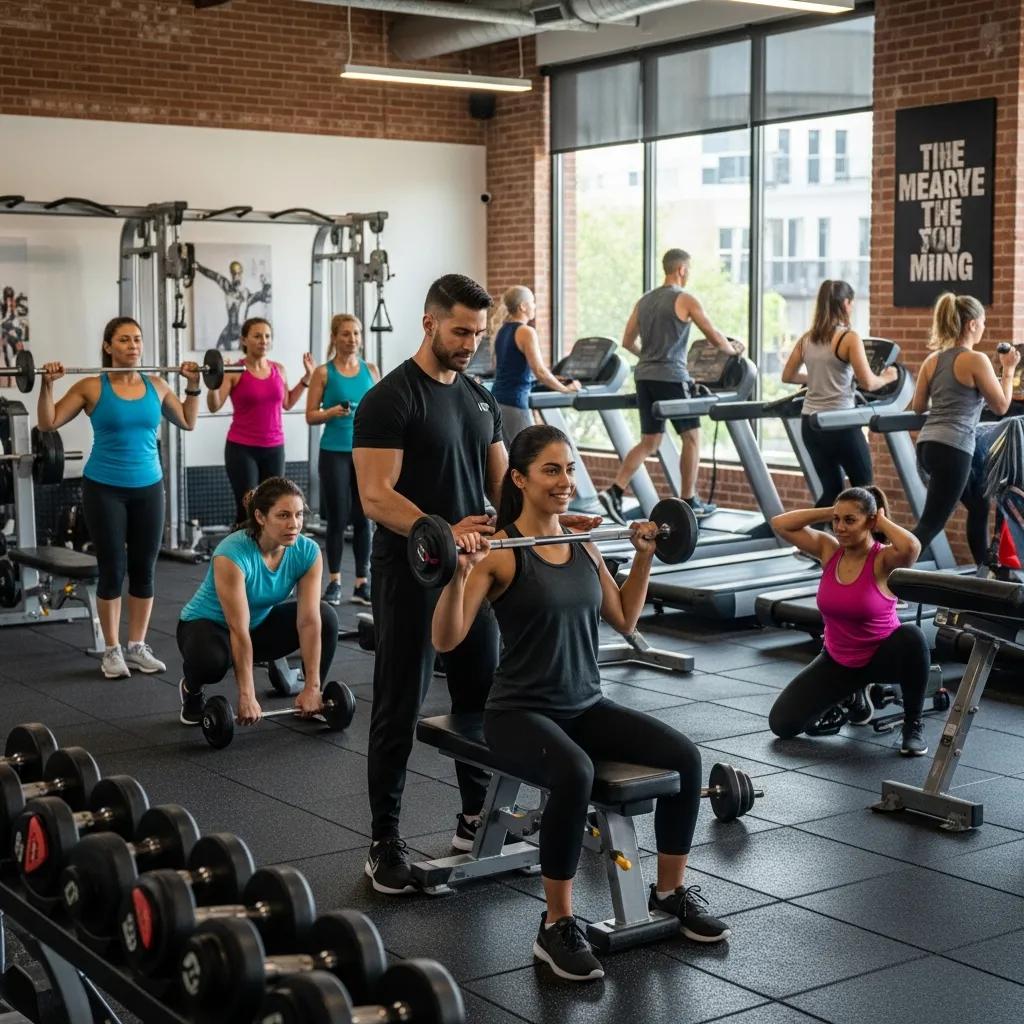
Starting your fitness journey in Chicago is more than just joining a gym—it's about finding the right support, expertise, and environment to help you progress. At Fit Results in South Loop, our certified personal trainers guide you at every level, from beginners to advanced athletes. We provide personalized training plans tailored to your fitness level, goals, and lifestyle—not cookie cutter programs.
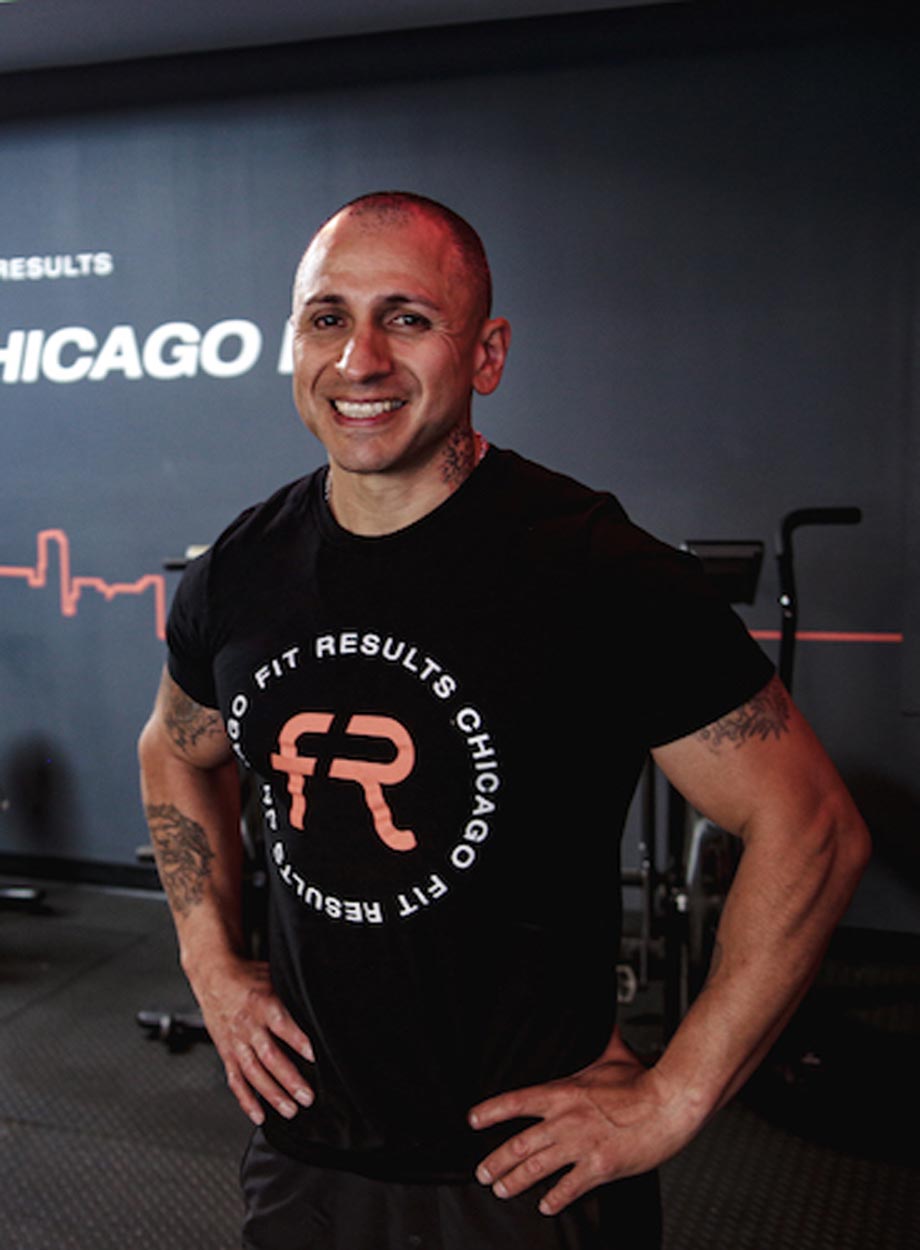
Our team, including Coach Lou, focuses on proper form and technique to ensure safe and effective training. From strength training to functional movement, our programs deliver lasting results and improved health. What sets Fit Results apart is our supportive community—members motivate and encourage each other, making workouts both effective and enjoyable. Whether your goal is to lose weight, build muscle, or improve daily well-being, our gym in Chicago's South Loop is the ideal place to start or continue your fitness journey. Join Fit Results and experience expert coaching and a community that supports your success.
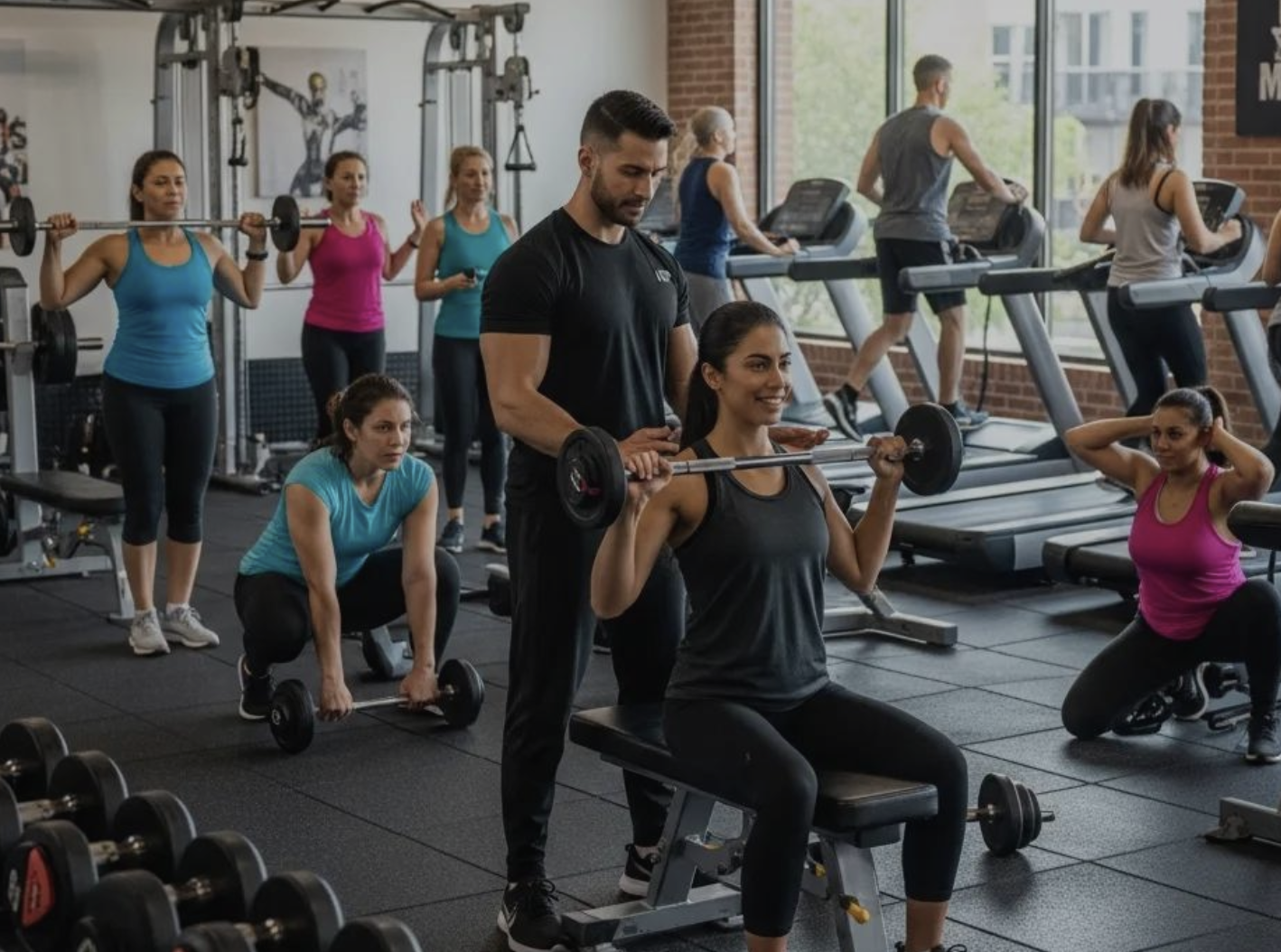
A yearly personal trainer membership in Chicago is a prepaid, structured commitment that pairs steady coaching with planned, periodized programs. At Fit Results, these programs are created by our expert trainers, ensuring each plan is thoughtfully tailored and authentic rather than generic. This kind of setup creates measurable progress and safer exercise habits, especially for people over 40. This guide walks through what an annual personal training plan looks like, why long-term coaching consistently produces better results, and how a year-long membership can be the smartest investment for durable strength, easier movement, and better metabolic health. Many Chicagoans run into inconsistent workouts, recurring injuries, and mixed nutrition advice; an annual approach fixes that by aligning training frequency, recovery, and nutrition across months instead of one-off sessions. Read on to learn the core benefits of a yearly plan, how one-on-one and semi-private yearly options are typically structured, special considerations for people 40+, the role nutrition coaching plays, and practical cost and onboarding tips for Chicago-based programs. Weave in trainer specializations, community support, and injury-prevention strategies with clear checklists and comparisons so you can pick the membership that fits your goals. Fit Results provides open gym time for members to work out independently.
Why Choose a Yearly Personal Trainer Membership in Chicago?
A yearly personal trainer membership sets up a long-term coaching relationship that standardizes progressive training, scheduled assessments, and accountability — all the building blocks for steady, measurable results. The core mechanism is consistent periodization: trainers map progressive overload and recovery across months so your gains compound instead of stalling. One major upside is safety for older adults — regular coaching reduces form breakdown and manages workload sensibly. Another is cost: prepaid annual packages spread fixed costs and usually lower the per-session price compared with paying session-by-session, which makes consistent coaching easier to maintain in Chicago. After accountability, what truly sets Fit Results apart is the dedication of our trainers — they are deeply committed to each client’s long-term progress and success, providing personalized attention and support throughout your fitness journey. Below we summarize the top benefits and how they translate into everyday improvements and long-term health.
Research and clinical practice both point toward the value of structured, periodized programs for maintaining fitness and lasting health gains.
Long-Term Periodized Exercise for Sustained Fitness* Benefits from cardiac rehabilitation (CR) programs are well documented, yet fewer than half of participants keep up an exercise routine six months after a hospital-based program ends. We still need better ways to help people sustain activity once formal programs stop. Exercise periodization — a planning method common in sport — is being tested to see if long-term, phased training improves cardiorespiratory endurance, muscular strength, skeletal muscle function, and body composition in cardiac patients. The effect of an expanded long-term periodization exercise training on physical fitness in patients with coronary artery artery disease: study protocol for a randomized …, R Pinto, 2019*
Yearly personal trainer memberships deliver practical benefits you feel week to week and month to month:
- Sustained Progress: Planned, long-term cycles let strength and fitness build reliably.
- Accountability: Regular sessions and coach check-ins help you form lasting habits.
- Cost Efficiency: Prepaid annual plans lower the cost per session and make consistency realistic.
- Fewer Injuries: Ongoing technique work and load management reduce setbacks.
Together, these benefits create a framework for lasting lifestyle change rather than short bursts of activity — which leads into how long-term programming actually improves outcomes over months and years.
How Long-Term Personal Training Improves Results
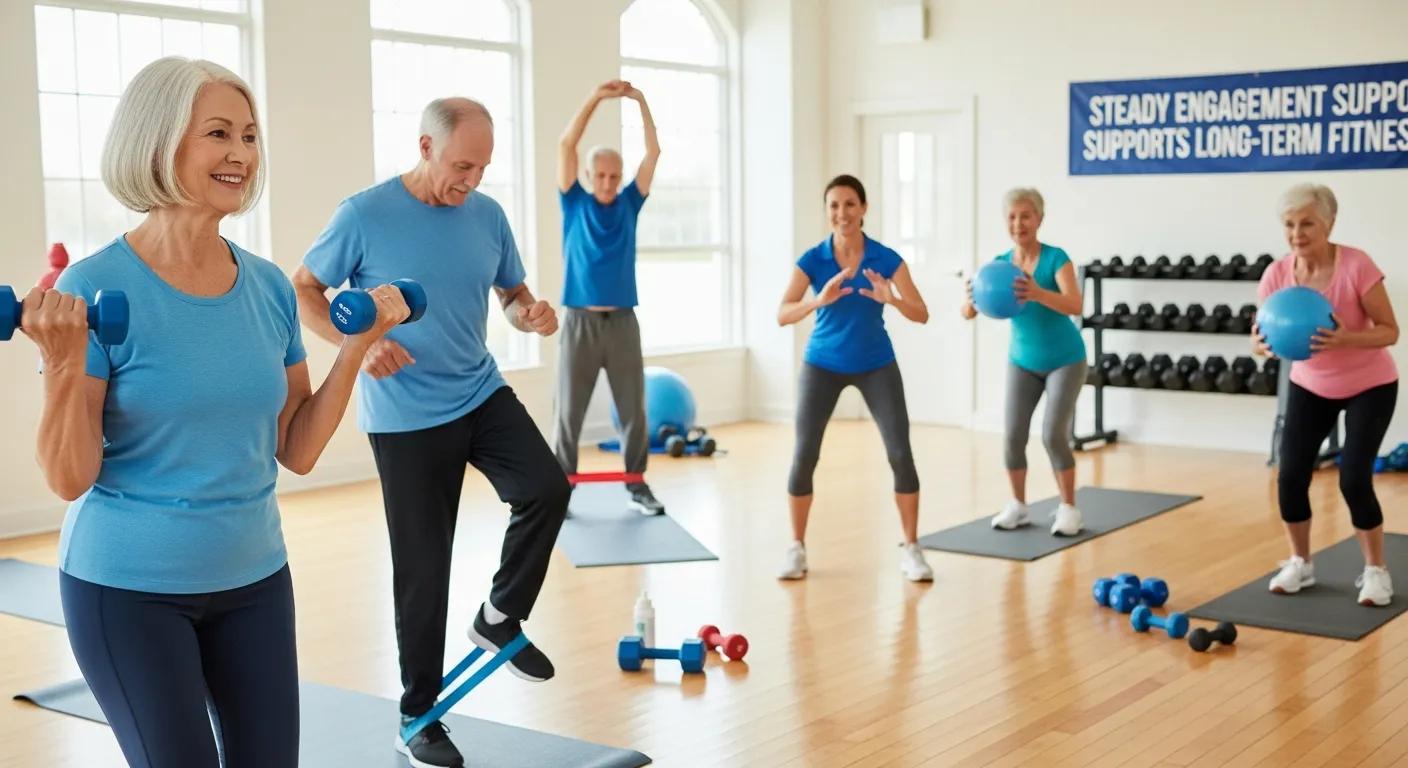
Long-term personal training works because it sequences phases and measures outcomes so progressive overload stays safe and effective. Trainers start with baseline assessments, then plan periodized cycles — hypertrophy, strength, and deload phases — that match your goals and recovery needs. Over a 12-month plan, many clients see steady gains (for example, a 10–30% rise in key compound lifts) and gradual fat-loss when nutrition is aligned and followed. Trainers at Fit Results are skilled at seizing the right moment during each session—whether it's a pivotal moment of motivation or a key point for technique correction—to maximize your progress and keep you engaged. For people 40+, plans are adapted with joint-friendly progressions, additional recovery, and an emphasis on functional strength that helps daily life. That’s why a single session or a few scattered workouts rarely produce the deep physiological changes that come from a structured annual plan.
That same structure makes accountability the next critical driver of long-term success.
Overcoming Plateaus During Your Yearly Membership
Hitting a plateau is something that happens to everyone that is trying to get fit, but it doesn't have to be the end of your journey or nothing like that. At Fit Results, the personal trainers that work there really understand how frustrating it can get when you feel stuck and they are committed to help you push through these tough times to get the results you want. Every person's journey is different and unique, and the trainers has the skills to know when you've hit that wall and they provide you with the right tools and motivation that keeps you going forward.
With all the support from Fit Results' team that really cares about you, you'll see that getting past plateaus becomes something you can handle—and it even gets motivating—as part of your fitness experience. The trainers is there to make sure that your fitness journey stays exciting and challenging and rewarding, so you can keep seeing progress and really enjoy all the benefits from your hard work that you put in.
Strategies Trainers Use to Break Through Stagnation
Our certified personal trainers at Fit Results is passionate about using proven strategies that help members break through plateaus and get their progress going again. We regularly adjust your workout routines, bring in new exercises, and incorporate different types of training—like strength training, boot camp, and group classes—so your body stays challenged and your mind engaged. Nutrition coaching is another key thing we focus on, making sure that your diet supports your training and recovery the right way.
We believe that staying motivated and being accountable is what makes long-term success happen. That's why our trainers don't just design effective workouts but also give you ongoing encouragement and support that you need. Whether you're in a high-energy group class or working one-on-one with a trainer, you'll always have the guidance to stay on track and reach your goals that we set together.
How Regular Assessments Keep You Progressing
At Fit Results, regular assessments is built into your training program to make sure you're always moving ahead in your fitness journey. These assessments allow our trainers to track how you're doing, find areas that needs improvement, and make adjustments to your workout plan when you need it. Whether your goal is lose weight, build muscle, or enhance your overall fitness, these check-ins help keeping you focused and motivated to push forward.
Our supportive community and experienced trainers is dedicated to help you push past obstacles and celebrate every milestone that you achieve. With each assessment, you'll see how far you've came and gain the confidence to push even further ahead. At Fit Results, your progress is our priority and we're here to help you achieve lasting results every step that you take in your journey.
Maintenance and Progress: Sustaining Your Results Year After Year
Getting your fitness goals is just the start—keeping those results and building more is where the real change happens in your life. At Fit Results, we are committed to help you through your whole fitness journey, helping you keep your progress and enjoy results that last year after year. Our way goes beyond quick fixes, focusing instead on building the habits and routines that leads to fitness for life.
With a team of trainers that care and a strong community that has your back, you'll have everything you need and the motivation to keep going forward, no matter what life throws at you. We believes that fitness should be a journey that never stops, and we are here to help you make it a part of your everyday life that brings you joy. We don't leave anyone behind because of excuses. We set goals and we achieve them together like a partnership.
Building Habits for Lifelong Fitness
Our personal training programs at Fit Results is designed to help you develop the habits that will support your fitness journey for years to come. From creating a personalized workout plan to providing expert nutrition coaching, our trainers work with you to ensure you're always progressing toward your goals. We offer ongoing support and accountability, so you can overcome challenges, stay motivated, and make fitness a permanent part of your lifestyle. Fit Results is passionate about helping others move ahead in life and we are committed to help you when you need encouragement and fitness expertise.
If you're training in the South Loop, our team is ready to help you schedule your next session and keep your momentum going. If you're ready to take the next step, contact us at our phone number or visit our website to learn more about our personal training programs. At Fit Results, we does not leave anyone behind because of excuses. We set goals and we achieve them together like a partnership. Fit Results is dedicated to helping you achieve lasting results and enjoy a healthier, more active life—one workout at a time.
Why Accountability Matters for Yearly Commitments
Accountability is the behavioral engine that turns plans into progress — it keeps you showing up, working the plan, and staying consistent over months. Trainers use recurring sessions, progress check-ins, objective tracking, and community nudges to keep engagement high and catch plateaus early. Both research and practitioner experience show clients with a steady coach have better retention and adherence than those training alone. For busy Chicagoans juggling work and family, built-in accountability like scheduled sessions and group classes makes it far easier to prioritize fitness over the long haul. Members who have joined Fit Results benefit from a welcoming environment that supports accountability and progress from day one. Understanding how accountability works helps when choosing between membership formats and value propositions.
Which Yearly Membership Options Does Fit Results Offer in Chicago?
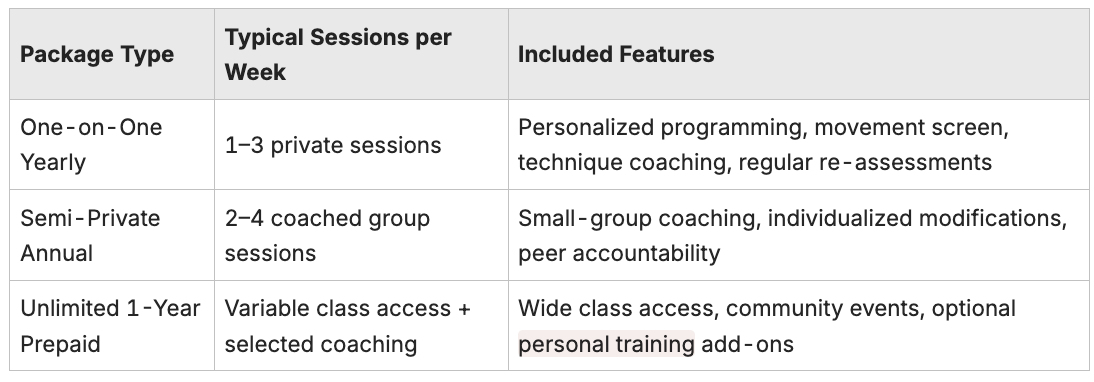
Yearly memberships usually come in three flavors: one-on-one coaching, semi-private small-group training, and unlimited annual passes that bundle training and classes. Each balances personalization, frequency, and cost differently. One-on-one annual coaching focuses on assessments, technique correction, and individualized programming for clients who need close supervision or rehab. Semi-private yearly options blend personalization with social motivation — small groups where coaches still give individual cues and progressions. Fit Results runs a Chicago location (South Loop) and also features Fit Results Skippack, emphasizing a strong local presence and community focus. Both locations offer these yearly formats along with nutrition coaching, movement assessments, and community classes; they also list an “unlimited 1 year prepaid membership” and a “Second Chance Program” to relaunch training. Below is a compact comparison of common annual packages and what they include to help you match format to goals and schedule.
Fit Results offers a variety of classes including Spinning which we call "Triple20", Group Strength, Resistance Training "Ground Works", Boot Camp "Fit Camp", and TRX Training is sprinkled throughout sessions.
Annual training packages typically bundle sessions, nutrition support, and periodic reassessments.
Package Type
Features of One-on-One Yearly Personal Training
One-on-one yearly training gives in-depth assessments, bespoke programming, and constant coach feedback that speeds safe progress. Trainers assist clients with exercises, answer questions, and offer motivation throughout each session to enhance the fitness experience. It begins with a thorough movement and health screen to find limits and set measurable goals, then progresses into a plan that evolves as strength and capacity grow. This hands-on approach is especially valuable for rehab clients and people over 40 who need careful load management. Sessions typically include a corrective warm-up, a main strength or conditioning block, and mobility/recovery work, with progress checks every 6–12 weeks. Technique coaching ensures trainers can correct form and adapt exercises for individual needs, providing safe and effective training. Adding nutrition coaching and regular check-ins reinforces gains and supports body-composition targets — and that high-touch model reduces the risk of form breakdown that leads to injury. For clients needing precise outcomes, one-on-one yearly plans are often the right choice.
How Semi-Private Annual Training Works
Semi-private annual packages run small-group sessions (usually 2–6 people) so you get many of the benefits of one-on-one coaching at a lower cost. Coaches provide individual regressions and progressions within the class, scaling exercises and loads to each person. You’re in good hands with Fit Results’ attentive and knowledgeable coaches, who ensure every member receives expert guidance and support. Typical weekly schedules might include two coached sessions plus optional community classes, creating a hybrid model for structure and social motivation. Semi-private yearly plans lower per-session cost while keeping accountability and technical oversight, making them a strong compromise for people who want guidance and peer support without the full price of private training.
The Fit Results Private Training app helps clients track activity, steps, and healthy habit compliance. Integration of nutrition coaching is standard in Fit Results' personal training packages to provide a holistic fitness approach. Personal training sessions can last for 45 - 60 minutes depending on the client's choice. Base Training time with additional time for warmup and cool-down. Fit Results guarantees 100% results with their tailored training programs. Fit Results emphasizes accountability through weekly check-ins and monthly progress reports.
Clients report significant improvements in strength, endurance, and energy after starting perstraining at Fit Results. Many clients express that personal training has helped them achieve weight loss and fitness goals they previously thought unattainable.
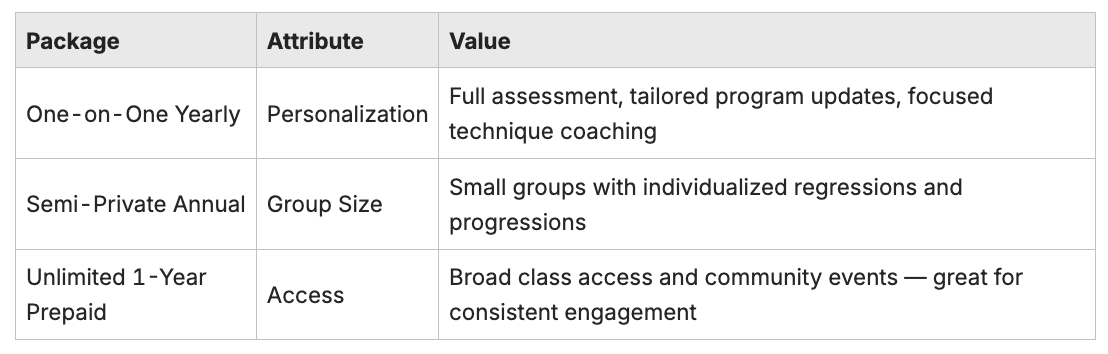
Below is a quick table showing Fit Results’ common yearly offerings and the value each delivers.
Broad class access and community events — great for consistent engagement
This comparison helps you weigh personalization against cost and community access, and it leads into how programs are adapted for older adults and injury prevention.
How Personal Training Adapts for People Over 40 in Chicago
Training for people over 40 centers on targeted screening, joint-friendly progressions, and programs that build functional strength while protecting recovery. The approach starts with focused assessment and conservative progression: trainers find mobility and strength gaps, then build capacity through controlled increases in load and volume while protecting joints. Trainers also ensure that the workout intensity is fine and appropriate for each individual's needs and comfort, so sessions feel manageable and aligned with personal goals. Typical priorities for this group include improving balance, preserving lean mass, lowering metabolic risk, and supporting bone health. Trainers layer strength work with mobility, cardio modulation, and recovery strategies to meet these goals. Regular reassessments and safety adaptations are essential because accumulated training stress and past issues can raise injury risk. These adjustments set the stage for specific injury-prevention tactics and program modifications described below.
Age-appropriate training matters — long-term studies show exercise can meaningfully affect cardiovascular health and recovery decades later.
Age & Cardiovascular Adaptation to Exercise Training* After training, V̇o2max indexed to fat-free mass improved enough that participants reached levels close to their 1966 baseline, recovering about 40% of the decline observed at the 30-year follow-up. A 30-year follow-up of the Dallas Bed Rest and Training Study: II. Effect of age on cardiovascular adaptation to exercise training, DK McGuire, 1966*
Injury-Prevention Strategies for Older Adults
Preventing injury for older adults focuses on early screening, corrective work, and paced load increases to limit reinjury and keep training consistent. Trainers typically start with a movement screen to look for limitations like restricted hip mobility or shoulder instability, then prescribe corrective exercises before increasing load. Other tactics include pacing weekly volume increases (often keeping rises to about 5–10%), rehearsing technique, and adding mobility and joint-strengthening within sessions to build resilience. Practical steps you can use right away include prioritizing bilateral strength work, using tempo control to lower impulse forces, and scheduling active recovery days to support tissue remodeling. Incorporating different types of weights—such as dumbbells, kettlebells, and barbells—into your routine helps build muscle, increase strength, and support joint health as part of a comprehensive injury-prevention strategy. These practices cut acute injury risk and help sustain long-term progress, which informs how programs are modified for safe strength gains after 40.
How Programs Are Adjusted for Safe Strength Training Over 40
Safe strength training over 40 changes volume, intensity, exercise choice, and recovery windows to favor longevity and steady progress. Trainers usually start with lower weekly volume while perfecting mechanics, then raise loads as movement competency and tissue tolerance improve. Compound lifts remain a priority because they build usable strength for everyday tasks. Programming often includes tempo prescriptions (slower eccentrics), longer warm-ups, built-in mobility sessions, and scheduled deloads every 4–8 weeks to manage cumulative fatigue. Recovery guidance — sleep habits and nutrition timing — supports adaptation, and coaches monitor perceived exertion and pain to scale sessions responsively. These strategies let you gain measurable strength without sacrificing joint health, reinforcing why training and nutrition must be closely aligned.
How Nutrition Coaching Fits into Yearly Personal Training

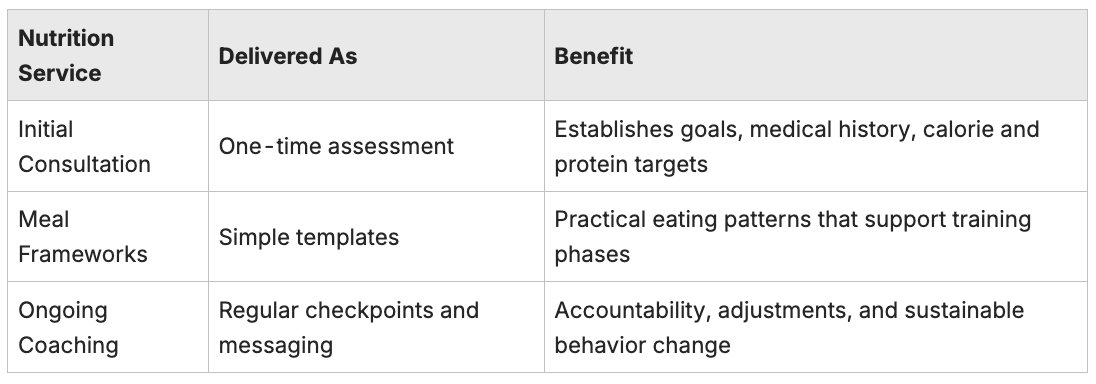
Nutrition coaching is the behavioral and metabolic partner to training — it speeds body-composition changes, improves recovery, and keeps energy steady for consistent workouts. The idea is alignment: nutrition is tuned to training phases — modest calorie deficits for fat loss, targeted protein and carbs during hypertrophy or strength phases, and recovery-focused timing around hard sessions. Common formats include an initial nutrition assessment, simple meal frameworks, habit-based coaching, and periodic checkpoints aligned with fitness assessments so coaches can tweak targets. For people over 40, nutrition often emphasizes enough protein, key micronutrients for bone and metabolic health, and sustainable habits instead of short-term restrictive diets. When nutrition and training are synced, workout quality improves and gains stick — which is why many annual plans include nutrition support or offer it as an add-on.
The table below shows common nutrition services and the direct benefits they bring to training.
How Nutrition Guidance Is Integrated with Training
Nutrition and training are tied together through an iterative loop: assess, build a plan, monitor, and adjust based on training phase and performance. Trainers and nutrition coaches begin with goal-setting and dietary history, create a straightforward meal framework (focus on protein distribution and timing), then track changes with body-composition and performance markers. Adjustments usually happen every 4–8 weeks based on results and training load — for instance, shifting calories and carbs when moving from strength to fat-loss phases to preserve intensity and muscle. This synced workflow — training plan → nutrition plan → reassessment — creates reliable, long-term progress and avoids letting dietary mistakes undermine months of effort.
Benefits of a Holistic Nutrition + Training Approach
Pairing nutrition coaching with a year-long training plan multiplies results: better recovery, more lean-mass retention, and improved metabolic health from matching stimulus with proper fuel. When nutrition supports the training phase, clients lift heavier, recover faster, and feel less soreness between sessions — these physiological wins speed progress. From a behavior perspective, simple meal frameworks are easier to follow than strict diets, which raises long-term adherence and reduces yo-yo patterns. Clinically, aligned approaches help with blood sugar control, inflammation management, and preserving bone and muscle mass — priorities for people over 40. In short, training raises capacity; nutrition supplies the building blocks for adaptation. Fit Results trainers are attentive and professional, making workouts fun while focusing on individual needs.
How Fit Results’ Trainers Support Your Yearly Fitness Journey
Fit Results’ trainers accelerate long-term results by combining focused specialties — injury rehab, corrective exercise, senior fitness, and nutrition coaching — with regular reassessments and program adjustments. The key is applied specialization: coaches who understand rehabilitation and corrective work find movement faults and design safe progressions that restore function while building strength. At Fit Results, that expertise sits inside a community-driven model that blends personalized training with group touchpoints and nutrition support — especially useful for clients 40+. This approach delivers unmatched support and service, ensuring every member receives a level of attention and care not found at other gyms. Experienced coaches shorten recovery timelines and lower reinjury risk by sequencing rehab-to-strength progressions and tailoring load based on ongoing assessments. Knowing trainer specializations helps you pick the right coach and the right yearly package for your goals.
Common Trainer Specializations at Fit Results
Fit Results trainers typically specialize in corrective exercise, injury rehabilitation, strength and conditioning for longevity, and habit-focused nutrition coaching. Those skills let coaches create targeted programs for people recovering from injury, for clients who want to keep muscle after 40, and for anyone improving metabolic health through combined training and nutrition. Corrective exercise work restores movement patterns; rehab-focused trainers bridge clinical recovery with strength rebuilding. Nutrition coaches focus on habits, protein prioritization, and simple meal frameworks that support training phases rather than short-term restrictive dieting. Knowing these specialties helps you match your needs — rehab, strength, or lifestyle change — to the right coach and yearly plan. The combination of expertise and personalized care is the thing special that sets Fit Results apart from other gyms. Fit Results is officially a proud Elite Partner of the Athletics & Fitness Association of America (AFAA) and the National Academy of Sports Medicine (NASM). The trainers at Fit Results have the knowledge and experience to train individuals of all fitness levels, from seniors to athletes.
How Trainer Expertise Helps Rehabilitation and Longevity
Trainer expertise speeds rehab and supports long-term independence by using targeted corrective strategies, loading progressions that respect tissue tolerance, and ongoing mobility and balance work. A typical path moves from pain reduction and range-of-motion restoration to slow, controlled loading of the affected tissues, then back into compound strength work while monitoring symptoms and performance. Coaches who know tissue-healing timelines and neuromuscular retraining can accelerate safe return-to-training and limit reinjury. Longevity programming also includes mobility, balance, and functional strength that preserve daily independence and lower fall risk as you age. Those methods show why experienced coaches matter when planning results across a full year.
Why Fit Results’ Community Helps Long-Term Members
A tight community boosts long-term adherence through social accountability, shared milestones, and regular events that make training sustainable and enjoyable. Community elements include group classes that build routine, buddy systems that improve attendance, and member events that celebrate progress outside of private sessions. Fit Results intentionally pairs community with personal training so members get social motivation plus individualized coaching. That mix raises retention and helps members keep momentum across a year, which is especially helpful when life pressures make training hard to prioritize. The community element amplifies structured programming and offers concrete daily support.
- Group Classes Build Routine: Regular classes make training feel normal and predictable.
- Peer Encouragement Boosts Consistency: Training partners make it easier to show up.
- Shared Milestones Improve Retention: Celebrating progress keeps people committed.
How Community Support Improves Motivation and Accountability
Community support increases motivation by creating dependable social structures — scheduled classes, small-group training, and shared milestones — that make showing up easier. Small-group dynamics produce camaraderie and peer-driven encouragement, which research and experience link to higher adherence and longer retention. Coaches and community leaders also run events and short challenges to re-engage members during plateaus, offering behavioral cues that sustain attendance. For people over 40, community settings provide safe places to test new movements and celebrate wins like better mobility or balance. These social mechanisms complement individualized coaching and often turn intermittent gym visits into a year-long habit.
Success Stories That Show the Community Difference
Anonymous member stories highlight how community supports sustained change: a 45-year-old regained functional strength after a year of one-on-one coaching plus weekly group classes and got back to favorite hobbies; another used semi-private annual training to lose weight steadily and gain strength, crediting weekly accountability and community events for sticking with the plan; a third re-entered training via the “Second Chance Program,” used community touchpoints plus targeted rehab to fix a nagging shoulder, then progressed to heavier, pain-free lifts. These examples show how community plus expert coaching turns an annual commitment into a lasting lifestyle change.
What Does a Yearly Personal Trainer Membership Cost in Chicago?
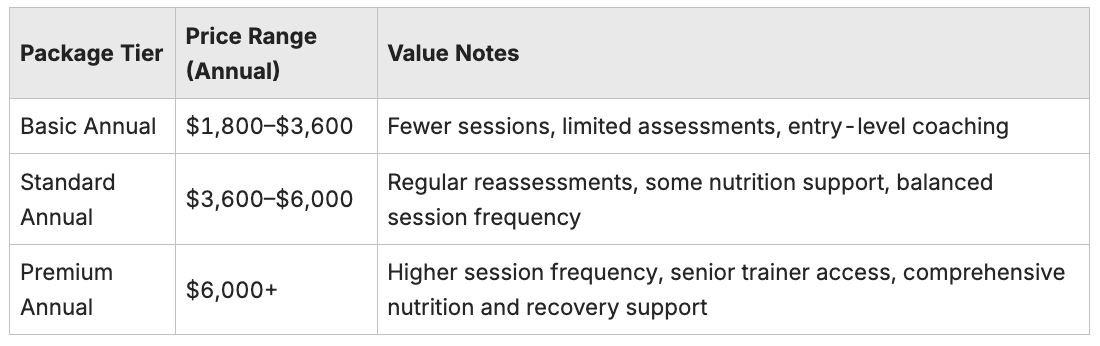
Annual membership costs vary with session frequency, trainer experience, and included services like nutrition coaching and assessments. Prepaid annual plans usually give better cost-per-session value than month-to-month or drop-in pricing. Chicago price ranges reflect trade-offs between personalization and access: premium packages with frequent one-on-one coaching cost more but deliver faster, highly individualized results, while semi-private or unlimited prepaid plans lower per-session cost and increase class access. When you compare value, look at cost-per-session and included features — movement screens, nutrition coaching, and reassessments — that add up over a year to yield better outcomes. The table below offers illustrative pricing tiers and value notes to help estimate what an annual commitment might cost and what to expect back in results.
Understanding Pricing Tiers for Annual Packages
Think of pricing tiers as a trade-off between session frequency and coach level. Basic tiers give fewer sessions and a more general plan; premium tiers include more one-on-one time and deeper integration of nutrition and reassessments. Cost drivers include trainer specialization, session length, session frequency, and extras like unlimited class access or the “Second Chance Program.” To compare value honestly, divide the annual price by included sessions to get a clear cost-per-session figure; prepaid annual plans almost always lower that number and encourage the consistency that produces results. Use this framework to choose the balance of affordability and outcome-focus that fits your year-long goals.
How Fit Results’ Pricing Stacks Up in Chicago
Fit Results positions annual plans around inclusions — movement screens, nutrition coaching, and community classes — that raise long-term ROI beyond headline hourly rates. Some competitors may advertise lower hourly fees but omit periodic assessments or nutrition support, which are important for steady progress and injury prevention. Fit Results’ packages blend community access and specialized coaching to reduce indirect costs like physical therapy or interrupted progress from poor programming. When evaluating options, weigh total package value (training, nutrition, community, and assessments) rather than comparing hourly prices alone; a slightly higher upfront investment often delivers better long-term health and performance.
How to Get Started with a Yearly Personal Trainer Membership at Fit Results
Starting a yearly membership follows a clear onboarding path so goals, movement limitations, and scheduling needs are captured before you choose a plan. The usual process begins with a free consultation to discuss goals and health history, followed by a movement assessment and a tailored plan recommendation that fits your schedule and priorities. From there you pick the membership that matches your session frequency and value needs — one-on-one for focused rehab or high-performance goals, or semi-private/unlimited prepaid options for social motivation and cost efficiency. Fit Results uses a consult-first approach to make sure annual commitments match realistic timelines and include measurable checkpoints throughout the year. Below is a simple step-by-step onboarding sequence designed for clarity.
- Free Consultation: Talk goals, health history, and scheduling preferences.
- Movement Assessment: Complete a screening to establish mobility and strength baselines.
- Plan Recommendation: Get a tailored annual plan aligned with your goals and availability.
- Select Membership & Schedule: Choose one-on-one, semi-private, or unlimited prepaid membership and begin training.
What the Free Consultation Includes
The free consultation covers goal-setting, a brief health and activity history, and an overview of membership options that match your objectives. You’ll discuss specific outcomes (weight loss, strength, rehab, or longevity), note any medical considerations, and get guidance on which tier and session frequency fit your timeline. Fit Results usually follows the consult with a movement screen so the plan recommendation is informed and specific rather than generic. Bring questions about session frequency, trainer specializations, and how nutrition coaching fits in so the consult gives you actionable next steps. This transparent process removes uncertainty and prepares you to commit to a year of structured progress.
How to Choose the Best Membership for Your Goals
Match session frequency and coaching intensity to your primary objective: maintenance, accelerated transformation, rehab, or social accountability. Use this quick checklist: if your top goal is faster strength gains or rehab, prioritize more frequent one-on-one sessions; if you want social motivation and lower cost, consider semi-private or unlimited prepaid plans with periodic private check-ins. Factor in schedule flexibility — if work travel or irregular hours are common, an unlimited prepaid membership with broad class access may support better adherence. Confirm your choice with the free consultation and movement assessment so the selected package aligns with your readiness and long-term goals.
If you’re ready to move forward, Fit Results offers a consult-driven onboarding process to make starting a yearly program straightforward; for scheduling, use the contact options provided during the consultation and ask about the unlimited 1 year prepaid membership or the Second Chance Program if you’re relaunching your fitness journey.
Frequently Asked Questions
What should I consider when choosing a personal trainer in Chicago?
Look at credentials, experience, and relevant specializations. Seek trainers with reputable certifications and experience with clients who share your goals — for example, injury rehab or senior fitness. Also check their coaching style and communication to make sure it fits your preferences. Ask how they integrate nutrition with training, since food and training together determine most results.
How often should I meet with my personal trainer for optimal results?
It depends on goals, experience, and budget. Generally, 1–3 sessions per week strikes the right balance for most people. Beginners or those rehabbing injuries often benefit from more frequent coaching, while experienced clients may do well with a mix of private sessions and group classes.
Can I switch trainers if I feel my current one isn't a good fit?
Yes. Communicate your concerns with management so they can help you transition. Finding a trainer whose expertise, style, and personality match your needs is important for motivation and progress — don’t hesitate to find the right fit.
What should I expect during my first personal training session?
Your first session typically includes an intake conversation about goals and health history, a movement screen to identify strengths and limitations, and introductory exercises with a focus on safe technique. The trainer will explain how nutrition and recovery fit into your plan.
How can I track my progress throughout the year?
Use regular assessments and goal-checks with your trainer. Common metrics include body composition, strength benchmarks, and endurance tests. A workout log or fitness app helps you track sessions and nutrition, and scheduled check-ins let the coach adjust programming as you improve.
Are there any specific nutrition guidelines I should follow while training?
Follow a balanced plan focused on whole foods, adequate protein, healthy fats, and plenty of vegetables. Hydration matters. Depending on goals, adjust calories and macronutrients — more protein for muscle gain, controlled carbs for fat loss. A nutrition coach can give personalized guidance that supports your training phases.
What are the benefits of group training compared to one-on-one sessions?
Group training is more cost-effective and offers social motivation that improves adherence. Groups keep workouts varied and engaging. One-on-one sessions, however, provide focused attention and customized programming — ideal for specific goals or rehabilitation. Choose based on how much personalization you need and the role community plays in your motivation.
Conclusion
Committing to a yearly personal trainer membership in Chicago gives you a clear path to long-term fitness: structured programming, ongoing accountability, injury-prevention strategies, and aligned nutrition support. With the right membership — whether one-on-one, semi-private, or unlimited prepaid — you can match your training to your lifestyle and goals and make progress that lasts. Ready to start? Explore our membership options and set up a consult to map out your year of consistent, sustainable results.
Personal Training at Fit Results: Best Yearly Trainer Memberships in Chicago — A Practical Guide to Lasting Fitness
Introduction to Your Fitness Journey in Chicago
Starting your fitness journey in Chicago is more than just joining a gym—it's about finding the right support, expertise, and environment to help you progress. At Fit Results in South Loop, our certified personal trainers guide you at every level, from beginners to advanced athletes. We provide personalized training plans tailored to your fitness level, goals, and lifestyle—not cookie cutter programs.
Our team, including Coach Lou, focuses on proper form and technique to ensure safe and effective training. From strength training to functional movement, our programs deliver lasting results and improved health. What sets Fit Results apart is our supportive community—members motivate and encourage each other, making workouts both effective and enjoyable. Whether your goal is to lose weight, build muscle, or improve daily well-being, our gym in Chicago's South Loop is the ideal place to start or continue your fitness journey. Join Fit Results and experience expert coaching and a community that supports your success.
A yearly personal trainer membership in Chicago is a prepaid, structured commitment that pairs steady coaching with planned, periodized programs. At Fit Results, these programs are created by our expert trainers, ensuring each plan is thoughtfully tailored and authentic rather than generic. This kind of setup creates measurable progress and safer exercise habits, especially for people over 40. This guide walks through what an annual personal training plan looks like, why long-term coaching consistently produces better results, and how a year-long membership can be the smartest investment for durable strength, easier movement, and better metabolic health. Many Chicagoans run into inconsistent workouts, recurring injuries, and mixed nutrition advice; an annual approach fixes that by aligning training frequency, recovery, and nutrition across months instead of one-off sessions. Read on to learn the core benefits of a yearly plan, how one-on-one and semi-private yearly options are typically structured, special considerations for people 40+, the role nutrition coaching plays, and practical cost and onboarding tips for Chicago-based programs. Weave in trainer specializations, community support, and injury-prevention strategies with clear checklists and comparisons so you can pick the membership that fits your goals. Fit Results provides open gym time for members to work out independently.
Why Choose a Yearly Personal Trainer Membership in Chicago?
A yearly personal trainer membership sets up a long-term coaching relationship that standardizes progressive training, scheduled assessments, and accountability — all the building blocks for steady, measurable results. The core mechanism is consistent periodization: trainers map progressive overload and recovery across months so your gains compound instead of stalling. One major upside is safety for older adults — regular coaching reduces form breakdown and manages workload sensibly. Another is cost: prepaid annual packages spread fixed costs and usually lower the per-session price compared with paying session-by-session, which makes consistent coaching easier to maintain in Chicago. After accountability, what truly sets Fit Results apart is the dedication of our trainers — they are deeply committed to each client’s long-term progress and success, providing personalized attention and support throughout your fitness journey. Below we summarize the top benefits and how they translate into everyday improvements and long-term health.
Research and clinical practice both point toward the value of structured, periodized programs for maintaining fitness and lasting health gains.
Long-Term Periodized Exercise for Sustained Fitness* Benefits from cardiac rehabilitation (CR) programs are well documented, yet fewer than half of participants keep up an exercise routine six months after a hospital-based program ends. We still need better ways to help people sustain activity once formal programs stop. Exercise periodization — a planning method common in sport — is being tested to see if long-term, phased training improves cardiorespiratory endurance, muscular strength, skeletal muscle function, and body composition in cardiac patients. The effect of an expanded long-term periodization exercise training on physical fitness in patients with coronary artery artery disease: study protocol for a randomized …, R Pinto, 2019*
Yearly personal trainer memberships deliver practical benefits you feel week to week and month to month:
- Sustained Progress: Planned, long-term cycles let strength and fitness build reliably.
- Accountability: Regular sessions and coach check-ins help you form lasting habits.
- Cost Efficiency: Prepaid annual plans lower the cost per session and make consistency realistic.
- Fewer Injuries: Ongoing technique work and load management reduce setbacks.
Together, these benefits create a framework for lasting lifestyle change rather than short bursts of activity — which leads into how long-term programming actually improves outcomes over months and years.
How Long-Term Personal Training Improves Results
Long-term personal training works because it sequences phases and measures outcomes so progressive overload stays safe and effective. Trainers start with baseline assessments, then plan periodized cycles — hypertrophy, strength, and deload phases — that match your goals and recovery needs. Over a 12-month plan, many clients see steady gains (for example, a 10–30% rise in key compound lifts) and gradual fat-loss when nutrition is aligned and followed. Trainers at Fit Results are skilled at seizing the right moment during each session—whether it's a pivotal moment of motivation or a key point for technique correction—to maximize your progress and keep you engaged. For people 40+, plans are adapted with joint-friendly progressions, additional recovery, and an emphasis on functional strength that helps daily life. That’s why a single session or a few scattered workouts rarely produce the deep physiological changes that come from a structured annual plan.
That same structure makes accountability the next critical driver of long-term success.
Overcoming Plateaus During Your Yearly Membership
Hitting a plateau is something that happens to everyone that is trying to get fit, but it doesn't have to be the end of your journey or nothing like that. At Fit Results, the personal trainers that work there really understand how frustrating it can get when you feel stuck and they are committed to help you push through these tough times to get the results you want. Every person's journey is different and unique, and the trainers has the skills to know when you've hit that wall and they provide you with the right tools and motivation that keeps you going forward.
With all the support from Fit Results' team that really cares about you, you'll see that getting past plateaus becomes something you can handle—and it even gets motivating—as part of your fitness experience. The trainers is there to make sure that your fitness journey stays exciting and challenging and rewarding, so you can keep seeing progress and really enjoy all the benefits from your hard work that you put in.
Strategies Trainers Use to Break Through Stagnation
Our certified personal trainers at Fit Results is passionate about using proven strategies that help members break through plateaus and get their progress going again. We regularly adjust your workout routines, bring in new exercises, and incorporate different types of training—like strength training, boot camp, and group classes—so your body stays challenged and your mind engaged. Nutrition coaching is another key thing we focus on, making sure that your diet supports your training and recovery the right way.
We believe that staying motivated and being accountable is what makes long-term success happen. That's why our trainers don't just design effective workouts but also give you ongoing encouragement and support that you need. Whether you're in a high-energy group class or working one-on-one with a trainer, you'll always have the guidance to stay on track and reach your goals that we set together.
How Regular Assessments Keep You Progressing
At Fit Results, regular assessments is built into your training program to make sure you're always moving ahead in your fitness journey. These assessments allow our trainers to track how you're doing, find areas that needs improvement, and make adjustments to your workout plan when you need it. Whether your goal is lose weight, build muscle, or enhance your overall fitness, these check-ins help keeping you focused and motivated to push forward.
Our supportive community and experienced trainers is dedicated to help you push past obstacles and celebrate every milestone that you achieve. With each assessment, you'll see how far you've came and gain the confidence to push even further ahead. At Fit Results, your progress is our priority and we're here to help you achieve lasting results every step that you take in your journey.
Maintenance and Progress: Sustaining Your Results Year After Year
Getting your fitness goals is just the start—keeping those results and building more is where the real change happens in your life. At Fit Results, we are committed to help you through your whole fitness journey, helping you keep your progress and enjoy results that last year after year. Our way goes beyond quick fixes, focusing instead on building the habits and routines that leads to fitness for life.
With a team of trainers that care and a strong community that has your back, you'll have everything you need and the motivation to keep going forward, no matter what life throws at you. We believes that fitness should be a journey that never stops, and we are here to help you make it a part of your everyday life that brings you joy. We don't leave anyone behind because of excuses. We set goals and we achieve them together like a partnership.
Building Habits for Lifelong Fitness
Our personal training programs at Fit Results is designed to help you develop the habits that will support your fitness journey for years to come. From creating a personalized workout plan to providing expert nutrition coaching, our trainers work with you to ensure you're always progressing toward your goals. We offer ongoing support and accountability, so you can overcome challenges, stay motivated, and make fitness a permanent part of your lifestyle. Fit Results is passionate about helping others move ahead in life and we are committed to help you when you need encouragement and fitness expertise.
If you're training in the South Loop, our team is ready to help you schedule your next session and keep your momentum going. If you're ready to take the next step, contact us at our phone number or visit our website to learn more about our personal training programs. At Fit Results, we does not leave anyone behind because of excuses. We set goals and we achieve them together like a partnership. Fit Results is dedicated to helping you achieve lasting results and enjoy a healthier, more active life—one workout at a time.
Why Accountability Matters for Yearly Commitments
Accountability is the behavioral engine that turns plans into progress — it keeps you showing up, working the plan, and staying consistent over months. Trainers use recurring sessions, progress check-ins, objective tracking, and community nudges to keep engagement high and catch plateaus early. Both research and practitioner experience show clients with a steady coach have better retention and adherence than those training alone. For busy Chicagoans juggling work and family, built-in accountability like scheduled sessions and group classes makes it far easier to prioritize fitness over the long haul. Members who have joined Fit Results benefit from a welcoming environment that supports accountability and progress from day one. Understanding how accountability works helps when choosing between membership formats and value propositions.
Which Yearly Membership Options Does Fit Results Offer in Chicago?
Yearly memberships usually come in three flavors: one-on-one coaching, semi-private small-group training, and unlimited annual passes that bundle training and classes. Each balances personalization, frequency, and cost differently. One-on-one annual coaching focuses on assessments, technique correction, and individualized programming for clients who need close supervision or rehab. Semi-private yearly options blend personalization with social motivation — small groups where coaches still give individual cues and progressions. Fit Results runs a Chicago location (South Loop) and also features Fit Results Skippack, emphasizing a strong local presence and community focus. Both locations offer these yearly formats along with nutrition coaching, movement assessments, and community classes; they also list an “unlimited 1 year prepaid membership” and a “Second Chance Program” to relaunch training. Below is a compact comparison of common annual packages and what they include to help you match format to goals and schedule.
Fit Results offers a variety of classes including Spinning which we call "Triple20", Group Strength, Resistance Training "Ground Works", Boot Camp "Fit Camp", and TRX Training is sprinkled throughout sessions.
Annual training packages typically bundle sessions, nutrition support, and periodic reassessments.
Package Type
Features of One-on-One Yearly Personal Training
One-on-one yearly training gives in-depth assessments, bespoke programming, and constant coach feedback that speeds safe progress. Trainers assist clients with exercises, answer questions, and offer motivation throughout each session to enhance the fitness experience. It begins with a thorough movement and health screen to find limits and set measurable goals, then progresses into a plan that evolves as strength and capacity grow. This hands-on approach is especially valuable for rehab clients and people over 40 who need careful load management. Sessions typically include a corrective warm-up, a main strength or conditioning block, and mobility/recovery work, with progress checks every 6–12 weeks. Technique coaching ensures trainers can correct form and adapt exercises for individual needs, providing safe and effective training. Adding nutrition coaching and regular check-ins reinforces gains and supports body-composition targets — and that high-touch model reduces the risk of form breakdown that leads to injury. For clients needing precise outcomes, one-on-one yearly plans are often the right choice.
How Semi-Private Annual Training Works
Semi-private annual packages run small-group sessions (usually 2–6 people) so you get many of the benefits of one-on-one coaching at a lower cost. Coaches provide individual regressions and progressions within the class, scaling exercises and loads to each person. You’re in good hands with Fit Results’ attentive and knowledgeable coaches, who ensure every member receives expert guidance and support. Typical weekly schedules might include two coached sessions plus optional community classes, creating a hybrid model for structure and social motivation. Semi-private yearly plans lower per-session cost while keeping accountability and technical oversight, making them a strong compromise for people who want guidance and peer support without the full price of private training.
The Fit Results Private Training app helps clients track activity, steps, and healthy habit compliance. Integration of nutrition coaching is standard in Fit Results' personal training packages to provide a holistic fitness approach. Personal training sessions can last for 45 - 60 minutes depending on the client's choice. Base Training time with additional time for warmup and cool-down. Fit Results guarantees 100% results with their tailored training programs. Fit Results emphasizes accountability through weekly check-ins and monthly progress reports.
Clients report significant improvements in strength, endurance, and energy after starting perstraining at Fit Results. Many clients express that personal training has helped them achieve weight loss and fitness goals they previously thought unattainable.
Below is a quick table showing Fit Results’ common yearly offerings and the value each delivers.
Broad class access and community events — great for consistent engagement
This comparison helps you weigh personalization against cost and community access, and it leads into how programs are adapted for older adults and injury prevention.
How Personal Training Adapts for People Over 40 in Chicago
Training for people over 40 centers on targeted screening, joint-friendly progressions, and programs that build functional strength while protecting recovery. The approach starts with focused assessment and conservative progression: trainers find mobility and strength gaps, then build capacity through controlled increases in load and volume while protecting joints. Trainers also ensure that the workout intensity is fine and appropriate for each individual's needs and comfort, so sessions feel manageable and aligned with personal goals. Typical priorities for this group include improving balance, preserving lean mass, lowering metabolic risk, and supporting bone health. Trainers layer strength work with mobility, cardio modulation, and recovery strategies to meet these goals. Regular reassessments and safety adaptations are essential because accumulated training stress and past issues can raise injury risk. These adjustments set the stage for specific injury-prevention tactics and program modifications described below.
Age-appropriate training matters — long-term studies show exercise can meaningfully affect cardiovascular health and recovery decades later.
Age & Cardiovascular Adaptation to Exercise Training* After training, V̇o2max indexed to fat-free mass improved enough that participants reached levels close to their 1966 baseline, recovering about 40% of the decline observed at the 30-year follow-up. A 30-year follow-up of the Dallas Bed Rest and Training Study: II. Effect of age on cardiovascular adaptation to exercise training, DK McGuire, 1966*
Injury-Prevention Strategies for Older Adults
Preventing injury for older adults focuses on early screening, corrective work, and paced load increases to limit reinjury and keep training consistent. Trainers typically start with a movement screen to look for limitations like restricted hip mobility or shoulder instability, then prescribe corrective exercises before increasing load. Other tactics include pacing weekly volume increases (often keeping rises to about 5–10%), rehearsing technique, and adding mobility and joint-strengthening within sessions to build resilience. Practical steps you can use right away include prioritizing bilateral strength work, using tempo control to lower impulse forces, and scheduling active recovery days to support tissue remodeling. Incorporating different types of weights—such as dumbbells, kettlebells, and barbells—into your routine helps build muscle, increase strength, and support joint health as part of a comprehensive injury-prevention strategy. These practices cut acute injury risk and help sustain long-term progress, which informs how programs are modified for safe strength gains after 40.
How Programs Are Adjusted for Safe Strength Training Over 40
Safe strength training over 40 changes volume, intensity, exercise choice, and recovery windows to favor longevity and steady progress. Trainers usually start with lower weekly volume while perfecting mechanics, then raise loads as movement competency and tissue tolerance improve. Compound lifts remain a priority because they build usable strength for everyday tasks. Programming often includes tempo prescriptions (slower eccentrics), longer warm-ups, built-in mobility sessions, and scheduled deloads every 4–8 weeks to manage cumulative fatigue. Recovery guidance — sleep habits and nutrition timing — supports adaptation, and coaches monitor perceived exertion and pain to scale sessions responsively. These strategies let you gain measurable strength without sacrificing joint health, reinforcing why training and nutrition must be closely aligned.
How Nutrition Coaching Fits into Yearly Personal Training
Nutrition coaching is the behavioral and metabolic partner to training — it speeds body-composition changes, improves recovery, and keeps energy steady for consistent workouts. The idea is alignment: nutrition is tuned to training phases — modest calorie deficits for fat loss, targeted protein and carbs during hypertrophy or strength phases, and recovery-focused timing around hard sessions. Common formats include an initial nutrition assessment, simple meal frameworks, habit-based coaching, and periodic checkpoints aligned with fitness assessments so coaches can tweak targets. For people over 40, nutrition often emphasizes enough protein, key micronutrients for bone and metabolic health, and sustainable habits instead of short-term restrictive diets. When nutrition and training are synced, workout quality improves and gains stick — which is why many annual plans include nutrition support or offer it as an add-on.
The table below shows common nutrition services and the direct benefits they bring to training.
How Nutrition Guidance Is Integrated with Training
Nutrition and training are tied together through an iterative loop: assess, build a plan, monitor, and adjust based on training phase and performance. Trainers and nutrition coaches begin with goal-setting and dietary history, create a straightforward meal framework (focus on protein distribution and timing), then track changes with body-composition and performance markers. Adjustments usually happen every 4–8 weeks based on results and training load — for instance, shifting calories and carbs when moving from strength to fat-loss phases to preserve intensity and muscle. This synced workflow — training plan → nutrition plan → reassessment — creates reliable, long-term progress and avoids letting dietary mistakes undermine months of effort.
Benefits of a Holistic Nutrition + Training Approach
Pairing nutrition coaching with a year-long training plan multiplies results: better recovery, more lean-mass retention, and improved metabolic health from matching stimulus with proper fuel. When nutrition supports the training phase, clients lift heavier, recover faster, and feel less soreness between sessions — these physiological wins speed progress. From a behavior perspective, simple meal frameworks are easier to follow than strict diets, which raises long-term adherence and reduces yo-yo patterns. Clinically, aligned approaches help with blood sugar control, inflammation management, and preserving bone and muscle mass — priorities for people over 40. In short, training raises capacity; nutrition supplies the building blocks for adaptation. Fit Results trainers are attentive and professional, making workouts fun while focusing on individual needs.
How Fit Results’ Trainers Support Your Yearly Fitness Journey
Fit Results’ trainers accelerate long-term results by combining focused specialties — injury rehab, corrective exercise, senior fitness, and nutrition coaching — with regular reassessments and program adjustments. The key is applied specialization: coaches who understand rehabilitation and corrective work find movement faults and design safe progressions that restore function while building strength. At Fit Results, that expertise sits inside a community-driven model that blends personalized training with group touchpoints and nutrition support — especially useful for clients 40+. This approach delivers unmatched support and service, ensuring every member receives a level of attention and care not found at other gyms. Experienced coaches shorten recovery timelines and lower reinjury risk by sequencing rehab-to-strength progressions and tailoring load based on ongoing assessments. Knowing trainer specializations helps you pick the right coach and the right yearly package for your goals.
Common Trainer Specializations at Fit Results
Fit Results trainers typically specialize in corrective exercise, injury rehabilitation, strength and conditioning for longevity, and habit-focused nutrition coaching. Those skills let coaches create targeted programs for people recovering from injury, for clients who want to keep muscle after 40, and for anyone improving metabolic health through combined training and nutrition. Corrective exercise work restores movement patterns; rehab-focused trainers bridge clinical recovery with strength rebuilding. Nutrition coaches focus on habits, protein prioritization, and simple meal frameworks that support training phases rather than short-term restrictive dieting. Knowing these specialties helps you match your needs — rehab, strength, or lifestyle change — to the right coach and yearly plan. The combination of expertise and personalized care is the thing special that sets Fit Results apart from other gyms. Fit Results is officially a proud Elite Partner of the Athletics & Fitness Association of America (AFAA) and the National Academy of Sports Medicine (NASM). The trainers at Fit Results have the knowledge and experience to train individuals of all fitness levels, from seniors to athletes.
How Trainer Expertise Helps Rehabilitation and Longevity
Trainer expertise speeds rehab and supports long-term independence by using targeted corrective strategies, loading progressions that respect tissue tolerance, and ongoing mobility and balance work. A typical path moves from pain reduction and range-of-motion restoration to slow, controlled loading of the affected tissues, then back into compound strength work while monitoring symptoms and performance. Coaches who know tissue-healing timelines and neuromuscular retraining can accelerate safe return-to-training and limit reinjury. Longevity programming also includes mobility, balance, and functional strength that preserve daily independence and lower fall risk as you age. Those methods show why experienced coaches matter when planning results across a full year.
Why Fit Results’ Community Helps Long-Term Members
A tight community boosts long-term adherence through social accountability, shared milestones, and regular events that make training sustainable and enjoyable. Community elements include group classes that build routine, buddy systems that improve attendance, and member events that celebrate progress outside of private sessions. Fit Results intentionally pairs community with personal training so members get social motivation plus individualized coaching. That mix raises retention and helps members keep momentum across a year, which is especially helpful when life pressures make training hard to prioritize. The community element amplifies structured programming and offers concrete daily support.
- Group Classes Build Routine: Regular classes make training feel normal and predictable.
- Peer Encouragement Boosts Consistency: Training partners make it easier to show up.
- Shared Milestones Improve Retention: Celebrating progress keeps people committed.
How Community Support Improves Motivation and Accountability
Community support increases motivation by creating dependable social structures — scheduled classes, small-group training, and shared milestones — that make showing up easier. Small-group dynamics produce camaraderie and peer-driven encouragement, which research and experience link to higher adherence and longer retention. Coaches and community leaders also run events and short challenges to re-engage members during plateaus, offering behavioral cues that sustain attendance. For people over 40, community settings provide safe places to test new movements and celebrate wins like better mobility or balance. These social mechanisms complement individualized coaching and often turn intermittent gym visits into a year-long habit.
Success Stories That Show the Community Difference
Anonymous member stories highlight how community supports sustained change: a 45-year-old regained functional strength after a year of one-on-one coaching plus weekly group classes and got back to favorite hobbies; another used semi-private annual training to lose weight steadily and gain strength, crediting weekly accountability and community events for sticking with the plan; a third re-entered training via the “Second Chance Program,” used community touchpoints plus targeted rehab to fix a nagging shoulder, then progressed to heavier, pain-free lifts. These examples show how community plus expert coaching turns an annual commitment into a lasting lifestyle change.
What Does a Yearly Personal Trainer Membership Cost in Chicago?
Annual membership costs vary with session frequency, trainer experience, and included services like nutrition coaching and assessments. Prepaid annual plans usually give better cost-per-session value than month-to-month or drop-in pricing. Chicago price ranges reflect trade-offs between personalization and access: premium packages with frequent one-on-one coaching cost more but deliver faster, highly individualized results, while semi-private or unlimited prepaid plans lower per-session cost and increase class access. When you compare value, look at cost-per-session and included features — movement screens, nutrition coaching, and reassessments — that add up over a year to yield better outcomes. The table below offers illustrative pricing tiers and value notes to help estimate what an annual commitment might cost and what to expect back in results.
Understanding Pricing Tiers for Annual Packages
Think of pricing tiers as a trade-off between session frequency and coach level. Basic tiers give fewer sessions and a more general plan; premium tiers include more one-on-one time and deeper integration of nutrition and reassessments. Cost drivers include trainer specialization, session length, session frequency, and extras like unlimited class access or the “Second Chance Program.” To compare value honestly, divide the annual price by included sessions to get a clear cost-per-session figure; prepaid annual plans almost always lower that number and encourage the consistency that produces results. Use this framework to choose the balance of affordability and outcome-focus that fits your year-long goals.
How Fit Results’ Pricing Stacks Up in Chicago
Fit Results positions annual plans around inclusions — movement screens, nutrition coaching, and community classes — that raise long-term ROI beyond headline hourly rates. Some competitors may advertise lower hourly fees but omit periodic assessments or nutrition support, which are important for steady progress and injury prevention. Fit Results’ packages blend community access and specialized coaching to reduce indirect costs like physical therapy or interrupted progress from poor programming. When evaluating options, weigh total package value (training, nutrition, community, and assessments) rather than comparing hourly prices alone; a slightly higher upfront investment often delivers better long-term health and performance.
How to Get Started with a Yearly Personal Trainer Membership at Fit Results
Starting a yearly membership follows a clear onboarding path so goals, movement limitations, and scheduling needs are captured before you choose a plan. The usual process begins with a free consultation to discuss goals and health history, followed by a movement assessment and a tailored plan recommendation that fits your schedule and priorities. From there you pick the membership that matches your session frequency and value needs — one-on-one for focused rehab or high-performance goals, or semi-private/unlimited prepaid options for social motivation and cost efficiency. Fit Results uses a consult-first approach to make sure annual commitments match realistic timelines and include measurable checkpoints throughout the year. Below is a simple step-by-step onboarding sequence designed for clarity.
- Free Consultation: Talk goals, health history, and scheduling preferences.
- Movement Assessment: Complete a screening to establish mobility and strength baselines.
- Plan Recommendation: Get a tailored annual plan aligned with your goals and availability.
- Select Membership & Schedule: Choose one-on-one, semi-private, or unlimited prepaid membership and begin training.
What the Free Consultation Includes
The free consultation covers goal-setting, a brief health and activity history, and an overview of membership options that match your objectives. You’ll discuss specific outcomes (weight loss, strength, rehab, or longevity), note any medical considerations, and get guidance on which tier and session frequency fit your timeline. Fit Results usually follows the consult with a movement screen so the plan recommendation is informed and specific rather than generic. Bring questions about session frequency, trainer specializations, and how nutrition coaching fits in so the consult gives you actionable next steps. This transparent process removes uncertainty and prepares you to commit to a year of structured progress.
How to Choose the Best Membership for Your Goals
Match session frequency and coaching intensity to your primary objective: maintenance, accelerated transformation, rehab, or social accountability. Use this quick checklist: if your top goal is faster strength gains or rehab, prioritize more frequent one-on-one sessions; if you want social motivation and lower cost, consider semi-private or unlimited prepaid plans with periodic private check-ins. Factor in schedule flexibility — if work travel or irregular hours are common, an unlimited prepaid membership with broad class access may support better adherence. Confirm your choice with the free consultation and movement assessment so the selected package aligns with your readiness and long-term goals.
If you’re ready to move forward, Fit Results offers a consult-driven onboarding process to make starting a yearly program straightforward; for scheduling, use the contact options provided during the consultation and ask about the unlimited 1 year prepaid membership or the Second Chance Program if you’re relaunching your fitness journey.
Frequently Asked Questions
What should I consider when choosing a personal trainer in Chicago?
Look at credentials, experience, and relevant specializations. Seek trainers with reputable certifications and experience with clients who share your goals — for example, injury rehab or senior fitness. Also check their coaching style and communication to make sure it fits your preferences. Ask how they integrate nutrition with training, since food and training together determine most results.
How often should I meet with my personal trainer for optimal results?
It depends on goals, experience, and budget. Generally, 1–3 sessions per week strikes the right balance for most people. Beginners or those rehabbing injuries often benefit from more frequent coaching, while experienced clients may do well with a mix of private sessions and group classes.
Can I switch trainers if I feel my current one isn't a good fit?
Yes. Communicate your concerns with management so they can help you transition. Finding a trainer whose expertise, style, and personality match your needs is important for motivation and progress — don’t hesitate to find the right fit.
What should I expect during my first personal training session?
Your first session typically includes an intake conversation about goals and health history, a movement screen to identify strengths and limitations, and introductory exercises with a focus on safe technique. The trainer will explain how nutrition and recovery fit into your plan.
How can I track my progress throughout the year?
Use regular assessments and goal-checks with your trainer. Common metrics include body composition, strength benchmarks, and endurance tests. A workout log or fitness app helps you track sessions and nutrition, and scheduled check-ins let the coach adjust programming as you improve.
Are there any specific nutrition guidelines I should follow while training?
Follow a balanced plan focused on whole foods, adequate protein, healthy fats, and plenty of vegetables. Hydration matters. Depending on goals, adjust calories and macronutrients — more protein for muscle gain, controlled carbs for fat loss. A nutrition coach can give personalized guidance that supports your training phases.
What are the benefits of group training compared to one-on-one sessions?
Group training is more cost-effective and offers social motivation that improves adherence. Groups keep workouts varied and engaging. One-on-one sessions, however, provide focused attention and customized programming — ideal for specific goals or rehabilitation. Choose based on how much personalization you need and the role community plays in your motivation.
Conclusion
Committing to a yearly personal trainer membership in Chicago gives you a clear path to long-term fitness: structured programming, ongoing accountability, injury-prevention strategies, and aligned nutrition support. With the right membership — whether one-on-one, semi-private, or unlimited prepaid — you can match your training to your lifestyle and goals and make progress that lasts. Ready to start? Explore our membership options and set up a consult to map out your year of consistent, sustainable results.
.png)