
December 17, 2025

Personal Training Benefits for Newbies: Start Strong, Stay Safe

Luis Centeno
|
24
mins read
Personal Training Benefits for Newbies: Start Strong, Stay Safe
Table of Contents

Personal Training Benefits for Newbies: Start Strong, Stay Safe

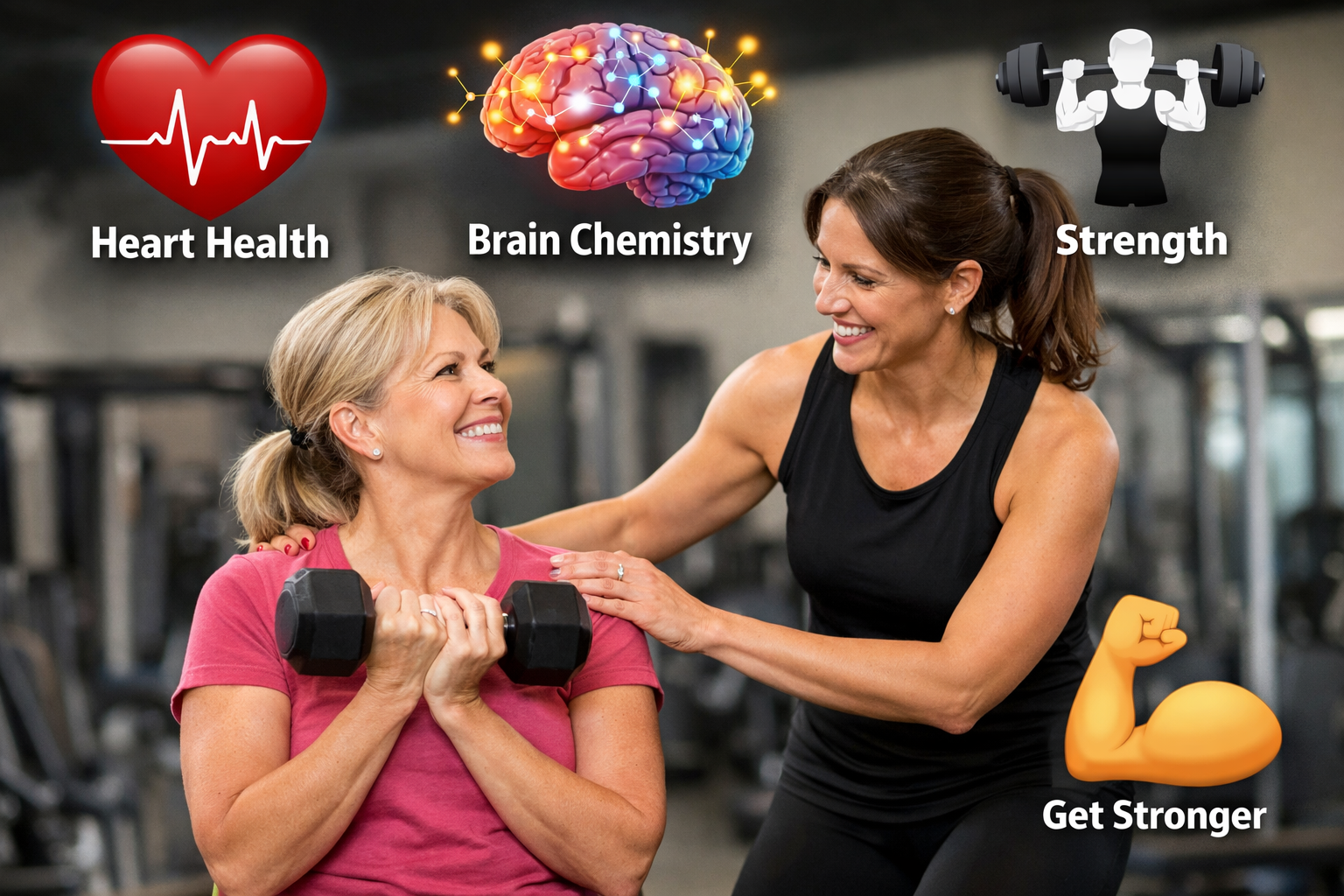
Fit Results coaching session — beginner-focused personal training

Personal training offers beginners a safe, clear path to progress. With expert coaching, tailored plans, and nutrition guidance, you avoid guesswork, reduce injury risk, and get results faster. Certified personal trainers often hold credentials from reputable organizations such as the American Council on Exercise (ACE) and the National Academy of Sports Medicine (NASM), ensuring high standards of training and safety. This guide highlights how one-on-one and coach-led programs help adults 35–80 improve form, build strength, and recover effectively. If you’re unsure where to start or worried about pain or injuries, structured coaching provides assessments, personalized progressions, and accountability. Learn why supervised training matters for adults over 40, how coaches create safe beginner plans, nutrition habits that support recovery, injury-prevention strategies, motivation tips, beginner-friendly classes, and the onboarding process starting with a free consultation and movement screen. Personal training supports not just physical fitness but also overall well-being, including mental health, sleep, and lifestyle balance.

Why Personal Training Matters for Beginners Over 40

After 40, muscle loss, lower bone density, and joint stiffness affect how you should train. Personal trainers use movement screening, progressive overload, and pacing to lower injury risk and improve function. Strength work applies appropriate load to stimulate muscle and bone growth without strain, helping prevent sarcopenia and support bone health.

For older beginners, assessments identify balance and mobility limits, shaping exercise selection and volume to build confidence and capacity. Many trainers begin with an initial physical assessment to identify strengths, weaknesses, and movement limitations. During this process, trainers evaluate your current fitness level to tailor workouts and ensure safety. Personal trainers also work with clients to set personal goals, using goal setting as a foundation for progress and motivation. Coaches integrate recovery and nutrition guidance because training without proper recovery causes setbacks. Guided programming outperforms trial-and-error self-training and builds everyday safety habits.

How Personal Training Supports Safe Exercise for Seniors

Safe training starts with an assessment of health, movement, and strength to set realistic starting points. Trainers prescribe low-impact progressions and mobility-first sessions that protect joints with gradual load increases. This gradual and well-paced approach is essential to avoid injuries and plays a key role in preventing injuries, especially for beginners. Tools like tempo control, reduced range of motion, and supported variations protect joints while building strength. Coaches monitor recovery—sleep, soreness, performance—and adjust sessions to avoid overtraining and keep you consistent. Focusing on proper form and movement quality is critical, as improper form while exercising is one of the most common causes of injuries, leading to prolonged recovery times. These habits protect beginners and create milestones that build confidence and long-term adherence.

Key Benefits of a Personal Trainer for Beginners

A personal trainer helps you progress safely and avoid wasted effort. Hands-on coaching teaches efficient movement patterns that protect joints and distribute load properly. Custom programming matches volume and intensity to your capacity, preventing plateaus. Scheduled sessions add accountability and reduce missed workouts. Trainers provide practical nutrition and recovery tips to support strength and energy.
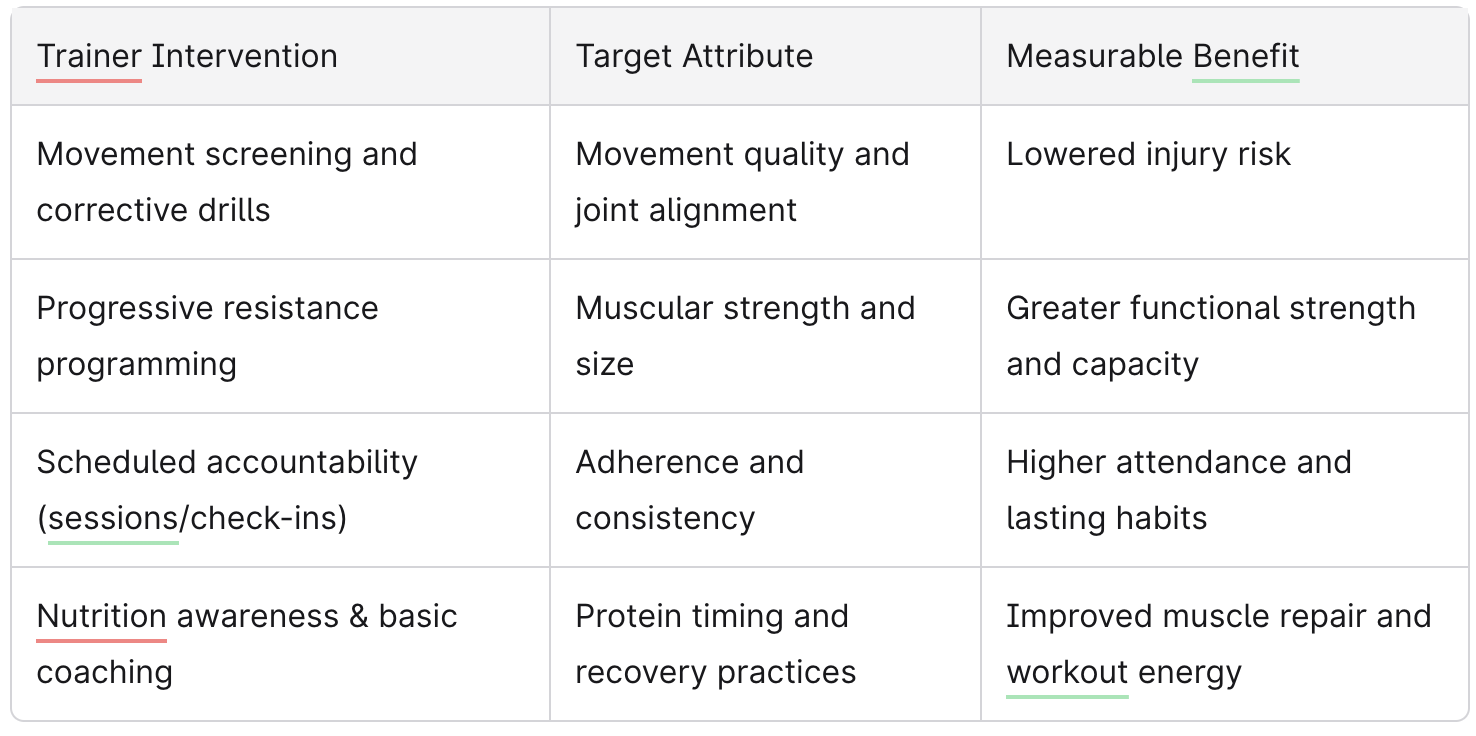
Benefits of a Personal trainer - Movements Screen, Progressive Resistance and Regressions
Key Benefits from Personal Training

Personalized workout plans designed by trainers are more effective than generic fitness programs for achieving your goals.

Summary: The biggest benefits of personal training for newbies include personalized workout plans, expert guidance, real-time feedback, and accountability—helping you achieve better results tailored to your individual needs. Trainers combine assessment, progression, and behavior support to deliver fewer injuries, faster strength gains, and consistent habits.

How Fit Results Customizes Beginner Workout Plans

Custom plans start with movement assessment, clear goals, and health history to guide progress focused on movement quality, conservative loading, and measurable advancement. The process typically begins with an initial consultation to discuss your goals and establish a baseline. Trainers balance resistance work, mobility, and conditioning so strength grows while joints stay protected. Regular reassessments let coaches scale intensity as you improve or face new limits.

At Fit Results, new members begin with a free consultation and movement screen to spot restrictions, receive individualized plans with scalable regressions, and work with coaches prioritizing form and injury prevention. Your training plan may include body weight exercises as a foundational component, making workouts accessible and effective for all levels. This keeps members focused on steady progress with coach feedback and scheduled reassessments for safety and adherence. Trainers also track your progress using metrics such as body composition and strength gains to ensure continuous improvement.

Role of Proper Form in Injury Prevention

Proper form distributes load across intended muscles and joints, preventing stress that causes injury. Faulty patterns shift stress to vulnerable tissues like ACL or lumbar discs. Trainers correct faults early with cues, hands-on feedback, and regressions. Trainers also demonstrate the correct way to perform exercises and ensure clients learn proper form. Maintaining good form is essential for targeting the right muscles and preventing injuries. Form development simplifies movements, builds consistency, then adds load and complexity. Coaches teach pain differentiation, tempo control, and breathing techniques to improve stability. Understanding body mechanics helps clients perform movements safely and effectively. Prioritizing technique speeds strength gains and protects tissue health. Trainers educate clients on the science behind exercises and the correct usage of equipment, fostering independence and confidence. Learn more about personal training options in the Chicago area.

Tailoring Fitness Plans for Older Adults and Beginners

Plans emphasize foundational movement quality, controlled loading, and recovery respecting slower recovery and joint sensitivity. Programming includes mobility and stability before heavier lifts, conservative volume, and pacing to prevent fatigue with careful intensity and making sure clients perform exercises correctly. Modifications like reduced range, slower tempo, or machine support provide stimulus without harmful stress. As you progress, trainers may introduce new exercises, the use of free weights, to keep routines varied, challenging, and engaging. Benchmarks track gains in balance, strength, and endurance; nutrition check-ins support adaptation. This approach reduces setbacks and builds capacity steadily.

Personal trainers provide expert guidance throughout your fitness journey, adjusting your plan as you achieve your initial goals.

Nutrition Essentials for Beginner Fitness

Nutrition focuses on adequate protein, steady carbs for energy, hydration, and micronutrients supporting bones and muscle. Protein spread across the day provides amino acids for repair, especially important after 40. Carbs timed around training refill glycogen and support session intensity, while also helping with burning calories during efficient workouts. Healthy fats aid hormonal balance and recovery. Hydration and nutrients like vitamin D and calcium support bone and muscle function, reducing injury risk. Developing healthy habits around nutrition and exercise is key for long-term success, and personal trainers can help you develop good habits for a lifetime, making fitness a natural part of your daily routine.

Practical tips:

  • Aim for 20–35 grams of protein per meal.
  • Include carbohydrates before and after workouts to support energy and burning calories.
  • Stay hydrated and consume daily calcium and vitamin D.

Summary: Consistent habits—protein distribution, strategic carbs, and micronutrients—build a nutrition foundation that supports training, burning calories, and achieving your fitness goals.

Nutrition Awareness Enhances Fitness Goals

Aligning meal timing, macronutrient balance, and micronutrient intake with training ensures gains and optimized recovery. Protein supports muscle synthesis and counters age-related loss. Pre-workout carbs boost energy; post-workout protein and carbs aid recovery. Nutrient-dense foods help control calories and supply vitamins vital for bone and immune health. Proper nutrition is essential for weight loss and overall fitness. Coaches include these principles in beginner programs through education and realistic meal patterns. Personal trainers can help clients lose weight by providing holistic support, including guidance on nutrition, sleep, and stress management.

Foods Supporting Strength and Recovery

Lean proteins (fish, poultry, legumes) provide amino acids for repair and are essential to build muscle effectively. Whole grains and starchy vegetables supply sustained carbs. Dairy or fortified alternatives add calcium and vitamin D for bones. Omega-3-rich foods (fatty fish, flaxseed) offer anti-inflammatory benefits aiding recovery.
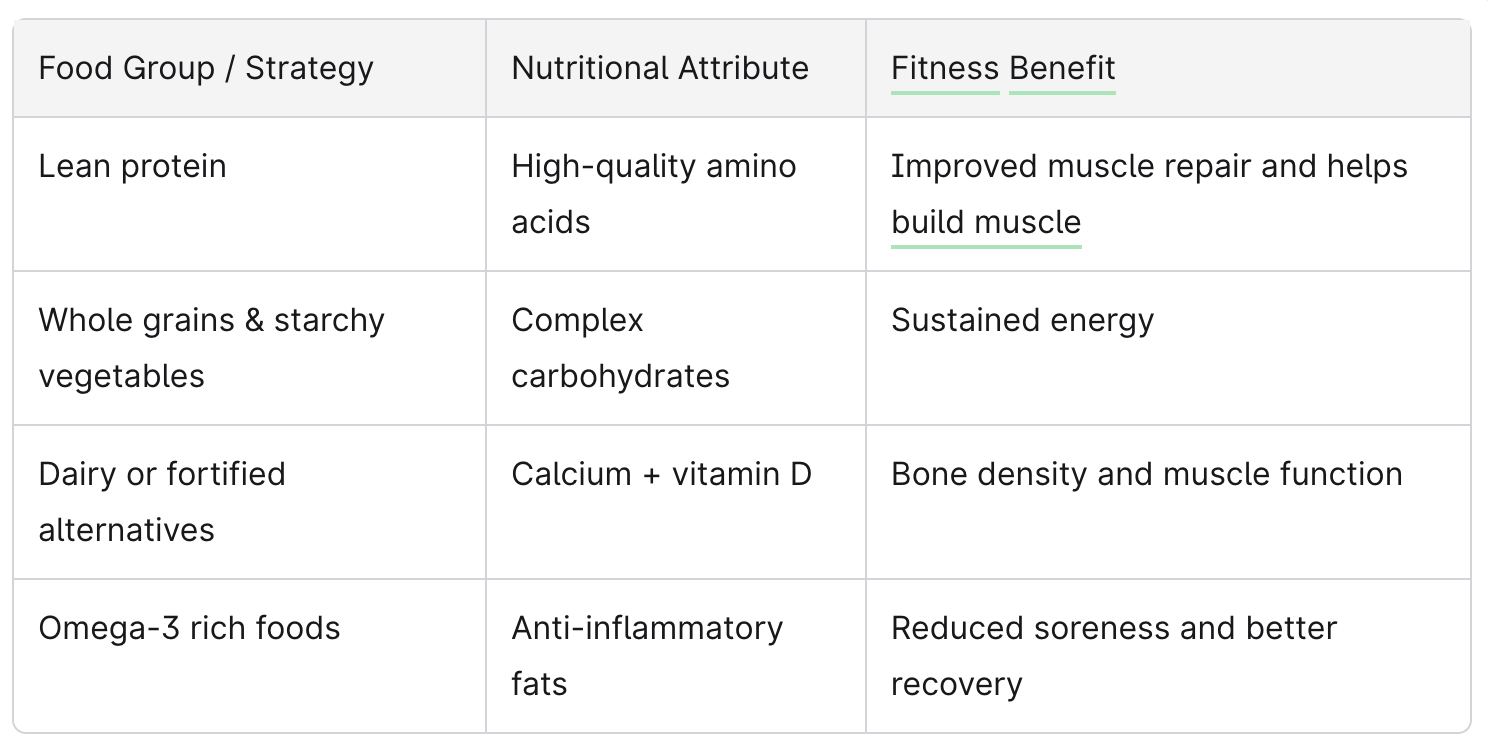
Food that helps with Strength and Recovery - Strategy and Attribution
Food Supporting Strength

Summary: Balanced meals around training support performance and recovery for measurable strength gains. Regular exercise not only supports physical recovery but also increases blood circulation to the brain, reducing stress and improving mood and cognitive function.

Injury Prevention in Personal Training

Injury prevention starts with early screening and slow, careful progression. Trainers assess your mobility, balance, and injury history to set safe limits and adjust exercises as needed. Certified personal trainers use their sports medicine knowledge to design programs that protect you and support recovery. They focus on proper movement, gradually increasing load while avoiding pain. Sessions include mobility and prehab exercises targeting vulnerable areas like hips, shoulders, and lower back to keep you moving and improving steadily.

Common Injuries Beginners Avoid with Expert Guidance

Coaching helps avoid knee pain, lower back strain, and shoulder impingement by fixing movement deficits and managing load. Knee pain improves with hip strengthening, adjusted squat depth, and loading control; trainers use glute and lateral hip work and teach joint-safe mechanics. Protecting the lower back relies on good hinge patterning, core bracing, and incremental loading; cues, tempo control, and regressions help. Shoulder health benefits from scapular stability drills, balanced push/pull work, and mobility exercises.
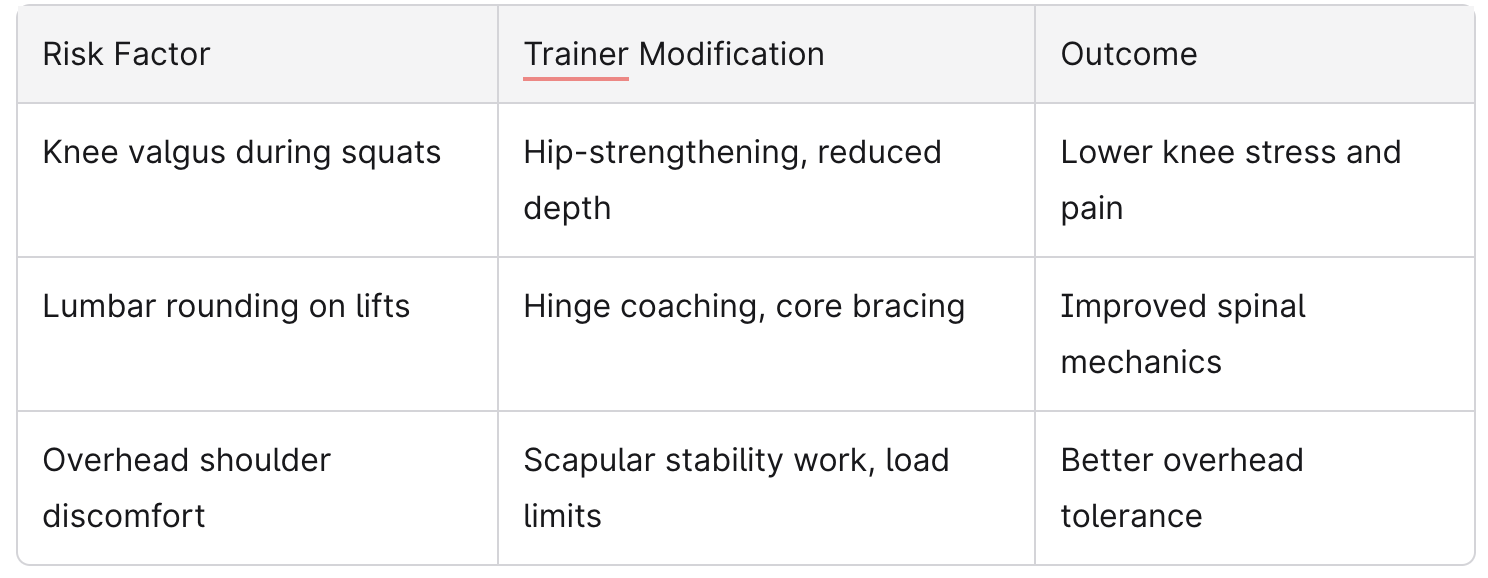
Common Injuries To Avoid and Prevetion at Fit Results
Common Injuries

Summary: Assessment and targeted programming turn risks into manageable deficits for consistent, safe training.

Modifying Workouts for Physical Limitations

Trainers use regressions, assistive tools, and gradual exposure to build tolerance without symptoms. For arthritis or joint sensitivity, lower volume, supported positions, and isometric variations preserve strength without irritation. Post-surgical cases use machine support, limited ranges, and controlled eccentric work. Balance issues are addressed with assisted standing, single-leg drills, and proprioceptive work transferring to daily life. Personalized training is a cost effective way to address limitations and prevent costly injuries or medical issues, as it provides expert supervision and tailored modifications. Regular supervised physical activity can also reduce stress hormones like cortisol and increase endorphin production, enhancing mood and overall wellbeing. Coaches track range of motion, pain, and function to guide increases and show progress.

Mental Health Benefits of Personal Training

Personal training offers way more than just getting your body in shape—it's a powerful tool that has helped so many people with their mental health and feeling better about themselves. Working with a certified personal trainer gives you that supportive environment where you can chase after your fitness goals and also build up your mental strength at the same time. The benefits of personal training goes far beyond just the gym, it helps reduce stress and boost your mood and makes you feel better about who you are. Whether you're just starting out or coming back after taking some time off, having that expert guidance from a personal trainer can make all the difference in both how you feel physically and mentally and that's something that has changed many people's lives.

Boosting Confidence and Reducing Stress

Getting into personal training sessions is a great way that has helped boost confidence and manage stress for so many people. Regular physical activity with a good personal trainer helps your body release those feel-good chemicals—the natural mood boosters that make you feel amazing. When you start learning to do exercises the right way and you see yourself making progress towards your fitness goals, that's when you really start feeling accomplished and sure of yourself. A personal trainer makes sure that every session is designed just for you, helping you stay committed and motivated through your whole fitness journey. The structured way of personal training doesn't just keep you on track but it also builds discipline and a positive mindset that will carry over to other parts of your life. By showing up consistently and working towards your goals, you'll find that stress levels go down and confidence becomes something that just comes naturally to you.

The Role of Exercise in Emotional Wellbeing

Exercise is a foundation for emotional wellbeing, and personal training is one of the most effective ways to help you get those mental health benefits that can change your life. A personal trainer can give you expert guidance on using strength training, cardio, and other forms of physical activity to support both your body composition and heart health that you need. These physical improvements often leads to greater mental clarity, reduced anxiety, and a more positive outlook on life that will help you move ahead. The approach of personal training—combining exercise, nutritional advice, and healthy lifestyle habits—supports your overall wellbeing and helps you develop the positive mindset you deserve. Many benefits of personal training, such as improved mental resilience and emotional balance, comes from the consistent effort and encouragement provided by your trainer who is passionate about helping you succeed. By investing in personal training, you're not just working towards a stronger body, but also a healthier, happier mind—making it a truly valuable step in your health and fitness journey that we can achieve together like a partnership.

Maintaining Commitment to Personal Training

Motivation grows from clear goals, accountability, and social support, reducing decision friction and creating positive feedback loops. Achievable milestones—more reps, less pain, better balance—deliver quick wins. Scheduled sessions remove daily exercise decisions. Social elements—peer encouragement, coach recognition—build belonging and persistence. Supporting autonomy, competence, and connection turns effort into lasting habits.

Personal training is an investment in your long term health and wellbeing, providing benefits that extend far beyond immediate fitness results. Certified personal trainers have extensive education, ensuring safe and effective guidance for every client. The support from a personal trainer helps clients overcome challenges and celebrate milestones along their fitness journey.

Accountability Improves Fitness Success

Scheduled sessions, progress tracking, and coach check-ins turn intention into action. Appointments improve attendance versus self-directed plans. Logs of weights, reps, and balance show progress. Coach feedback corrects form and validates improvement, preventing plateaus and helping clients stay motivated and engaged. Personal trainers also provide motivation by encouraging clients to push beyond their comfort zones during workouts. Practical steps: book recurring sessions, set weekly micro-goals, and chart gains. These tactics increase consistency and results.

Community Support at Fit Results

Fit Results fosters a supportive community with one-on-one coaching, group classes, and peer support to boost confidence and retention. Classes like Triple 20, Groundworks, and Fitcamp are scalable and coach-led, enabling beginners and older adults to progress safely alongside peers. Coaches cue regressions and progressions in real time. Even in group settings, trainers help clients focus on their personal goals by providing individualized attention within the class. The accountability provided by personal trainers is key to maintaining consistent effort and achieving results. Group training strengthens social bonds and consistency essential for long-term success.

Starting Your Fitness Journey with Fit Results

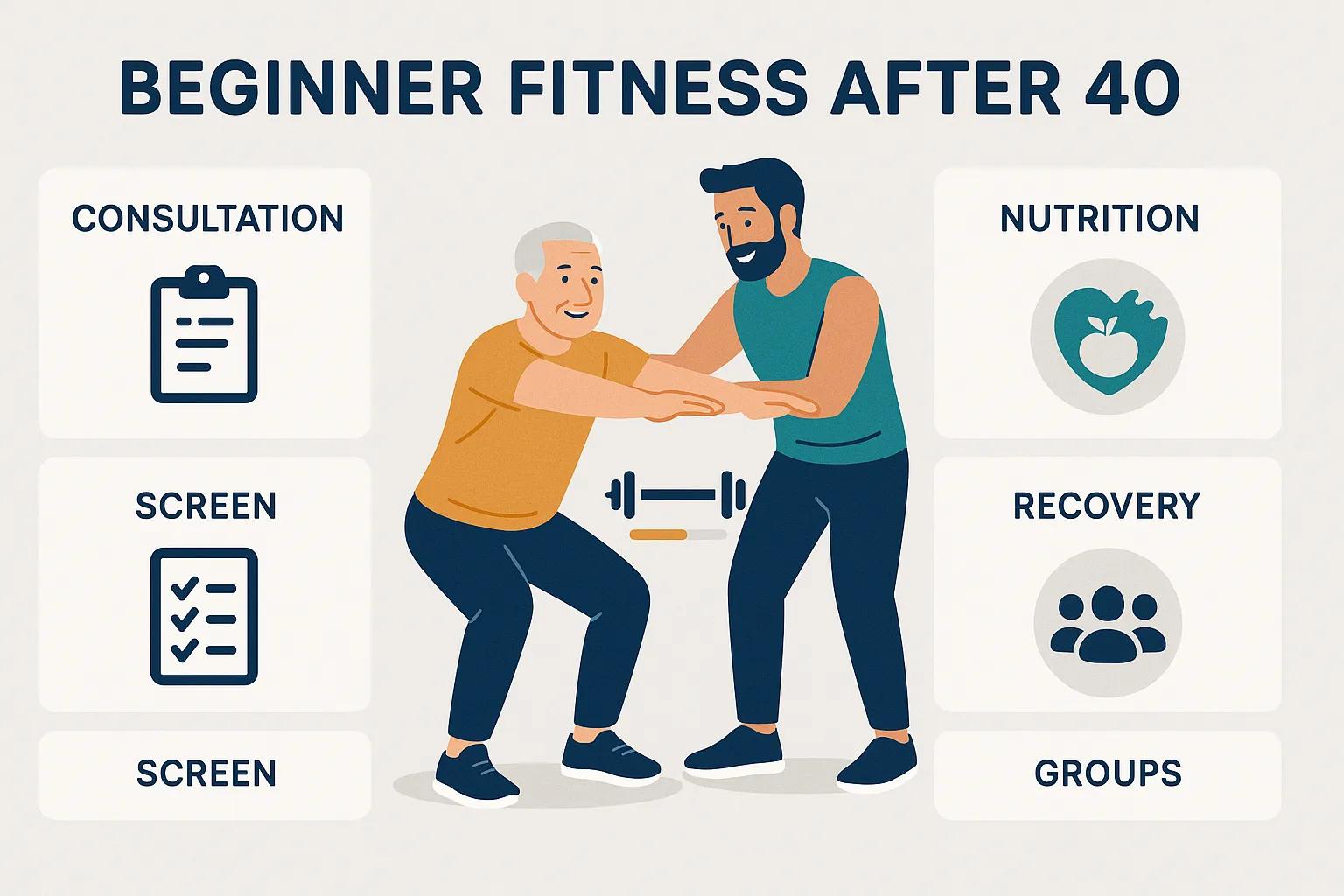
Onboarding includes a free consultation to review goals and health, a movement screen to identify limits, a personalized plan, and scheduled sessions with reassessments. This places you in the right training format and provides immediate coaching on form and load. The first month mixes one-on-one coaching for technique with group classes for community and consistency, plus nutrition check-ins aligning habits with training. Hiring a personal trainer ensures you receive expert guidance and tailored support from the very beginning, helping you achieve your fitness goals more efficiently and with reduced risk of injury. Many find that having a personal trainer makes workouts more enjoyable and something to look forward to.

Steps:

  • Free consultation: discuss goals and health history.
  • Movement assessment: identify limitations.
  • Personalized plan: safe, progressive roadmap.
  • Initial sessions and reassessments: technique coaching and load management.

Summary: This onboarding reduces uncertainty, prioritizes safety, and creates a clear path to consistent training. Hiring a personal trainer provides expert guidance and support from day one, making your fitness journey more enjoyable and effective.

Frequently Asked Questions

What signs show a personal trainer is right for me?

Look for certified trainers experienced with beginners or older adults, prioritizing safety, injury prevention, and personalized programming. Supportive communication and good rapport enhance your training experience.

How to ensure sessions are effective?

Communicate goals and concerns openly, attend sessions consistently, follow guidance on exercises and nutrition, ask questions, and seek feedback on form and progress.

What to expect during first sessions?

Focus on assessment and foundational movements. Your trainer will develop a personalized training plan based on your needs, goals, and fitness level. Learn proper techniques for basic exercises like bodyweight moves and light resistance. Build a strong, safe foundation.

How to incorporate nutrition?

Eat balanced meals rich in lean protein, whole grains, fruits, and vegetables. Prioritize protein after workouts for recovery and stay hydrated. Consult a nutritionist for personalized advice.

Common beginner challenges?

Lack of confidence, difficulty with new movements, soreness, overwhelm from advice, and consistency issues. Trainers provide tailored support, accountability, and encouragement.

How to maintain progress post-training?

Set new goals, maintain a consistent workout routine with strength, cardio, and flexibility, join classes or find workout partners, and reassess goals regularly.

What to look for in a personal trainer?

Relevant qualifications, experience with beginners or older adults, safety focus, individualized programming, and supportive communication.

How often to train with a trainer?

One to three sessions per week depending on goals and schedule. Combine coached sessions with independent practice.

Best beginner exercises?

Foundational movements like squats, lunges, push-ups, planks; low-impact cardio; flexibility and balance work.

How to track progress?

Keep a workout journal, measure weight and fitness tests, track performance metrics, set measurable goals, and celebrate milestones.

Role of nutrition in achieving your PR?

Supports energy, recovery, and performance. Balanced diet with protein, hydration, and meal timing enhances training.

Staying motivated? Check out these delicious pre-workout snacks to fuel your workout and keep your energy high!

Goal setting is a key strategy for maintaining motivation and tracking progress. Set realistic goals, build routine, seek social support, celebrate wins, and focus on health benefits. Accountability from your trainer also helps you stay consistent.

Conclusion

Personal training equips beginners—especially over 40—with tools to train safely, build strength, and gain confidence. Expert coaching, tailored programming, and sensible nutrition reduce injury risk and ensure steady progress. Personal training also supports your overall well being, promoting not just physical fitness but also mental health, better sleep, and a balanced lifestyle. By overcoming challenges in the gym, you build mental resilience that helps you handle difficulties in other areas of life. A structured approach turns short-term effort into lasting results. Ready to start? Book a free consultation and see how personalized coaching transforms your fitness journey.

Personal Training Benefits for Newbies: Start Strong, Stay Safe

Fit Results coaching session — beginner-focused personal training

Personal training offers beginners a safe, clear path to progress. With expert coaching, tailored plans, and nutrition guidance, you avoid guesswork, reduce injury risk, and get results faster. Certified personal trainers often hold credentials from reputable organizations such as the American Council on Exercise (ACE) and the National Academy of Sports Medicine (NASM), ensuring high standards of training and safety. This guide highlights how one-on-one and coach-led programs help adults 35–80 improve form, build strength, and recover effectively. If you’re unsure where to start or worried about pain or injuries, structured coaching provides assessments, personalized progressions, and accountability. Learn why supervised training matters for adults over 40, how coaches create safe beginner plans, nutrition habits that support recovery, injury-prevention strategies, motivation tips, beginner-friendly classes, and the onboarding process starting with a free consultation and movement screen. Personal training supports not just physical fitness but also overall well-being, including mental health, sleep, and lifestyle balance.

Why Personal Training Matters for Beginners Over 40

After 40, muscle loss, lower bone density, and joint stiffness affect how you should train. Personal trainers use movement screening, progressive overload, and pacing to lower injury risk and improve function. Strength work applies appropriate load to stimulate muscle and bone growth without strain, helping prevent sarcopenia and support bone health.

For older beginners, assessments identify balance and mobility limits, shaping exercise selection and volume to build confidence and capacity. Many trainers begin with an initial physical assessment to identify strengths, weaknesses, and movement limitations. During this process, trainers evaluate your current fitness level to tailor workouts and ensure safety. Personal trainers also work with clients to set personal goals, using goal setting as a foundation for progress and motivation. Coaches integrate recovery and nutrition guidance because training without proper recovery causes setbacks. Guided programming outperforms trial-and-error self-training and builds everyday safety habits.

How Personal Training Supports Safe Exercise for Seniors

Safe training starts with an assessment of health, movement, and strength to set realistic starting points. Trainers prescribe low-impact progressions and mobility-first sessions that protect joints with gradual load increases. This gradual and well-paced approach is essential to avoid injuries and plays a key role in preventing injuries, especially for beginners. Tools like tempo control, reduced range of motion, and supported variations protect joints while building strength. Coaches monitor recovery—sleep, soreness, performance—and adjust sessions to avoid overtraining and keep you consistent. Focusing on proper form and movement quality is critical, as improper form while exercising is one of the most common causes of injuries, leading to prolonged recovery times. These habits protect beginners and create milestones that build confidence and long-term adherence.

Key Benefits of a Personal Trainer for Beginners

A personal trainer helps you progress safely and avoid wasted effort. Hands-on coaching teaches efficient movement patterns that protect joints and distribute load properly. Custom programming matches volume and intensity to your capacity, preventing plateaus. Scheduled sessions add accountability and reduce missed workouts. Trainers provide practical nutrition and recovery tips to support strength and energy.

Benefits of a Personal trainer - Movements Screen, Progressive Resistance and Regressions
Key Benefits from Personal Training

Personalized workout plans designed by trainers are more effective than generic fitness programs for achieving your goals.

Summary: The biggest benefits of personal training for newbies include personalized workout plans, expert guidance, real-time feedback, and accountability—helping you achieve better results tailored to your individual needs. Trainers combine assessment, progression, and behavior support to deliver fewer injuries, faster strength gains, and consistent habits.

How Fit Results Customizes Beginner Workout Plans

Custom plans start with movement assessment, clear goals, and health history to guide progress focused on movement quality, conservative loading, and measurable advancement. The process typically begins with an initial consultation to discuss your goals and establish a baseline. Trainers balance resistance work, mobility, and conditioning so strength grows while joints stay protected. Regular reassessments let coaches scale intensity as you improve or face new limits.

At Fit Results, new members begin with a free consultation and movement screen to spot restrictions, receive individualized plans with scalable regressions, and work with coaches prioritizing form and injury prevention. Your training plan may include body weight exercises as a foundational component, making workouts accessible and effective for all levels. This keeps members focused on steady progress with coach feedback and scheduled reassessments for safety and adherence. Trainers also track your progress using metrics such as body composition and strength gains to ensure continuous improvement.

Role of Proper Form in Injury Prevention

Proper form distributes load across intended muscles and joints, preventing stress that causes injury. Faulty patterns shift stress to vulnerable tissues like ACL or lumbar discs. Trainers correct faults early with cues, hands-on feedback, and regressions. Trainers also demonstrate the correct way to perform exercises and ensure clients learn proper form. Maintaining good form is essential for targeting the right muscles and preventing injuries. Form development simplifies movements, builds consistency, then adds load and complexity. Coaches teach pain differentiation, tempo control, and breathing techniques to improve stability. Understanding body mechanics helps clients perform movements safely and effectively. Prioritizing technique speeds strength gains and protects tissue health. Trainers educate clients on the science behind exercises and the correct usage of equipment, fostering independence and confidence. Learn more about personal training options in the Chicago area.

Tailoring Fitness Plans for Older Adults and Beginners

Plans emphasize foundational movement quality, controlled loading, and recovery respecting slower recovery and joint sensitivity. Programming includes mobility and stability before heavier lifts, conservative volume, and pacing to prevent fatigue with careful intensity and making sure clients perform exercises correctly. Modifications like reduced range, slower tempo, or machine support provide stimulus without harmful stress. As you progress, trainers may introduce new exercises, the use of free weights, to keep routines varied, challenging, and engaging. Benchmarks track gains in balance, strength, and endurance; nutrition check-ins support adaptation. This approach reduces setbacks and builds capacity steadily.

Personal trainers provide expert guidance throughout your fitness journey, adjusting your plan as you achieve your initial goals.

Nutrition Essentials for Beginner Fitness

Nutrition focuses on adequate protein, steady carbs for energy, hydration, and micronutrients supporting bones and muscle. Protein spread across the day provides amino acids for repair, especially important after 40. Carbs timed around training refill glycogen and support session intensity, while also helping with burning calories during efficient workouts. Healthy fats aid hormonal balance and recovery. Hydration and nutrients like vitamin D and calcium support bone and muscle function, reducing injury risk. Developing healthy habits around nutrition and exercise is key for long-term success, and personal trainers can help you develop good habits for a lifetime, making fitness a natural part of your daily routine.

Practical tips:

  • Aim for 20–35 grams of protein per meal.
  • Include carbohydrates before and after workouts to support energy and burning calories.
  • Stay hydrated and consume daily calcium and vitamin D.

Summary: Consistent habits—protein distribution, strategic carbs, and micronutrients—build a nutrition foundation that supports training, burning calories, and achieving your fitness goals.

Nutrition Awareness Enhances Fitness Goals

Aligning meal timing, macronutrient balance, and micronutrient intake with training ensures gains and optimized recovery. Protein supports muscle synthesis and counters age-related loss. Pre-workout carbs boost energy; post-workout protein and carbs aid recovery. Nutrient-dense foods help control calories and supply vitamins vital for bone and immune health. Proper nutrition is essential for weight loss and overall fitness. Coaches include these principles in beginner programs through education and realistic meal patterns. Personal trainers can help clients lose weight by providing holistic support, including guidance on nutrition, sleep, and stress management.

Foods Supporting Strength and Recovery

Lean proteins (fish, poultry, legumes) provide amino acids for repair and are essential to build muscle effectively. Whole grains and starchy vegetables supply sustained carbs. Dairy or fortified alternatives add calcium and vitamin D for bones. Omega-3-rich foods (fatty fish, flaxseed) offer anti-inflammatory benefits aiding recovery.

Food that helps with Strength and Recovery - Strategy and Attribution
Food Supporting Strength

Summary: Balanced meals around training support performance and recovery for measurable strength gains. Regular exercise not only supports physical recovery but also increases blood circulation to the brain, reducing stress and improving mood and cognitive function.

Injury Prevention in Personal Training

Injury prevention starts with early screening and slow, careful progression. Trainers assess your mobility, balance, and injury history to set safe limits and adjust exercises as needed. Certified personal trainers use their sports medicine knowledge to design programs that protect you and support recovery. They focus on proper movement, gradually increasing load while avoiding pain. Sessions include mobility and prehab exercises targeting vulnerable areas like hips, shoulders, and lower back to keep you moving and improving steadily.

Common Injuries Beginners Avoid with Expert Guidance

Coaching helps avoid knee pain, lower back strain, and shoulder impingement by fixing movement deficits and managing load. Knee pain improves with hip strengthening, adjusted squat depth, and loading control; trainers use glute and lateral hip work and teach joint-safe mechanics. Protecting the lower back relies on good hinge patterning, core bracing, and incremental loading; cues, tempo control, and regressions help. Shoulder health benefits from scapular stability drills, balanced push/pull work, and mobility exercises.

Common Injuries To Avoid and Prevetion at Fit Results
Common Injuries

Summary: Assessment and targeted programming turn risks into manageable deficits for consistent, safe training.

Modifying Workouts for Physical Limitations

Trainers use regressions, assistive tools, and gradual exposure to build tolerance without symptoms. For arthritis or joint sensitivity, lower volume, supported positions, and isometric variations preserve strength without irritation. Post-surgical cases use machine support, limited ranges, and controlled eccentric work. Balance issues are addressed with assisted standing, single-leg drills, and proprioceptive work transferring to daily life. Personalized training is a cost effective way to address limitations and prevent costly injuries or medical issues, as it provides expert supervision and tailored modifications. Regular supervised physical activity can also reduce stress hormones like cortisol and increase endorphin production, enhancing mood and overall wellbeing. Coaches track range of motion, pain, and function to guide increases and show progress.

Mental Health Benefits of Personal Training

Personal training offers way more than just getting your body in shape—it's a powerful tool that has helped so many people with their mental health and feeling better about themselves. Working with a certified personal trainer gives you that supportive environment where you can chase after your fitness goals and also build up your mental strength at the same time. The benefits of personal training goes far beyond just the gym, it helps reduce stress and boost your mood and makes you feel better about who you are. Whether you're just starting out or coming back after taking some time off, having that expert guidance from a personal trainer can make all the difference in both how you feel physically and mentally and that's something that has changed many people's lives.

Boosting Confidence and Reducing Stress

Getting into personal training sessions is a great way that has helped boost confidence and manage stress for so many people. Regular physical activity with a good personal trainer helps your body release those feel-good chemicals—the natural mood boosters that make you feel amazing. When you start learning to do exercises the right way and you see yourself making progress towards your fitness goals, that's when you really start feeling accomplished and sure of yourself. A personal trainer makes sure that every session is designed just for you, helping you stay committed and motivated through your whole fitness journey. The structured way of personal training doesn't just keep you on track but it also builds discipline and a positive mindset that will carry over to other parts of your life. By showing up consistently and working towards your goals, you'll find that stress levels go down and confidence becomes something that just comes naturally to you.

The Role of Exercise in Emotional Wellbeing

Exercise is a foundation for emotional wellbeing, and personal training is one of the most effective ways to help you get those mental health benefits that can change your life. A personal trainer can give you expert guidance on using strength training, cardio, and other forms of physical activity to support both your body composition and heart health that you need. These physical improvements often leads to greater mental clarity, reduced anxiety, and a more positive outlook on life that will help you move ahead. The approach of personal training—combining exercise, nutritional advice, and healthy lifestyle habits—supports your overall wellbeing and helps you develop the positive mindset you deserve. Many benefits of personal training, such as improved mental resilience and emotional balance, comes from the consistent effort and encouragement provided by your trainer who is passionate about helping you succeed. By investing in personal training, you're not just working towards a stronger body, but also a healthier, happier mind—making it a truly valuable step in your health and fitness journey that we can achieve together like a partnership.

Maintaining Commitment to Personal Training

Motivation grows from clear goals, accountability, and social support, reducing decision friction and creating positive feedback loops. Achievable milestones—more reps, less pain, better balance—deliver quick wins. Scheduled sessions remove daily exercise decisions. Social elements—peer encouragement, coach recognition—build belonging and persistence. Supporting autonomy, competence, and connection turns effort into lasting habits.

Personal training is an investment in your long term health and wellbeing, providing benefits that extend far beyond immediate fitness results. Certified personal trainers have extensive education, ensuring safe and effective guidance for every client. The support from a personal trainer helps clients overcome challenges and celebrate milestones along their fitness journey.

Accountability Improves Fitness Success

Scheduled sessions, progress tracking, and coach check-ins turn intention into action. Appointments improve attendance versus self-directed plans. Logs of weights, reps, and balance show progress. Coach feedback corrects form and validates improvement, preventing plateaus and helping clients stay motivated and engaged. Personal trainers also provide motivation by encouraging clients to push beyond their comfort zones during workouts. Practical steps: book recurring sessions, set weekly micro-goals, and chart gains. These tactics increase consistency and results.

Community Support at Fit Results

Fit Results fosters a supportive community with one-on-one coaching, group classes, and peer support to boost confidence and retention. Classes like Triple 20, Groundworks, and Fitcamp are scalable and coach-led, enabling beginners and older adults to progress safely alongside peers. Coaches cue regressions and progressions in real time. Even in group settings, trainers help clients focus on their personal goals by providing individualized attention within the class. The accountability provided by personal trainers is key to maintaining consistent effort and achieving results. Group training strengthens social bonds and consistency essential for long-term success.

Starting Your Fitness Journey with Fit Results

Onboarding includes a free consultation to review goals and health, a movement screen to identify limits, a personalized plan, and scheduled sessions with reassessments. This places you in the right training format and provides immediate coaching on form and load. The first month mixes one-on-one coaching for technique with group classes for community and consistency, plus nutrition check-ins aligning habits with training. Hiring a personal trainer ensures you receive expert guidance and tailored support from the very beginning, helping you achieve your fitness goals more efficiently and with reduced risk of injury. Many find that having a personal trainer makes workouts more enjoyable and something to look forward to.

Steps:

  • Free consultation: discuss goals and health history.
  • Movement assessment: identify limitations.
  • Personalized plan: safe, progressive roadmap.
  • Initial sessions and reassessments: technique coaching and load management.

Summary: This onboarding reduces uncertainty, prioritizes safety, and creates a clear path to consistent training. Hiring a personal trainer provides expert guidance and support from day one, making your fitness journey more enjoyable and effective.

Frequently Asked Questions

What signs show a personal trainer is right for me?

Look for certified trainers experienced with beginners or older adults, prioritizing safety, injury prevention, and personalized programming. Supportive communication and good rapport enhance your training experience.

How to ensure sessions are effective?

Communicate goals and concerns openly, attend sessions consistently, follow guidance on exercises and nutrition, ask questions, and seek feedback on form and progress.

What to expect during first sessions?

Focus on assessment and foundational movements. Your trainer will develop a personalized training plan based on your needs, goals, and fitness level. Learn proper techniques for basic exercises like bodyweight moves and light resistance. Build a strong, safe foundation.

How to incorporate nutrition?

Eat balanced meals rich in lean protein, whole grains, fruits, and vegetables. Prioritize protein after workouts for recovery and stay hydrated. Consult a nutritionist for personalized advice.

Common beginner challenges?

Lack of confidence, difficulty with new movements, soreness, overwhelm from advice, and consistency issues. Trainers provide tailored support, accountability, and encouragement.

How to maintain progress post-training?

Set new goals, maintain a consistent workout routine with strength, cardio, and flexibility, join classes or find workout partners, and reassess goals regularly.

What to look for in a personal trainer?

Relevant qualifications, experience with beginners or older adults, safety focus, individualized programming, and supportive communication.

How often to train with a trainer?

One to three sessions per week depending on goals and schedule. Combine coached sessions with independent practice.

Best beginner exercises?

Foundational movements like squats, lunges, push-ups, planks; low-impact cardio; flexibility and balance work.

How to track progress?

Keep a workout journal, measure weight and fitness tests, track performance metrics, set measurable goals, and celebrate milestones.

Role of nutrition in achieving your PR?

Supports energy, recovery, and performance. Balanced diet with protein, hydration, and meal timing enhances training.

Staying motivated? Check out these delicious pre-workout snacks to fuel your workout and keep your energy high!

Goal setting is a key strategy for maintaining motivation and tracking progress. Set realistic goals, build routine, seek social support, celebrate wins, and focus on health benefits. Accountability from your trainer also helps you stay consistent.

Conclusion

Personal training equips beginners—especially over 40—with tools to train safely, build strength, and gain confidence. Expert coaching, tailored programming, and sensible nutrition reduce injury risk and ensure steady progress. Personal training also supports your overall well being, promoting not just physical fitness but also mental health, better sleep, and a balanced lifestyle. By overcoming challenges in the gym, you build mental resilience that helps you handle difficulties in other areas of life. A structured approach turns short-term effort into lasting results. Ready to start? Book a free consultation and see how personalized coaching transforms your fitness journey.

Luis Centeno

Luis Centeno is the Founder, Owner + Lead Trainer at FIT RESULTS ®️ Second Chance turned entrepreneur Changing lives through fitness. Master Trainer Certified (Personal Training, Strength Training Specialist, Nutrition Specialist, Endurance Specialist, Nutrition Coach, S + C Coach. Passionate about helping others reach their personal goals. The more lives I can help change, the better I feel about the big task that is at hand to make the world a better place.

looking for a gym
In the chicago area?

GET A FREE CONSULTATION