Personal Training Sessions at Fit Results: What You Pay and What You Gain to Transform Your Fitness Journey

When people consider personal training, two questions come up first: how much will it cost and what real results can I expect? This guide answers both for Chicago residents exploring Fit Results. We’ll walk through the training options available at our South Loop location, typical pricing and what influences it, and the measurable gains focused coaching delivers. You’ll see how one-on-one, semi-private, and group class formats differ in setup and outcomes, what cost ranges to expect, and how add-ons like nutrition support and our Second Chance Program speed results. We also explain how location and trainer experience affect investment and share practical tips to get the most from any Fit Results program. Keywords such as how much does training cost at Fit Results and Fit Results one-on-one training cost Chicago are woven in to help you find the answers fast.
Introduction to Fitness
Fitness is what makes a healthy lifestyle possible, it brings together working out regular, eating right, and feeling good in your mind. If you are just starting or want to make your routine better, training gives you a clear way to succeed. When you work with a certified personal trainer you get a workout plan that is made just for you and your fitness goals—if that’s getting stronger, having better endurance, or just feeling your best every single day.
Most personal fitness trainers need to have at least a high school diploma and a recognized certification from organizations such as the American Council on Exercise (ACE), National Academy of Sports Medicine (NASM), or the National Strength and Conditioning Association (NSCA). Certification from a respected conditioning association ensures that trainers meet industry standards for education, safety, and effectiveness.
At Fit Results, we know that everyone can benefit when they get the right mix of training sessions, group classes, and semi-private training. These choices give you flexibility, someone to keep you accountable, and the expert help you need to stay consistent and motivated. If you are thinking about hiring a personal trainer, it’s important that you look into training prices, understand how valuable personalized guidance is, and find a certified trainer that connects with your needs and goals. It doesn’t matter where you start from, the right training approach can help you get results that last and support a healthier, more active lifestyle.
What Are the Training Options Available at Fit Results?
At Fit Results we offer three main ways to train: one-on-one personal training, semi-private sessions, and group classes like Triple 20, FitCamp, and Groundworks. Every option uses thoughtful programming and assessments by the personal trainer to help you reach goals — whether that’s weight loss, building strength, or returning to exercise after injury. Our trainers guide you through a variety of exercises tailored to your goals, ensuring proper technique and safety. One-on-one focuses on individualized progress and technique coaching, with hands on coaching that provides direct instruction and real-time technique correction; semi-private mixes personalized attention with the energy of a small group; and group classes give coached, scalable workouts built around conditioning and community. Group training can enhance motivation through camaraderie and friendly competition among participants. Below is a quick breakdown so you can match format to your goals and budget, followed by specifics about what Fit Results offers.
Across our Chicago locations, Fit Results organizes these formats into clear program paths and leans on personalized coaching, flexible scheduling, nutrition support, and community accountability as core strengths. Our trainers — including coaches like Luis Centeno and Steven Rosellini — adapt programs for beginners and clients with injuries to keep things safe while driving progress, and provide support for injury recovery to help clients safely return to fitness. Use the list below to quickly see which format fits you best.
- One-on-one training: best for people who need focused technique work, hands on coaching, rehab guidance, or fast strength gains.
- Semi-private training: ideal if you want coach-led programming at a lower per-person cost, plus small-group motivation.
- Group classes (FitCamp, Groundworks, Triple 20): great for structured conditioning, class camaraderie, group training, and consistent scheduling.
Each format supports different outcomes and budgets. Consider how much individual attention you want, how often you can train, and what you want to achieve when picking the right path.
How Do One-on-One Personal Training Sessions Work?
One-on-one personalized training is a step-by-step, individualized process that starts with an assessment and goal-setting session to establish your baseline and a tailored plan. During the complimentary consultation, a coach reviews your goals, runs a baseline assessment, and outlines package options and pricing tailored to you. From there, your trainer runs coached sessions focused on technique, progressive overload, and measurable milestones, with regular check-ins to tweak programming. During each session, you receive real time feedback as your trainer monitors your form, joint alignment, and muscle activation, providing immediate corrections and guidance to optimize your results. For example, a beginner returning from a minor injury will get safe regressions, pain-free progressions, and mobility work while the coach tracks strength and function week to week. That consistent feedback loop keeps sessions targeted and accelerates results. One-on-one training provides the most hands-on coaching and customization — which is why it is the most efficient option for specific goals and faster, measurable gains.
What Is Semi-Private Personal Training and Its Advantages?
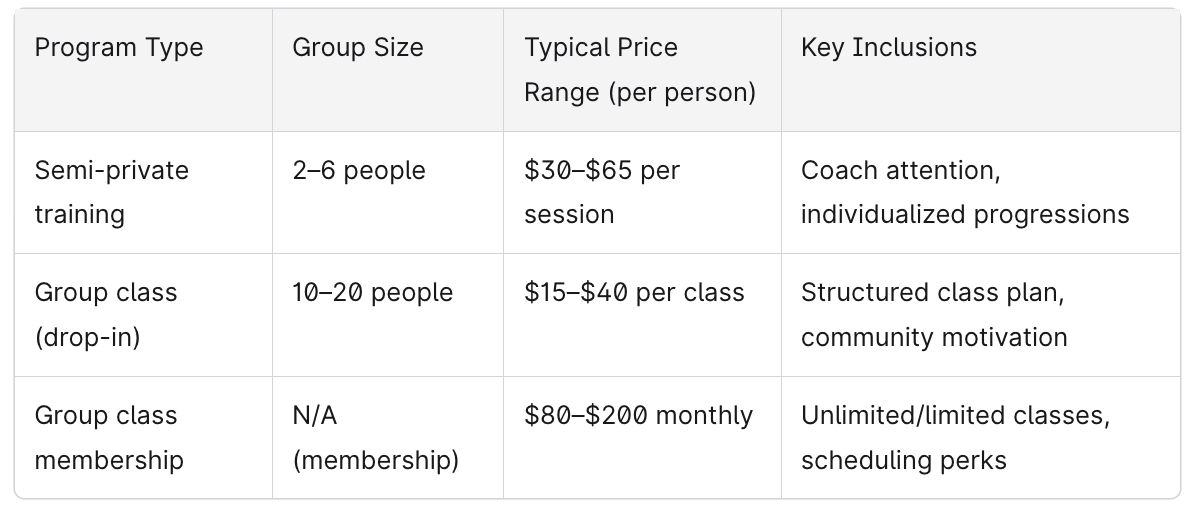
Semi-private training brings small groups (usually 2–6 people) together under one coach so each person gets individualized progressions inside a session. This format is cost effective, as it delivers expert coaching and tailored programs at a lower price point. The coach designs modifications so everyone works at the right intensity while the group provides accountability and consistent scheduling. Group training also offers shared motivation, social support, and a sense of community, making workouts more engaging and enjoyable. Group or semi-private training can lower the hourly rate to $30–$50 per person, making it a more affordable option. Semi-private lowers the per-person cost compared to solo sessions but keeps technical coaching — a smart choice for people who want real guidance without the full one-on-one price. The social element also boosts adherence and motivation, helping members stick with the plan and see measurable improvements through coached progression. The focus at Fit Results in 2026 has shifted toward smarter training techniques that promote longevity and sustainability in results.
How Much Does Personal Training Cost at Fit Results?
Training costs depend on several variables that influence personal trainer cost: session format (one-on-one, semi-private, or group), session length and frequency, trainer experience, and local demand in neighborhoods like South Loop. Rates are often quoted per hour, and training packages frequently include additional services like nutrition support and movement assessments, which can affect overall pricing. In-person training typically costs more than online training due to gym visits and associated overhead. Common pricing models include single-session drop-ins, multi-session packages that lower per-session cost, and membership-style group access that spreads cost across recurring classes. Below are typical ranges and comparisons in the area so you can set realistic expectations, plus a simple table that shows common one-on-one package examples and how session length and package size affect per-session price.

What Are the Typical Price Ranges for One-on-One Training?
One-on-one sessions usually reflect trainer experience and session features. In urban markets you’ll commonly see single sessions between about $75 and $125. Packages (8, 12, or monthly commitments) often reduce the per-session cost by applying a bulk discount or requiring a recurring schedule, which makes ongoing coaching more affordable. For example: an 8-session package at $640 is $80 per session; a 12-session package at $1,020 averages $85 per session while giving you a longer, progressive coaching block. For exact Fit Results pricing by trainer and location, book a consultation — that’s the fastest way to get a tailored quote based on your goals, session length, and preferred coach.
How Are Semi-Private Training and Group Classes Priced?
Semi-private and group classes keep costs down by sharing coaching across participants. Semi-private pricing is per person and varies with group size and frequency, while group memberships spread cost across recurring classes for the best value. The table below shows typical structures, how group size affects per-session cost, and what’s usually included.
Setting Fitness Goals
Setting clear, realistic fitness goals is the first step toward lasting change in your life. Whether your aim is weight loss, muscle gain, or simply improving your overall health, defining your objectives gives your training purpose and direction that really matters. A personal trainer that cares about you can help you set SMART goals—Specific, Measurable, Achievable, Relevant, and Time-bound—so you know exactly what you're working toward and how to get there step by step.
With a personalized workout plan and regular check-ins, your trainer will track your progress, celebrate your wins with you, and adjust your plan as needed to keep you moving forward together. Understanding personal training cost and the value of ongoing support can help you make informed decisions about your investment in health and your future. The right trainer will not only guide your workouts but also provide the motivation and accountability you need to stay on track and achieve your fitness goals because nobody gets left behind when you work together like a partnership.
What Do You Gain from Investing in Fit Results Personal Training?
Investing in coaching delivers clear, trackable returns: more strength, targeted fat loss, safer movement patterns, and lasting habit change through accountability and nutrition support. Personalized coaching at Fit Results features personalized programs and personalized workout plans, ensuring every client receives a custom-tailored approach that addresses their unique goals, fitness level, and physical condition. Our certified trainers design workout plans that are customized to individual needs, optimizing results and adapting as you progress.
Personal trainers keep workouts fresh and challenging by introducing new exercises and increasing intensity, which helps prevent plateaus and keeps you motivated. Strength training and a variety of exercises are key components of our training process, supporting overall fitness and injury prevention. Clients working with fitness professionals typically experience 20-30% faster strength gains compared to self-guided routines. Fit Results layers on nutrition support, group accountability, and programs like the Second Chance Program to increase adherence and long-term behavior change. The table below links common inclusions to the expected outcomes so you can see how each part contributes to your overall return on investment.

How Does Personalized Coaching Help Achieve Your Fitness Goals?
Personalized coaching breaks big goals into manageable progressions, prioritizing safety, technique, and progressive overload so your body adapts consistently. For clients with complex goals—such as rehabilitation, performance optimization, or multifaceted objectives—advanced programming and problem-solving skills are especially valuable for efficient progress and long-term results.
Initial meetings with trainers usually include fitness assessments, strength tests, and discussions of medical history to ensure a safe and effective start. Trainers use movement screens to find limitations, then prescribe regressions or progressions so you can steadily increase load without risking injury. Strength tests are also used to assess your physical capabilities, track progress, and customize your training program for injury prevention and safety. For example, a strength plan will move through hypertrophy, strength, and power phases with frequent check-ins to dial volume and intensity based on your results. That targeted approach creates measurable milestones in strength and function faster than one-size-fits-all programs, and it builds habits that keep gains long term.
What Role Does Nutrition Coaching and Community Support Play?
Nutrition coaching and community support amplify training by improving adherence, fueling workouts, and aligning eating habits with your goals. Habit-focused nutrition work targets practical changes like meal patterns, protein distribution, and realistic calorie control that match training phases and recovery needs. Community elements — class camaraderie, accountability partners, and a supportive coaching culture — make it easier to stay consistent and push through plateaus. Together, these pieces improve adherence and shorten the time to visible body-composition and performance results.
Health and Fitness Benefits of Regular Exercise
Making a commitment to regular exercise brings so many amazing health and fitness benefits that goes way beyond just what happens in the gym. Working with a certified personal trainer in personal training sessions can help you to increase strength, boost your cardiovascular health, improve flexibility, and manage your weight in a more effective way. Beyond just the physical stuff, exercise has been proven to reduce stress, elevate your mood, and support your overall mental well-being in ways that really makes a difference.
A personalized workout plan that is combined with expert nutrition guidance makes sure you're fueling your body for optimal performance and recovery like it should be. Learning proper form and technique under the watchful eye of a personal trainer helps to prevent injuries and maximizes how effective every training session can be for you. Whether you prefer in-person training or online coaching, choosing the right format that fits your lifestyle and goals can make all the difference in achieving increased strength and long-term health and fitness that you deserve.
What Is the Second Chance Program and How Does It Add Value?
The Second Chance Program helps people who’ve stepped away from consistent training — whether due to life changes, lapses, or plateaus — by offering a structured, compassionate re-onboarding pathway focused on small wins and sustainable habit rebuilding. The program aims to restore confidence, rebuild movement quality, and increase training load gradually to lower relapse risk. It pairs initial assessments with frequent accountability checkpoints, tailored coaching interventions, and nutrition touch points to create momentum and early, measurable wins. By lowering the activation energy to restart and using staged progression, Second Chance improves the odds of long-term retention and performance maintenance.
Who Can Benefit from the Second Chance Program?
People who’ve taken a long break, had an injury-related pause, or struggled with consistency often get the most from a re-onboarding program that addresses practical and emotional barriers. Common beneficiaries include returning parents, someone rehabbing after injury, or anyone who stalled and lost motivation — each needs gradual progression and regular coach contact to rebuild routine. The program focuses on achievable milestones, steady coach touchpoints, and community reintegration to rebuild confidence and momentum. Early wins usually include better movement quality and quick strength or endurance gains that encourage continued participation.
How Is the Program Structured to Support Long-Term Success?
Second Chance unfolds in phases: a 0–8 week onboarding to rebuild movement and form new habits, an 8–24 week consolidation phase to increase capacity and load, and a transition into standard training pathways for maintenance. Each phase includes scheduled assessments, nutrition check-ins, and accountability moments to keep progress honest and adaptive. Coaches use measurement and client feedback to tweak plans so the program stays responsive and reduces the risk of relapse. This phased approach creates a clear path from restart to sustainable training.
How Do Location and Trainer Expertise Affect Personal Training Costs?
Two big cost drivers are location-based market differences and trainer experience: neighborhoods with higher demand or premium facilities tend to have higher session rates, and more experienced coaches command higher fees because of deeper assessment and programming skills. In Chicago, demand patterns in areas like South Loop can affect trainer availability and peak-hour pricing.
In the United States, various certifications are available within the fitness industry, although not all are accredited. Respected organizations such as the National Strength and Conditioning Association (NSCA) play a key role in setting national strength and fitness standards. Trainers also maintain their certifications in first aid and CPR to ensure client safety during sessions.
Trainer experience matters: senior coaches bring advanced assessment and injury-modification skills that can speed results, while entry level trainers—often certified by reputable organizations—offer excellent technical instruction at more affordable rates, making them a great option for beginners or those on a budget. Many personal trainers choose to specialize in areas such as strength training, conditioning, or working with special populations, ensuring workouts are safe and effective for clients with unique needs.
A trainer’s track record—proven success with past clients—is an important indicator of their ability to deliver results. Choosing the right trainer and training format can be cost effective, as higher expertise and tailored programs may lead to better long-term outcomes and reduce the need for extended training.
Exact session pricing is provided following a complimentary consultation, so you can assess value and fit before committing. Balance your budget with the complexity of your goals and how quickly you want results.
What Are the Differences in Pricing Between Fit Results Locations?
Pricing at Fit Results primarily reflects local demand, class schedules, and trainer availability within our South Loop location. While the program types remain consistent, peak-hour pricing and coach schedules may vary. High-demand time slots or popular trainers might cost more or book up quickly, whereas off-peak times or other coaches may offer more availability and sometimes lower rates. To get an accurate quote tailored to your schedule and coach preferences, the best approach is to request a consultation specific to our South Loop facility.
How Does Trainer Experience Influence Your Training Investment?
Trainer experience tends to correlate with the depth of assessment, programming nuance, and ability to manage complex cases like injury modification — which usually raises per-session cost but can shorten the total time to reach a goal. Not all personal trainers have the same qualifications or experience; not all are certified or possess advanced expertise, so it's important to assess credentials and specialization when choosing a coach. Many health clubs and gyms require their trainers to be certified, and some advanced certifications may even require a degree in exercise science or sports medicine. Senior coaches often deliver higher-signal programming and fine-grained technique cues that speed adaptations, while emerging coaches provide strong value for standard strength and conditioning goals at a lower hourly rate. Committing to a multi-session block can optimize cost when working with a high-expertise coach because it spreads the investment across measurable progress. Choose trainer experience based on the difficulty of your goals, injury history, and desired speed of results.
How to Hire the Right Personal Trainer at Fit Results
Hiring the right personal trainer is one of the most important things you can do to reach your fitness goals and get real results from your training sessions. At Fit Results, we understand that not all personal trainers are the same, and finding the right coach can make all the difference in your health and fitness journey. Whether you want weight loss, muscle gain, or just want to improve how you feel and move, the right trainer will give you the personal guidance, motivation, and support you need to stay committed and see the changes you're looking for. Here's how to make sure you choose a certified personal trainer that matches what you need, your personality, and what you want to achieve in your fitness.
What Qualities Should You Look for in a Personal Trainer?
When you're looking for a personal trainer, it's really important to find someone that will give you safe, effective, and personalized training that works for your life. At Fit Results, our trainers are chosen because they truly care about helping you succeed and have the expertise to get you there. Here's what you should really focus on when choosing:
- Certification from Respected Organizations: You want to make sure your trainer has credentials from places like the National Academy of Sports Medicine (NASM), American Council on Exercise (ACE), or other respected organizations that people trust. This means your trainer has learned the right way to help you with exercise, sports medicine, and proper form so you don't get hurt.
- Relevant Experience: Choose someone that has actually worked with people like you who want the same things—whether that's losing weight, building muscle, recovering from injury, or training for sports. Experience with real people makes all the difference.
- Personalized Workout Plans: The best trainers don't give you cookie-cutter workouts. They design plans that fit where you're at right now, what you want to achieve, and any special things you need to work around, like past injuries or unique situations you're dealing with.
- Excellent Communication Skills: Your trainer needs to be able to explain things in a way that makes sense to you, give you feedback when you're working out, and keep encouraging you when things get tough. Good communication keeps you motivated and moving forward.
- Focus on Proper Form and Injury Prevention: A trainer that knows what they're doing will make sure you're doing exercises the right way so you don't get hurt and actually get the results you're working so hard for. Proper form is everything.
- Nutrition Guidance: Look for someone that can help you with eating better too, not just working out. Your nutrition and workouts need to work together if you really want to see changes and feel better overall.
- Ongoing Support and Motivation: Staying consistent is the key to everything, so you need a trainer that checks in with you regularly, encourages you when you want to quit, and helps keep you accountable so you stick with it and actually reach your goals.
- Proven Success with Clients: Ask to hear about other people they've helped and what kind of results they got. When a trainer has real success stories, it shows they know how to help people from all walks of life achieve what they're trying to accomplish.
When you focus on finding these qualities in a trainer, you'll be on your way to finding someone that can really help you get lasting results and make your investment in training something that actually changes your life.
How to Match a Trainer to Your Fitness Goals and Personality
Finding the right trainer isn't just about credentials—it's about finding someone whose approach and personality that aligns with your own and helps you move ahead in life. Here's how to ensure your training experience is both effective and enjoyable and helps you achieve the results you need:
- Define Your Fitness Goals: Are you looking for weight loss, muscle gain, improved endurance, or overall health and fitness that will change your life? Make sure your trainer has experience and success in helping clients achieve similar goals like you have. We help people from all walks of life that has different needs and goals.
- Assess Your Current Fitness Level: Whether you're a beginner that has never worked out in their life, returning after a break, or an experienced athlete that has some knowledge, choose a trainer who can meet you where you are and build a personalized workout plan that matches your current fitness level and helps you move better.
- Consider Your Preferred Coaching Style: Some people thrive with a trainer who is energetic and pushes them hard, while others prefer a more supportive, encouraging approach that has helped thousand of people stay motivated. Think about what motivates you and discuss this with potential trainers because we don't leave anyone behind because of excuses.
- Evaluate Scheduling and Flexibility: Your trainer should be able to accommodate your schedule, whether you need early morning sessions, evening workouts, or flexible options to fit your busy life. We help everyone the same and encourages others to bring a friend or loved one in order to help staying motivated.
- Balance Personal Training Prices and Value: Consider your budget and look for a cost effective option that still provides the personalized guidance and support you need and helps you achieve goals together like a partnership. Semi-private training or group classes can be a great way to get expert coaching at a lower personal training cost.
- Look for a Good Personal Connection: The right trainer will make you feel comfortable, understood, and supported with compassionate and empathetic attitude. A strong coach-client relationship is key to staying motivated and achieving your health and fitness goals that will change your life.
By taking the time to match your trainer to your fitness goals, personality, and lifestyle, you'll set yourself up for a successful, rewarding training experience at Fit Results that has helped people since we opened. Whether you're interested in one-on-one training, semi-private sessions, or group classes, our team is here to help you find the perfect fit and achieve your best results together.
Overcoming Common Fitness Challenges
Every fitness journey is comes with its own set of challenges—whether it's staying motivated, breaking through plateaus, or addressing muscle imbalances that affects so many people. Working with a certified personal trainer provides the personalized guidance and accountability that is needed to overcome these obstacles and move ahead in life. Your trainer will help you identify and correct muscle imbalances, adapt your workout plan to your current fitness level, and develop strategies to keep you engaged and progressing. The trainer helps you the same way they help everyone because fitness changes lives and they are committed to help you when you need encouragement and fitness expertise.
Nutrition support and healthy lifestyle habits are also key to complementing your training sessions and achieving your health and fitness goals that you deserve. Whether you thrive in one-on-one sessions, semi-private training, or group classes, finding the right coach and training format can make a significant difference in your life. The trainer does not leave anyone behind because of excuses and encourages you to bring a friend or loved one in order to help staying motivated. With expert support, you'll be better equipped to tackle setbacks, stay consistent, and ultimately achieve the results you're after because we set goals and we achieve them together like a partnership.
How Can You Maximize the Value of Your Personal Training Investment at Fit Results?
To get the most from training, pick the format that matches your goals, commit to consistency, use included services like nutrition support and assessments, and lean into community accountability. The best results come from the right format (one-on-one, semi-private, or group classes), a regular attendance plan, and active use of supplemental services to compound progress. For those with busy schedules or limited gym access, working with a personal trainer online can be a cost effective way to receive personalized workout plans and expert guidance from anywhere. Scheduled sessions with trainers—whether in-person or online—can increase exercise adherence rates to about 80%. Below is a short checklist and a few practical habits that boost your ROI from training.
- Match program to goal: One-on-one for technical or rehab needs, semi-private for coached economy, group classes for conditioning and routine.
- Prioritize consistency: Commit to a weekly minimum and schedule sessions in advance to build a habit.
- Use all inclusions: Pair nutrition support, assessments, and classes to tackle your goals from multiple angles.
What Should You Consider When Choosing a Training Program?
When picking a program, weigh your primary goal, weekly availability, budget, medical or injury considerations, whether you belong to special populations requiring specialized programming, and how much coach expertise you need. If you have complex goals—such as advanced performance, rehabilitation, or multifaceted fitness objectives—personalized coaching can provide more efficient progress and better long-term outcomes. Simple rules of thumb: choose semi-private if you need coaching but must control cost; choose one-on-one if technique and rehab matter most; use group classes for habit-building and community support. For example, a busy professional may get the most consistency from morning group classes, while someone recovering from injury or with unique needs as part of a special population will benefit more from focused one-on-one attention. These considerations help align your choice with your life and goals.
How Does Consistency and Utilizing All Inclusions Enhance Results?
Consistency is the biggest driver of return on investment — regular attendance compounds adaptations far more reliably than sporadic high-effort sessions. Using inclusions like nutrition support and assessments multiplies that effect. Practical tips: block sessions on your calendar, track short-term metrics, and pair one-on-one work with community classes for social accountability. Metrics such as weekly attendance and steady progression usually predict long-term success better than isolated workout intensity. Using all available resources creates redundancy: when motivation dips, community and coaching prompts help you stay on track and accelerate results.
If you’re ready for a precise, location- and trainer-specific plan, book a complimentary consultation with Fit Results. We’ll match your goals, schedule, and budget to the right program and trainer so you get a clear path forward.
Frequently Asked Questions
What Should I Expect During My First Personal Training Session?
Your first session at Fit Results will include an assessment and a conversation about your goals. The trainer will check your current fitness level, any injuries or limitations, and your preferences so they can build a safe, effective plan. This initial meeting sets the foundation for your program and makes sure your training matches your needs from day one.
Can I Switch Between Different Training Formats at Fit Results?
Yes — you can move between one-on-one, semi-private, and group classes as your needs change. If you start with individual training and later prefer a class environment, we’ll help you transition so your progress continues smoothly. Talk with your trainer about the change so they can align your programming with the new format.
How Do I Track My Progress in Personal Training?
We track progress through regular assessments and trainer feedback. Expect scheduled check-ins to measure strength, endurance, movement quality, and other markers tied to your goals. Trainers often use body-composition checks, movement tests, and performance in specific lifts or workouts to show progress. Keeping a training log or using apps can also help you celebrate milestones and stay motivated.
Are There Any Special Programs for Beginners?
Yes — Fit Results offers beginner-focused programs that ease you into training with foundational movement work, technique coaching, and confidence-building progressions. Trainers provide modifications and stepwise progressions so newcomers start safe and effective, then scale intensity as they grow more comfortable.
What Should I Wear to My Personal Training Sessions?
Wear comfortable, breathable clothing that lets you move freely and athletic shoes with good support. Moisture-wicking fabrics help during intense sessions. If you use personal gear like lifting straps or knee sleeves, bring them along — otherwise we’ll provide what’s needed for class or session use.
How Can I Stay Motivated Throughout My Fitness Journey?
Staying motivated comes down to clear goals, regular review with your trainer, and community support. Join group classes, find a training partner, and celebrate small wins along the way — those milestones keep momentum going. Your trainer will also help adapt your plan to keep it challenging and rewarding.
What Are the Benefits of Group Classes Compared to Personal Training?
Group classes deliver community, structure, and consistency at a lower cost than one-on-one training. They’re great for habit-building and motivation while still offering coached instruction. Personal training gives more individualized programming and hands-on technique work, which is better for rehab or highly specific goals. Many clients combine both to get the best of each approach.
Conclusion
Choosing personal training at Fit Results means tailored coaching, accountability, and community support that lead to measurable improvements in strength, fitness, and daily well-being. Understanding each training format and typical pricing helps you pick the best option for your goals and budget. Ready to take the next step? Book a complimentary consultation to get personalized recommendations and a clear plan. Let Fit Results help you transform how you train.
Personal Training Sessions at Fit Results: What You Pay and What You Gain to Transform Your Fitness Journey
When people consider personal training, two questions come up first: how much will it cost and what real results can I expect? This guide answers both for Chicago residents exploring Fit Results. We’ll walk through the training options available at our South Loop location, typical pricing and what influences it, and the measurable gains focused coaching delivers. You’ll see how one-on-one, semi-private, and group class formats differ in setup and outcomes, what cost ranges to expect, and how add-ons like nutrition support and our Second Chance Program speed results. We also explain how location and trainer experience affect investment and share practical tips to get the most from any Fit Results program. Keywords such as how much does training cost at Fit Results and Fit Results one-on-one training cost Chicago are woven in to help you find the answers fast.
Introduction to Fitness
Fitness is what makes a healthy lifestyle possible, it brings together working out regular, eating right, and feeling good in your mind. If you are just starting or want to make your routine better, training gives you a clear way to succeed. When you work with a certified personal trainer you get a workout plan that is made just for you and your fitness goals—if that’s getting stronger, having better endurance, or just feeling your best every single day.
Most personal fitness trainers need to have at least a high school diploma and a recognized certification from organizations such as the American Council on Exercise (ACE), National Academy of Sports Medicine (NASM), or the National Strength and Conditioning Association (NSCA). Certification from a respected conditioning association ensures that trainers meet industry standards for education, safety, and effectiveness.
At Fit Results, we know that everyone can benefit when they get the right mix of training sessions, group classes, and semi-private training. These choices give you flexibility, someone to keep you accountable, and the expert help you need to stay consistent and motivated. If you are thinking about hiring a personal trainer, it’s important that you look into training prices, understand how valuable personalized guidance is, and find a certified trainer that connects with your needs and goals. It doesn’t matter where you start from, the right training approach can help you get results that last and support a healthier, more active lifestyle.
What Are the Training Options Available at Fit Results?
At Fit Results we offer three main ways to train: one-on-one personal training, semi-private sessions, and group classes like Triple 20, FitCamp, and Groundworks. Every option uses thoughtful programming and assessments by the personal trainer to help you reach goals — whether that’s weight loss, building strength, or returning to exercise after injury. Our trainers guide you through a variety of exercises tailored to your goals, ensuring proper technique and safety. One-on-one focuses on individualized progress and technique coaching, with hands on coaching that provides direct instruction and real-time technique correction; semi-private mixes personalized attention with the energy of a small group; and group classes give coached, scalable workouts built around conditioning and community. Group training can enhance motivation through camaraderie and friendly competition among participants. Below is a quick breakdown so you can match format to your goals and budget, followed by specifics about what Fit Results offers.
Across our Chicago locations, Fit Results organizes these formats into clear program paths and leans on personalized coaching, flexible scheduling, nutrition support, and community accountability as core strengths. Our trainers — including coaches like Luis Centeno and Steven Rosellini — adapt programs for beginners and clients with injuries to keep things safe while driving progress, and provide support for injury recovery to help clients safely return to fitness. Use the list below to quickly see which format fits you best.
- One-on-one training: best for people who need focused technique work, hands on coaching, rehab guidance, or fast strength gains.
- Semi-private training: ideal if you want coach-led programming at a lower per-person cost, plus small-group motivation.
- Group classes (FitCamp, Groundworks, Triple 20): great for structured conditioning, class camaraderie, group training, and consistent scheduling.
Each format supports different outcomes and budgets. Consider how much individual attention you want, how often you can train, and what you want to achieve when picking the right path.
How Do One-on-One Personal Training Sessions Work?
One-on-one personalized training is a step-by-step, individualized process that starts with an assessment and goal-setting session to establish your baseline and a tailored plan. During the complimentary consultation, a coach reviews your goals, runs a baseline assessment, and outlines package options and pricing tailored to you. From there, your trainer runs coached sessions focused on technique, progressive overload, and measurable milestones, with regular check-ins to tweak programming. During each session, you receive real time feedback as your trainer monitors your form, joint alignment, and muscle activation, providing immediate corrections and guidance to optimize your results. For example, a beginner returning from a minor injury will get safe regressions, pain-free progressions, and mobility work while the coach tracks strength and function week to week. That consistent feedback loop keeps sessions targeted and accelerates results. One-on-one training provides the most hands-on coaching and customization — which is why it is the most efficient option for specific goals and faster, measurable gains.
What Is Semi-Private Personal Training and Its Advantages?
Semi-private training brings small groups (usually 2–6 people) together under one coach so each person gets individualized progressions inside a session. This format is cost effective, as it delivers expert coaching and tailored programs at a lower price point. The coach designs modifications so everyone works at the right intensity while the group provides accountability and consistent scheduling. Group training also offers shared motivation, social support, and a sense of community, making workouts more engaging and enjoyable. Group or semi-private training can lower the hourly rate to $30–$50 per person, making it a more affordable option. Semi-private lowers the per-person cost compared to solo sessions but keeps technical coaching — a smart choice for people who want real guidance without the full one-on-one price. The social element also boosts adherence and motivation, helping members stick with the plan and see measurable improvements through coached progression. The focus at Fit Results in 2026 has shifted toward smarter training techniques that promote longevity and sustainability in results.
How Much Does Personal Training Cost at Fit Results?
Training costs depend on several variables that influence personal trainer cost: session format (one-on-one, semi-private, or group), session length and frequency, trainer experience, and local demand in neighborhoods like South Loop. Rates are often quoted per hour, and training packages frequently include additional services like nutrition support and movement assessments, which can affect overall pricing. In-person training typically costs more than online training due to gym visits and associated overhead. Common pricing models include single-session drop-ins, multi-session packages that lower per-session cost, and membership-style group access that spreads cost across recurring classes. Below are typical ranges and comparisons in the area so you can set realistic expectations, plus a simple table that shows common one-on-one package examples and how session length and package size affect per-session price.
What Are the Typical Price Ranges for One-on-One Training?
One-on-one sessions usually reflect trainer experience and session features. In urban markets you’ll commonly see single sessions between about $75 and $125. Packages (8, 12, or monthly commitments) often reduce the per-session cost by applying a bulk discount or requiring a recurring schedule, which makes ongoing coaching more affordable. For example: an 8-session package at $640 is $80 per session; a 12-session package at $1,020 averages $85 per session while giving you a longer, progressive coaching block. For exact Fit Results pricing by trainer and location, book a consultation — that’s the fastest way to get a tailored quote based on your goals, session length, and preferred coach.
How Are Semi-Private Training and Group Classes Priced?
Semi-private and group classes keep costs down by sharing coaching across participants. Semi-private pricing is per person and varies with group size and frequency, while group memberships spread cost across recurring classes for the best value. The table below shows typical structures, how group size affects per-session cost, and what’s usually included.
Setting Fitness Goals
Setting clear, realistic fitness goals is the first step toward lasting change in your life. Whether your aim is weight loss, muscle gain, or simply improving your overall health, defining your objectives gives your training purpose and direction that really matters. A personal trainer that cares about you can help you set SMART goals—Specific, Measurable, Achievable, Relevant, and Time-bound—so you know exactly what you're working toward and how to get there step by step.
With a personalized workout plan and regular check-ins, your trainer will track your progress, celebrate your wins with you, and adjust your plan as needed to keep you moving forward together. Understanding personal training cost and the value of ongoing support can help you make informed decisions about your investment in health and your future. The right trainer will not only guide your workouts but also provide the motivation and accountability you need to stay on track and achieve your fitness goals because nobody gets left behind when you work together like a partnership.
What Do You Gain from Investing in Fit Results Personal Training?
Investing in coaching delivers clear, trackable returns: more strength, targeted fat loss, safer movement patterns, and lasting habit change through accountability and nutrition support. Personalized coaching at Fit Results features personalized programs and personalized workout plans, ensuring every client receives a custom-tailored approach that addresses their unique goals, fitness level, and physical condition. Our certified trainers design workout plans that are customized to individual needs, optimizing results and adapting as you progress.
Personal trainers keep workouts fresh and challenging by introducing new exercises and increasing intensity, which helps prevent plateaus and keeps you motivated. Strength training and a variety of exercises are key components of our training process, supporting overall fitness and injury prevention. Clients working with fitness professionals typically experience 20-30% faster strength gains compared to self-guided routines. Fit Results layers on nutrition support, group accountability, and programs like the Second Chance Program to increase adherence and long-term behavior change. The table below links common inclusions to the expected outcomes so you can see how each part contributes to your overall return on investment.
How Does Personalized Coaching Help Achieve Your Fitness Goals?
Personalized coaching breaks big goals into manageable progressions, prioritizing safety, technique, and progressive overload so your body adapts consistently. For clients with complex goals—such as rehabilitation, performance optimization, or multifaceted objectives—advanced programming and problem-solving skills are especially valuable for efficient progress and long-term results.
Initial meetings with trainers usually include fitness assessments, strength tests, and discussions of medical history to ensure a safe and effective start. Trainers use movement screens to find limitations, then prescribe regressions or progressions so you can steadily increase load without risking injury. Strength tests are also used to assess your physical capabilities, track progress, and customize your training program for injury prevention and safety. For example, a strength plan will move through hypertrophy, strength, and power phases with frequent check-ins to dial volume and intensity based on your results. That targeted approach creates measurable milestones in strength and function faster than one-size-fits-all programs, and it builds habits that keep gains long term.
What Role Does Nutrition Coaching and Community Support Play?
Nutrition coaching and community support amplify training by improving adherence, fueling workouts, and aligning eating habits with your goals. Habit-focused nutrition work targets practical changes like meal patterns, protein distribution, and realistic calorie control that match training phases and recovery needs. Community elements — class camaraderie, accountability partners, and a supportive coaching culture — make it easier to stay consistent and push through plateaus. Together, these pieces improve adherence and shorten the time to visible body-composition and performance results.
Health and Fitness Benefits of Regular Exercise
Making a commitment to regular exercise brings so many amazing health and fitness benefits that goes way beyond just what happens in the gym. Working with a certified personal trainer in personal training sessions can help you to increase strength, boost your cardiovascular health, improve flexibility, and manage your weight in a more effective way. Beyond just the physical stuff, exercise has been proven to reduce stress, elevate your mood, and support your overall mental well-being in ways that really makes a difference.
A personalized workout plan that is combined with expert nutrition guidance makes sure you're fueling your body for optimal performance and recovery like it should be. Learning proper form and technique under the watchful eye of a personal trainer helps to prevent injuries and maximizes how effective every training session can be for you. Whether you prefer in-person training or online coaching, choosing the right format that fits your lifestyle and goals can make all the difference in achieving increased strength and long-term health and fitness that you deserve.
What Is the Second Chance Program and How Does It Add Value?
The Second Chance Program helps people who’ve stepped away from consistent training — whether due to life changes, lapses, or plateaus — by offering a structured, compassionate re-onboarding pathway focused on small wins and sustainable habit rebuilding. The program aims to restore confidence, rebuild movement quality, and increase training load gradually to lower relapse risk. It pairs initial assessments with frequent accountability checkpoints, tailored coaching interventions, and nutrition touch points to create momentum and early, measurable wins. By lowering the activation energy to restart and using staged progression, Second Chance improves the odds of long-term retention and performance maintenance.
Who Can Benefit from the Second Chance Program?
People who’ve taken a long break, had an injury-related pause, or struggled with consistency often get the most from a re-onboarding program that addresses practical and emotional barriers. Common beneficiaries include returning parents, someone rehabbing after injury, or anyone who stalled and lost motivation — each needs gradual progression and regular coach contact to rebuild routine. The program focuses on achievable milestones, steady coach touchpoints, and community reintegration to rebuild confidence and momentum. Early wins usually include better movement quality and quick strength or endurance gains that encourage continued participation.
How Is the Program Structured to Support Long-Term Success?
Second Chance unfolds in phases: a 0–8 week onboarding to rebuild movement and form new habits, an 8–24 week consolidation phase to increase capacity and load, and a transition into standard training pathways for maintenance. Each phase includes scheduled assessments, nutrition check-ins, and accountability moments to keep progress honest and adaptive. Coaches use measurement and client feedback to tweak plans so the program stays responsive and reduces the risk of relapse. This phased approach creates a clear path from restart to sustainable training.
How Do Location and Trainer Expertise Affect Personal Training Costs?
Two big cost drivers are location-based market differences and trainer experience: neighborhoods with higher demand or premium facilities tend to have higher session rates, and more experienced coaches command higher fees because of deeper assessment and programming skills. In Chicago, demand patterns in areas like South Loop can affect trainer availability and peak-hour pricing.
In the United States, various certifications are available within the fitness industry, although not all are accredited. Respected organizations such as the National Strength and Conditioning Association (NSCA) play a key role in setting national strength and fitness standards. Trainers also maintain their certifications in first aid and CPR to ensure client safety during sessions.
Trainer experience matters: senior coaches bring advanced assessment and injury-modification skills that can speed results, while entry level trainers—often certified by reputable organizations—offer excellent technical instruction at more affordable rates, making them a great option for beginners or those on a budget. Many personal trainers choose to specialize in areas such as strength training, conditioning, or working with special populations, ensuring workouts are safe and effective for clients with unique needs.
A trainer’s track record—proven success with past clients—is an important indicator of their ability to deliver results. Choosing the right trainer and training format can be cost effective, as higher expertise and tailored programs may lead to better long-term outcomes and reduce the need for extended training.
Exact session pricing is provided following a complimentary consultation, so you can assess value and fit before committing. Balance your budget with the complexity of your goals and how quickly you want results.
What Are the Differences in Pricing Between Fit Results Locations?
Pricing at Fit Results primarily reflects local demand, class schedules, and trainer availability within our South Loop location. While the program types remain consistent, peak-hour pricing and coach schedules may vary. High-demand time slots or popular trainers might cost more or book up quickly, whereas off-peak times or other coaches may offer more availability and sometimes lower rates. To get an accurate quote tailored to your schedule and coach preferences, the best approach is to request a consultation specific to our South Loop facility.
How Does Trainer Experience Influence Your Training Investment?
Trainer experience tends to correlate with the depth of assessment, programming nuance, and ability to manage complex cases like injury modification — which usually raises per-session cost but can shorten the total time to reach a goal. Not all personal trainers have the same qualifications or experience; not all are certified or possess advanced expertise, so it's important to assess credentials and specialization when choosing a coach. Many health clubs and gyms require their trainers to be certified, and some advanced certifications may even require a degree in exercise science or sports medicine. Senior coaches often deliver higher-signal programming and fine-grained technique cues that speed adaptations, while emerging coaches provide strong value for standard strength and conditioning goals at a lower hourly rate. Committing to a multi-session block can optimize cost when working with a high-expertise coach because it spreads the investment across measurable progress. Choose trainer experience based on the difficulty of your goals, injury history, and desired speed of results.
How to Hire the Right Personal Trainer at Fit Results
Hiring the right personal trainer is one of the most important things you can do to reach your fitness goals and get real results from your training sessions. At Fit Results, we understand that not all personal trainers are the same, and finding the right coach can make all the difference in your health and fitness journey. Whether you want weight loss, muscle gain, or just want to improve how you feel and move, the right trainer will give you the personal guidance, motivation, and support you need to stay committed and see the changes you're looking for. Here's how to make sure you choose a certified personal trainer that matches what you need, your personality, and what you want to achieve in your fitness.
What Qualities Should You Look for in a Personal Trainer?
When you're looking for a personal trainer, it's really important to find someone that will give you safe, effective, and personalized training that works for your life. At Fit Results, our trainers are chosen because they truly care about helping you succeed and have the expertise to get you there. Here's what you should really focus on when choosing:
- Certification from Respected Organizations: You want to make sure your trainer has credentials from places like the National Academy of Sports Medicine (NASM), American Council on Exercise (ACE), or other respected organizations that people trust. This means your trainer has learned the right way to help you with exercise, sports medicine, and proper form so you don't get hurt.
- Relevant Experience: Choose someone that has actually worked with people like you who want the same things—whether that's losing weight, building muscle, recovering from injury, or training for sports. Experience with real people makes all the difference.
- Personalized Workout Plans: The best trainers don't give you cookie-cutter workouts. They design plans that fit where you're at right now, what you want to achieve, and any special things you need to work around, like past injuries or unique situations you're dealing with.
- Excellent Communication Skills: Your trainer needs to be able to explain things in a way that makes sense to you, give you feedback when you're working out, and keep encouraging you when things get tough. Good communication keeps you motivated and moving forward.
- Focus on Proper Form and Injury Prevention: A trainer that knows what they're doing will make sure you're doing exercises the right way so you don't get hurt and actually get the results you're working so hard for. Proper form is everything.
- Nutrition Guidance: Look for someone that can help you with eating better too, not just working out. Your nutrition and workouts need to work together if you really want to see changes and feel better overall.
- Ongoing Support and Motivation: Staying consistent is the key to everything, so you need a trainer that checks in with you regularly, encourages you when you want to quit, and helps keep you accountable so you stick with it and actually reach your goals.
- Proven Success with Clients: Ask to hear about other people they've helped and what kind of results they got. When a trainer has real success stories, it shows they know how to help people from all walks of life achieve what they're trying to accomplish.
When you focus on finding these qualities in a trainer, you'll be on your way to finding someone that can really help you get lasting results and make your investment in training something that actually changes your life.
How to Match a Trainer to Your Fitness Goals and Personality
Finding the right trainer isn't just about credentials—it's about finding someone whose approach and personality that aligns with your own and helps you move ahead in life. Here's how to ensure your training experience is both effective and enjoyable and helps you achieve the results you need:
- Define Your Fitness Goals: Are you looking for weight loss, muscle gain, improved endurance, or overall health and fitness that will change your life? Make sure your trainer has experience and success in helping clients achieve similar goals like you have. We help people from all walks of life that has different needs and goals.
- Assess Your Current Fitness Level: Whether you're a beginner that has never worked out in their life, returning after a break, or an experienced athlete that has some knowledge, choose a trainer who can meet you where you are and build a personalized workout plan that matches your current fitness level and helps you move better.
- Consider Your Preferred Coaching Style: Some people thrive with a trainer who is energetic and pushes them hard, while others prefer a more supportive, encouraging approach that has helped thousand of people stay motivated. Think about what motivates you and discuss this with potential trainers because we don't leave anyone behind because of excuses.
- Evaluate Scheduling and Flexibility: Your trainer should be able to accommodate your schedule, whether you need early morning sessions, evening workouts, or flexible options to fit your busy life. We help everyone the same and encourages others to bring a friend or loved one in order to help staying motivated.
- Balance Personal Training Prices and Value: Consider your budget and look for a cost effective option that still provides the personalized guidance and support you need and helps you achieve goals together like a partnership. Semi-private training or group classes can be a great way to get expert coaching at a lower personal training cost.
- Look for a Good Personal Connection: The right trainer will make you feel comfortable, understood, and supported with compassionate and empathetic attitude. A strong coach-client relationship is key to staying motivated and achieving your health and fitness goals that will change your life.
By taking the time to match your trainer to your fitness goals, personality, and lifestyle, you'll set yourself up for a successful, rewarding training experience at Fit Results that has helped people since we opened. Whether you're interested in one-on-one training, semi-private sessions, or group classes, our team is here to help you find the perfect fit and achieve your best results together.
Overcoming Common Fitness Challenges
Every fitness journey is comes with its own set of challenges—whether it's staying motivated, breaking through plateaus, or addressing muscle imbalances that affects so many people. Working with a certified personal trainer provides the personalized guidance and accountability that is needed to overcome these obstacles and move ahead in life. Your trainer will help you identify and correct muscle imbalances, adapt your workout plan to your current fitness level, and develop strategies to keep you engaged and progressing. The trainer helps you the same way they help everyone because fitness changes lives and they are committed to help you when you need encouragement and fitness expertise.
Nutrition support and healthy lifestyle habits are also key to complementing your training sessions and achieving your health and fitness goals that you deserve. Whether you thrive in one-on-one sessions, semi-private training, or group classes, finding the right coach and training format can make a significant difference in your life. The trainer does not leave anyone behind because of excuses and encourages you to bring a friend or loved one in order to help staying motivated. With expert support, you'll be better equipped to tackle setbacks, stay consistent, and ultimately achieve the results you're after because we set goals and we achieve them together like a partnership.
How Can You Maximize the Value of Your Personal Training Investment at Fit Results?
To get the most from training, pick the format that matches your goals, commit to consistency, use included services like nutrition support and assessments, and lean into community accountability. The best results come from the right format (one-on-one, semi-private, or group classes), a regular attendance plan, and active use of supplemental services to compound progress. For those with busy schedules or limited gym access, working with a personal trainer online can be a cost effective way to receive personalized workout plans and expert guidance from anywhere. Scheduled sessions with trainers—whether in-person or online—can increase exercise adherence rates to about 80%. Below is a short checklist and a few practical habits that boost your ROI from training.
- Match program to goal: One-on-one for technical or rehab needs, semi-private for coached economy, group classes for conditioning and routine.
- Prioritize consistency: Commit to a weekly minimum and schedule sessions in advance to build a habit.
- Use all inclusions: Pair nutrition support, assessments, and classes to tackle your goals from multiple angles.
What Should You Consider When Choosing a Training Program?
When picking a program, weigh your primary goal, weekly availability, budget, medical or injury considerations, whether you belong to special populations requiring specialized programming, and how much coach expertise you need. If you have complex goals—such as advanced performance, rehabilitation, or multifaceted fitness objectives—personalized coaching can provide more efficient progress and better long-term outcomes. Simple rules of thumb: choose semi-private if you need coaching but must control cost; choose one-on-one if technique and rehab matter most; use group classes for habit-building and community support. For example, a busy professional may get the most consistency from morning group classes, while someone recovering from injury or with unique needs as part of a special population will benefit more from focused one-on-one attention. These considerations help align your choice with your life and goals.
How Does Consistency and Utilizing All Inclusions Enhance Results?
Consistency is the biggest driver of return on investment — regular attendance compounds adaptations far more reliably than sporadic high-effort sessions. Using inclusions like nutrition support and assessments multiplies that effect. Practical tips: block sessions on your calendar, track short-term metrics, and pair one-on-one work with community classes for social accountability. Metrics such as weekly attendance and steady progression usually predict long-term success better than isolated workout intensity. Using all available resources creates redundancy: when motivation dips, community and coaching prompts help you stay on track and accelerate results.
If you’re ready for a precise, location- and trainer-specific plan, book a complimentary consultation with Fit Results. We’ll match your goals, schedule, and budget to the right program and trainer so you get a clear path forward.
Frequently Asked Questions
What Should I Expect During My First Personal Training Session?
Your first session at Fit Results will include an assessment and a conversation about your goals. The trainer will check your current fitness level, any injuries or limitations, and your preferences so they can build a safe, effective plan. This initial meeting sets the foundation for your program and makes sure your training matches your needs from day one.
Can I Switch Between Different Training Formats at Fit Results?
Yes — you can move between one-on-one, semi-private, and group classes as your needs change. If you start with individual training and later prefer a class environment, we’ll help you transition so your progress continues smoothly. Talk with your trainer about the change so they can align your programming with the new format.
How Do I Track My Progress in Personal Training?
We track progress through regular assessments and trainer feedback. Expect scheduled check-ins to measure strength, endurance, movement quality, and other markers tied to your goals. Trainers often use body-composition checks, movement tests, and performance in specific lifts or workouts to show progress. Keeping a training log or using apps can also help you celebrate milestones and stay motivated.
Are There Any Special Programs for Beginners?
Yes — Fit Results offers beginner-focused programs that ease you into training with foundational movement work, technique coaching, and confidence-building progressions. Trainers provide modifications and stepwise progressions so newcomers start safe and effective, then scale intensity as they grow more comfortable.
What Should I Wear to My Personal Training Sessions?
Wear comfortable, breathable clothing that lets you move freely and athletic shoes with good support. Moisture-wicking fabrics help during intense sessions. If you use personal gear like lifting straps or knee sleeves, bring them along — otherwise we’ll provide what’s needed for class or session use.
How Can I Stay Motivated Throughout My Fitness Journey?
Staying motivated comes down to clear goals, regular review with your trainer, and community support. Join group classes, find a training partner, and celebrate small wins along the way — those milestones keep momentum going. Your trainer will also help adapt your plan to keep it challenging and rewarding.
What Are the Benefits of Group Classes Compared to Personal Training?
Group classes deliver community, structure, and consistency at a lower cost than one-on-one training. They’re great for habit-building and motivation while still offering coached instruction. Personal training gives more individualized programming and hands-on technique work, which is better for rehab or highly specific goals. Many clients combine both to get the best of each approach.
Conclusion
Choosing personal training at Fit Results means tailored coaching, accountability, and community support that lead to measurable improvements in strength, fitness, and daily well-being. Understanding each training format and typical pricing helps you pick the best option for your goals and budget. Ready to take the next step? Book a complimentary consultation to get personalized recommendations and a clear plan. Let Fit Results help you transform how you train.
.png)