
The Complete Guide to Weight Lifting Gyms: Finding the Perfect Training Facility
Introduction
Weight lifting gyms are specialized fitness facilities designed specifically for serious strength training, powerlifting, and bodybuilding pursuits. Unlike general fitness centers that prioritize cardio equipment and group classes, these dedicated strength training environments focus on providing the heavy-duty equipment and expert guidance necessary for athletes to build strength and achieve their fitness goals. Many weight lifting gyms offer 24/7 access, allowing members to train at their convenience and accommodate diverse schedules. Strength Lab Performance Center, for example, supports members in reaching their fitness goals with flexible workout options and round-the-clock availability.
What This Guide Covers
This guide is your personal roadmap to finding the perfect weight lifting gym that fits your unique fitness journey. We'll walk you through the different types of gyms, the essential strength equipment you need, how to evaluate facilities, and ways to get the most out of your membership. Whether you're a seasoned lifter or just stepping into the world of strength training, this guide has practical advice tailored for you. We keep it focused on weight lifting gyms and won’t dive into general fitness, nutrition, or specific workout programming.
Who This Is For
If you’re serious about building strength, powerlifting, bodybuilding, or just want expert guidance and a supportive community, this guide is made for you. Whether upgrading from a home gym or switching from a general fitness center, we help you find a facility that matches your training experience and fitness levels.
Additional Questions You Might Have
Q: Can I join a weight lifting gym if I’m new to strength training?
A: Absolutely! Many weight lifting gyms welcome beginners and offer beginner-friendly classes, personal training, and community support to help you build confidence and learn proper technique.
Q: How important is coaching in a weight lifting gym?
A: Coaching is crucial for your progress and safety. Expert trainers provide personalized guidance, help you master technique, and design programs that align with your goals, whether you're powerlifting, bodybuilding, or just building strength.
Q: Are weight lifting gyms suitable for people with injuries or special needs?
A: Yes, many gyms offer injury-friendly modifications and personalized training plans to accommodate your needs. Be upfront with trainers so they can tailor your workouts safely.
Q: What should I expect from a typical visit to a weight lifting gym?
A: Expect a focused environment with quality strength equipment like free weights, power racks, and specialized machines. You’ll find a community of like-minded athletes and often have access to coaching and classes to support your training.
What This Guide Covers
This comprehensive guide covers gym types and their specializations, essential strength equipment requirements, evaluation criteria for selecting facilities, and strategies to maximize your membership value. We do not cover general fitness advice, nutrition planning, or specific workout programming.
Who This Is For
This guide is designed for serious lifters, powerlifters, bodybuilders, and strength athletes seeking specialized training facilities. Whether you’re transitioning from a home gym setup or looking to upgrade from a general fitness center, you’ll find practical guidance to determine the right facility for your training experience and fitness levels.
Additional Questions You Might Have
Q: Can I find a weight lifting gym that accommodates all ages and fitness levels?
A: Absolutely! Many weight lifting gyms pride themselves on welcoming clients of all ages and fitness levels. Whether you’re a young athlete or someone looking to build strength later in life, gyms often offer tailored programs and expert guidance to help every person succeed safely and effectively.
Q: How can I stay motivated during my fitness journey at a weight lifting gym?
A: Staying motivated often comes down to finding the right team and community that supports your goals. Many gyms foster a family-like atmosphere where members encourage each other, track progress together, and celebrate milestones. Joining group classes or working with personal trainers can also provide the accountability and expert guidance needed to keep you focused week after week.
Why This Matters
Selecting the right weight lifting gym directly impacts your ability to perform at peak levels, access proper coaching and expert guidance, and maintain the motivation necessary for long-term success. The wrong facility can limit your progress through inadequate equipment, poor community support, or lack of structured programming appropriate for your fitness journey.
What You’ll Learn:
- Different weight lifting gym types and their unique advantages
- Essential equipment and services that separate quality facilities from basic gyms
- Step-by-step evaluation process to assess potential training facilities
- Solutions to common membership challenges and selection obstacles
Understanding Weight Lifting Gyms
Weight lifting gyms are specialized facilities that prioritize strength equipment, free weights, and the coaching expertise needed for serious strength development. These facilities distinguish themselves through their focus on barbells, dumbbells, power racks, and specialized machines rather than the cardio-dominant equipment found in general fitness centers.
The fundamental difference lies in equipment quality and community focus. Weight lifting gyms feature competition-standard barbells, extensive plate availability, and multiple squat racks to accommodate serious training sessions. The atmosphere emphasizes performance, technique, and progressive strength development rather than general fitness maintenance. A gym that allows the use of chalk often caters to serious lifters, further highlighting its commitment to strength-focused training.
Traditional Powerlifting Gyms
Traditional powerlifting gyms center their entire facility around the three core powerlifting movements: squat, bench press, and deadlift. These facilities feature multiple power racks, competition-standard barbells, and dedicated deadlift platforms with proper flooring to handle heavy loads safely.
This connects to the main concept of specialization because powerlifting gyms create an environment specifically designed for maximal strength development. Members can access knowledgeable coaches with proven expertise in strength training, and the community consists of athletes with similar goals focused on building raw power and strength.
Olympic Weightlifting Centers
Olympic weightlifting centers focus specifically on the clean & jerk and snatch movements that define Olympic competition. These facilities provide specialized platforms, bumper plates for safe dropping, and coaching staff with expertise in the complex technique requirements of Olympic lifts.
Building on powerlifting gyms, Olympic weightlifting centers represent an even more specialized approach with different equipment needs and coaching focus. The movements demand enhanced mobility work, precise technique development, and recovery protocols that differ significantly from traditional powerlifting training.
Bodybuilding and Physique Gyms
Bodybuilding and physique gyms emphasize hypertrophy and muscle development through extensive machine availability, cable systems, and isolation equipment. These facilities feature comprehensive dumbbell sets, adjustable benches, and strategic mirror placement to support form analysis and confidence building. Gold's Gym, often referred to as the 'Mecca of Bodybuilding,' has set a benchmark in this category with its strong reputation in strength training and physique development. Additionally, Gold's Gym provides tools for everyone, from beginners to pros, to reach their fitness goals using free weights and specialized equipment.
The relationship to other gym types reflects a shift from pure strength focus to aesthetic and conditioning goals. Unlike powerlifting facilities, bodybuilding gyms provide variety in equipment to target specific muscle groups and create the training environment necessary for physique development.
Transition: Understanding these gym types provides the foundation for evaluating what specific equipment and services each facility should offer to support your training goals.
Additional Questions You Might Have
Q: How do bodybuilding gyms support recovery during intense training phases?
A: Many bodybuilding gyms recognize the importance of recovery and offer amenities such as stretching areas, mobility classes, and sometimes even recovery tools like foam rollers or massage services. Prioritizing recovery helps you avoid burnout and supports muscle growth, allowing you to train consistently and effectively.
Q: Can I access bodybuilding gym facilities anytime to fit my busy schedule?
A: Yes! Many bodybuilding and weight lifting gyms offer 24/7 access or extended hours to accommodate various lifestyles. This flexibility allows you to train whenever it suits you best, helping maintain consistency in your fitness journey.
Essential Equipment and Services
The equipment quality and availability in weight lifting gyms directly determines whether serious athletes can perform their training programs effectively and safely.
Free Weight Equipment
Olympic barbells form the cornerstone of any serious weight lifting facility, meeting international standards for length, weight, and sleeve rotation. Quality facilities stock multiple barbells to prevent wait times during peak hours and provide specialty bars including safety squat bars, hex bars, and EZ curl bars for exercise variation.
Complete dumbbell sets ranging from light weights for beginners to heavy options for advanced athletes ensure all fitness levels can train effectively. Weight plate availability should include both iron and bumper plate options, with sufficient quantities to support multiple heavy training sessions simultaneously.
Additional Questions You Might Have
Q: How can I ensure my training program aligns with my fitness goals at a weight lifting gym?
A: Communicating your specific goals with trainers and coaches is key. Many gyms offer personalized assessments and customized programming to help you build strength, improve technique, and track progress effectively. Don’t hesitate to ask for expert guidance to tailor your workouts to your unique fitness journey.
Q: What amenities should I look for to support recovery after intense weight lifting sessions?
A: Recovery is essential to avoid burnout and injury. Look for gyms that provide recovery-focused amenities such as stretching areas, mobility classes, foam rollers, or even massage services. These resources, combined with proper rest and nutrition, will help you recover efficiently and maintain consistent progress.
Strength Training Stations
Power racks and squat racks represent essential safety equipment for heavy compound movements, featuring adjustable safety bars and pull-up capabilities. Quality facilities provide enough racks to accommodate multiple training sessions without extended wait times during peak hours.
Unlike basic gym equipment, dedicated deadlift platforms with proper shock-absorbing flooring protect both equipment and facility structure while allowing safe performance of heavy deadlifts. Adjustable bench availability ensures members can perform incline, decline, and flat pressing movements with proper support.
Specialized Services
Personal training with certified coaches who possess strength sport expertise provides invaluable guidance for technique development and program design. These trainers understand the specific demands of powerlifting, Olympic weightlifting, and bodybuilding rather than general fitness programming. Brooklyn Training Hall, for instance, offers fully customized, one-on-one coaching to help individuals reach their unique strength and fitness goals. Similarly, Portland Strength Collective prioritizes strength gains through structured programming and personalized guidance. Additionally, Portland Strength Collective offers a free, all-levels community workout every Saturday to promote fitness and good vibes.
Group coaching sessions and structured programming offer community support and expert guidance at more accessible pricing than individual training. Competition preparation services and meet hosting capabilities indicate a facility’s commitment to serious strength sport development. Charlotte Strength, for example, provides genuine support and motivation to its members during competitions, fostering a strong sense of community and encouragement. Charlotte Strength also offers HYROX simulations and classes led by knowledgeable coaches to elevate performance.
Key Points:
- Competition-standard equipment quality ensures consistent training experience
- Adequate equipment quantities prevent bottlenecks during peak training hours
- Specialized coaching expertise supports technique development and safety
Transition: With equipment and service requirements established, the next step involves systematically evaluating potential facilities against these criteria.
Evaluating and Choosing Your Weight Lifting Gym
Selecting the right weight lifting gym requires systematic evaluation of equipment, atmosphere, and services to determine alignment with your fitness goals and training experience level.
Step-by-Step: Gym Evaluation Process
When to use this: For serious lifters seeking optimal training environments that support long-term progress and performance goals.
- Assess equipment quality and availability during peak hours: Visit during your preferred training times to observe wait times for squat racks, bench press stations, and other essential equipment. Test barbells for proper rotation and examine weight plate availability.
- Evaluate coaching staff credentials and experience: Discuss training background with available trainers, review their expertise in your specific strength discipline, and observe their interaction with current members to assess coaching quality.
- Test facility atmosphere and member community: Spend time observing the gym culture, noise levels, and whether the environment supports focused training. Engage with existing members to understand community dynamics and support systems.
- Review membership terms, pricing, and additional fees: Analyze contract length requirements, cancellation policies, guest privileges, and any hidden fees for amenities or services to determine total membership costs.
Comparison: Commercial Chains vs Independent Gyms
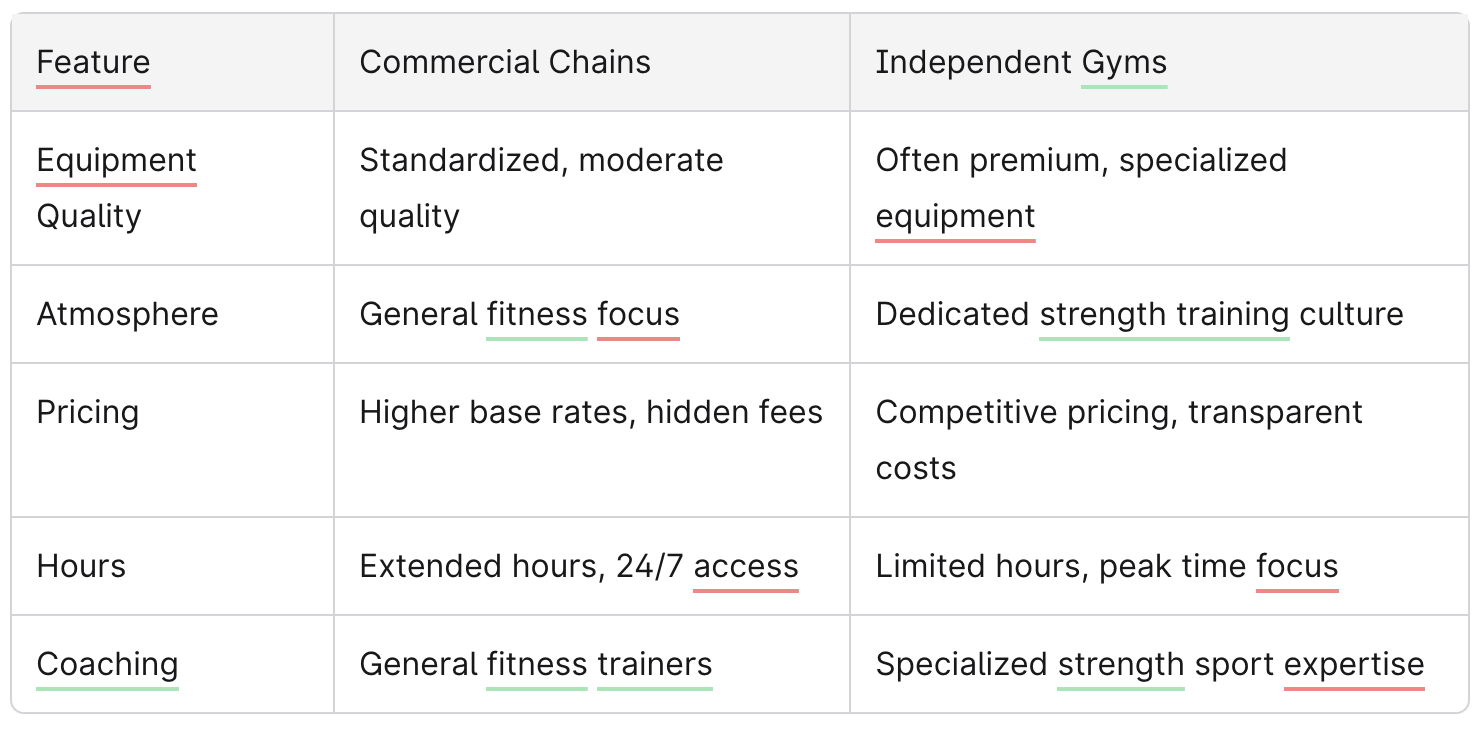
Independent facilities typically provide superior equipment quality and specialized coaching expertise, while commercial chains offer convenience through extended hours and standardized amenities. Your choice should align with whether you prioritize training quality and community or convenience and accessibility. Life Time Fitness, for example, is known for providing a luxurious all-in-one experience with extensive equipment and amenities that cater to a variety of fitness goals and preferences.
Transition: Even with careful evaluation, certain challenges commonly arise during the gym selection and membership experience.
Common Challenges and Solutions
Understanding common obstacles in weight lifting gym membership helps you make informed decisions and create strategies for successful long-term training.
Challenge 1: Limited Equipment Access During Peak Hours
Solution: Schedule gym visits during your preferred training times and evaluate equipment availability realistically. Consider off-peak memberships or flexible scheduling to avoid crowded periods.
Many serious athletes discover that training during off-peak hours provides better equipment access and a more focused training environment, often at reduced membership rates.
Challenge 2: Intimidating Gym Atmosphere for Beginners
Solution: Look for facilities offering beginner-friendly programs and welcoming community culture. Seek gyms where staff and members actively support new athletes developing confidence and technique.
Quality weight lifting gyms recognize that today’s beginners become tomorrow’s dedicated members, creating inclusive environments where all fitness levels can succeed and grow. Members at Brooklyn Training Hall, for instance, report feeling stronger and healthier due to the supportive community vibe, which emphasizes connection and encouragement. Brooklyn Training Hall also emphasizes the importance of community connection and fun in their training programs.
Challenge 3: High Membership Costs at Specialized Facilities
Solution: Calculate cost per training session and evaluate the value of specialized equipment, expert coaching, and community support against budget considerations.
Consider that investing in quality training environments often accelerates progress and prevents injuries, potentially reducing long-term costs while enhancing your overall fitness journey.
Transition: Armed with evaluation criteria and solutions to common challenges, you can now take concrete steps toward finding your ideal training facility.
Conclusion and Next Steps
The right weight lifting gym provides the equipment quality, coaching expertise, and community support necessary to achieve your strength training goals and enhance your overall performance. At Fit Results, we understand that quality facilities offer more than just access to weights—they create a welcoming environment where expert guidance and personalized coaching are at the heart of your fitness journey. Whether you’re a beginner or an experienced athlete, having the right support makes all the difference in training safely and effectively, helping you build confidence and succeed at every step.
To get started:
- Visit potential gyms during your preferred training times to assess equipment availability and facility atmosphere when you would actually train
- Trial memberships or day passes to test facilities allow hands-on evaluation of equipment quality and community dynamics before committing to long-term contracts
- Connect with gym staff and existing members for insights about programming options, coaching quality, and the overall training experience
Related Topics: Explore home gym setups for supplemental training, online coaching for programming guidance, and competition preparation resources as you advance in your strength training journey.
The Complete Guide to Weight Lifting Gyms: Finding the Perfect Training Facility
Introduction
Weight lifting gyms are specialized fitness facilities designed specifically for serious strength training, powerlifting, and bodybuilding pursuits. Unlike general fitness centers that prioritize cardio equipment and group classes, these dedicated strength training environments focus on providing the heavy-duty equipment and expert guidance necessary for athletes to build strength and achieve their fitness goals. Many weight lifting gyms offer 24/7 access, allowing members to train at their convenience and accommodate diverse schedules. Strength Lab Performance Center, for example, supports members in reaching their fitness goals with flexible workout options and round-the-clock availability.
What This Guide Covers
This guide is your personal roadmap to finding the perfect weight lifting gym that fits your unique fitness journey. We'll walk you through the different types of gyms, the essential strength equipment you need, how to evaluate facilities, and ways to get the most out of your membership. Whether you're a seasoned lifter or just stepping into the world of strength training, this guide has practical advice tailored for you. We keep it focused on weight lifting gyms and won’t dive into general fitness, nutrition, or specific workout programming.
Who This Is For
If you’re serious about building strength, powerlifting, bodybuilding, or just want expert guidance and a supportive community, this guide is made for you. Whether upgrading from a home gym or switching from a general fitness center, we help you find a facility that matches your training experience and fitness levels.
Additional Questions You Might Have
Q: Can I join a weight lifting gym if I’m new to strength training?
A: Absolutely! Many weight lifting gyms welcome beginners and offer beginner-friendly classes, personal training, and community support to help you build confidence and learn proper technique.
Q: How important is coaching in a weight lifting gym?
A: Coaching is crucial for your progress and safety. Expert trainers provide personalized guidance, help you master technique, and design programs that align with your goals, whether you're powerlifting, bodybuilding, or just building strength.
Q: Are weight lifting gyms suitable for people with injuries or special needs?
A: Yes, many gyms offer injury-friendly modifications and personalized training plans to accommodate your needs. Be upfront with trainers so they can tailor your workouts safely.
Q: What should I expect from a typical visit to a weight lifting gym?
A: Expect a focused environment with quality strength equipment like free weights, power racks, and specialized machines. You’ll find a community of like-minded athletes and often have access to coaching and classes to support your training.
What This Guide Covers
This comprehensive guide covers gym types and their specializations, essential strength equipment requirements, evaluation criteria for selecting facilities, and strategies to maximize your membership value. We do not cover general fitness advice, nutrition planning, or specific workout programming.
Who This Is For
This guide is designed for serious lifters, powerlifters, bodybuilders, and strength athletes seeking specialized training facilities. Whether you’re transitioning from a home gym setup or looking to upgrade from a general fitness center, you’ll find practical guidance to determine the right facility for your training experience and fitness levels.
Additional Questions You Might Have
Q: Can I find a weight lifting gym that accommodates all ages and fitness levels?
A: Absolutely! Many weight lifting gyms pride themselves on welcoming clients of all ages and fitness levels. Whether you’re a young athlete or someone looking to build strength later in life, gyms often offer tailored programs and expert guidance to help every person succeed safely and effectively.
Q: How can I stay motivated during my fitness journey at a weight lifting gym?
A: Staying motivated often comes down to finding the right team and community that supports your goals. Many gyms foster a family-like atmosphere where members encourage each other, track progress together, and celebrate milestones. Joining group classes or working with personal trainers can also provide the accountability and expert guidance needed to keep you focused week after week.
Why This Matters
Selecting the right weight lifting gym directly impacts your ability to perform at peak levels, access proper coaching and expert guidance, and maintain the motivation necessary for long-term success. The wrong facility can limit your progress through inadequate equipment, poor community support, or lack of structured programming appropriate for your fitness journey.
What You’ll Learn:
- Different weight lifting gym types and their unique advantages
- Essential equipment and services that separate quality facilities from basic gyms
- Step-by-step evaluation process to assess potential training facilities
- Solutions to common membership challenges and selection obstacles
Understanding Weight Lifting Gyms
Weight lifting gyms are specialized facilities that prioritize strength equipment, free weights, and the coaching expertise needed for serious strength development. These facilities distinguish themselves through their focus on barbells, dumbbells, power racks, and specialized machines rather than the cardio-dominant equipment found in general fitness centers.
The fundamental difference lies in equipment quality and community focus. Weight lifting gyms feature competition-standard barbells, extensive plate availability, and multiple squat racks to accommodate serious training sessions. The atmosphere emphasizes performance, technique, and progressive strength development rather than general fitness maintenance. A gym that allows the use of chalk often caters to serious lifters, further highlighting its commitment to strength-focused training.
Traditional Powerlifting Gyms
Traditional powerlifting gyms center their entire facility around the three core powerlifting movements: squat, bench press, and deadlift. These facilities feature multiple power racks, competition-standard barbells, and dedicated deadlift platforms with proper flooring to handle heavy loads safely.
This connects to the main concept of specialization because powerlifting gyms create an environment specifically designed for maximal strength development. Members can access knowledgeable coaches with proven expertise in strength training, and the community consists of athletes with similar goals focused on building raw power and strength.
Olympic Weightlifting Centers
Olympic weightlifting centers focus specifically on the clean & jerk and snatch movements that define Olympic competition. These facilities provide specialized platforms, bumper plates for safe dropping, and coaching staff with expertise in the complex technique requirements of Olympic lifts.
Building on powerlifting gyms, Olympic weightlifting centers represent an even more specialized approach with different equipment needs and coaching focus. The movements demand enhanced mobility work, precise technique development, and recovery protocols that differ significantly from traditional powerlifting training.
Bodybuilding and Physique Gyms
Bodybuilding and physique gyms emphasize hypertrophy and muscle development through extensive machine availability, cable systems, and isolation equipment. These facilities feature comprehensive dumbbell sets, adjustable benches, and strategic mirror placement to support form analysis and confidence building. Gold's Gym, often referred to as the 'Mecca of Bodybuilding,' has set a benchmark in this category with its strong reputation in strength training and physique development. Additionally, Gold's Gym provides tools for everyone, from beginners to pros, to reach their fitness goals using free weights and specialized equipment.
The relationship to other gym types reflects a shift from pure strength focus to aesthetic and conditioning goals. Unlike powerlifting facilities, bodybuilding gyms provide variety in equipment to target specific muscle groups and create the training environment necessary for physique development.
Transition: Understanding these gym types provides the foundation for evaluating what specific equipment and services each facility should offer to support your training goals.
Additional Questions You Might Have
Q: How do bodybuilding gyms support recovery during intense training phases?
A: Many bodybuilding gyms recognize the importance of recovery and offer amenities such as stretching areas, mobility classes, and sometimes even recovery tools like foam rollers or massage services. Prioritizing recovery helps you avoid burnout and supports muscle growth, allowing you to train consistently and effectively.
Q: Can I access bodybuilding gym facilities anytime to fit my busy schedule?
A: Yes! Many bodybuilding and weight lifting gyms offer 24/7 access or extended hours to accommodate various lifestyles. This flexibility allows you to train whenever it suits you best, helping maintain consistency in your fitness journey.
Essential Equipment and Services
The equipment quality and availability in weight lifting gyms directly determines whether serious athletes can perform their training programs effectively and safely.
Free Weight Equipment
Olympic barbells form the cornerstone of any serious weight lifting facility, meeting international standards for length, weight, and sleeve rotation. Quality facilities stock multiple barbells to prevent wait times during peak hours and provide specialty bars including safety squat bars, hex bars, and EZ curl bars for exercise variation.
Complete dumbbell sets ranging from light weights for beginners to heavy options for advanced athletes ensure all fitness levels can train effectively. Weight plate availability should include both iron and bumper plate options, with sufficient quantities to support multiple heavy training sessions simultaneously.
Additional Questions You Might Have
Q: How can I ensure my training program aligns with my fitness goals at a weight lifting gym?
A: Communicating your specific goals with trainers and coaches is key. Many gyms offer personalized assessments and customized programming to help you build strength, improve technique, and track progress effectively. Don’t hesitate to ask for expert guidance to tailor your workouts to your unique fitness journey.
Q: What amenities should I look for to support recovery after intense weight lifting sessions?
A: Recovery is essential to avoid burnout and injury. Look for gyms that provide recovery-focused amenities such as stretching areas, mobility classes, foam rollers, or even massage services. These resources, combined with proper rest and nutrition, will help you recover efficiently and maintain consistent progress.
Strength Training Stations
Power racks and squat racks represent essential safety equipment for heavy compound movements, featuring adjustable safety bars and pull-up capabilities. Quality facilities provide enough racks to accommodate multiple training sessions without extended wait times during peak hours.
Unlike basic gym equipment, dedicated deadlift platforms with proper shock-absorbing flooring protect both equipment and facility structure while allowing safe performance of heavy deadlifts. Adjustable bench availability ensures members can perform incline, decline, and flat pressing movements with proper support.
Specialized Services
Personal training with certified coaches who possess strength sport expertise provides invaluable guidance for technique development and program design. These trainers understand the specific demands of powerlifting, Olympic weightlifting, and bodybuilding rather than general fitness programming. Brooklyn Training Hall, for instance, offers fully customized, one-on-one coaching to help individuals reach their unique strength and fitness goals. Similarly, Portland Strength Collective prioritizes strength gains through structured programming and personalized guidance. Additionally, Portland Strength Collective offers a free, all-levels community workout every Saturday to promote fitness and good vibes.
Group coaching sessions and structured programming offer community support and expert guidance at more accessible pricing than individual training. Competition preparation services and meet hosting capabilities indicate a facility’s commitment to serious strength sport development. Charlotte Strength, for example, provides genuine support and motivation to its members during competitions, fostering a strong sense of community and encouragement. Charlotte Strength also offers HYROX simulations and classes led by knowledgeable coaches to elevate performance.
Key Points:
- Competition-standard equipment quality ensures consistent training experience
- Adequate equipment quantities prevent bottlenecks during peak training hours
- Specialized coaching expertise supports technique development and safety
Transition: With equipment and service requirements established, the next step involves systematically evaluating potential facilities against these criteria.
Evaluating and Choosing Your Weight Lifting Gym
Selecting the right weight lifting gym requires systematic evaluation of equipment, atmosphere, and services to determine alignment with your fitness goals and training experience level.
Step-by-Step: Gym Evaluation Process
When to use this: For serious lifters seeking optimal training environments that support long-term progress and performance goals.
- Assess equipment quality and availability during peak hours: Visit during your preferred training times to observe wait times for squat racks, bench press stations, and other essential equipment. Test barbells for proper rotation and examine weight plate availability.
- Evaluate coaching staff credentials and experience: Discuss training background with available trainers, review their expertise in your specific strength discipline, and observe their interaction with current members to assess coaching quality.
- Test facility atmosphere and member community: Spend time observing the gym culture, noise levels, and whether the environment supports focused training. Engage with existing members to understand community dynamics and support systems.
- Review membership terms, pricing, and additional fees: Analyze contract length requirements, cancellation policies, guest privileges, and any hidden fees for amenities or services to determine total membership costs.
Comparison: Commercial Chains vs Independent Gyms

Independent facilities typically provide superior equipment quality and specialized coaching expertise, while commercial chains offer convenience through extended hours and standardized amenities. Your choice should align with whether you prioritize training quality and community or convenience and accessibility. Life Time Fitness, for example, is known for providing a luxurious all-in-one experience with extensive equipment and amenities that cater to a variety of fitness goals and preferences.
Transition: Even with careful evaluation, certain challenges commonly arise during the gym selection and membership experience.
Common Challenges and Solutions
Understanding common obstacles in weight lifting gym membership helps you make informed decisions and create strategies for successful long-term training.
Challenge 1: Limited Equipment Access During Peak Hours
Solution: Schedule gym visits during your preferred training times and evaluate equipment availability realistically. Consider off-peak memberships or flexible scheduling to avoid crowded periods.
Many serious athletes discover that training during off-peak hours provides better equipment access and a more focused training environment, often at reduced membership rates.
Challenge 2: Intimidating Gym Atmosphere for Beginners
Solution: Look for facilities offering beginner-friendly programs and welcoming community culture. Seek gyms where staff and members actively support new athletes developing confidence and technique.
Quality weight lifting gyms recognize that today’s beginners become tomorrow’s dedicated members, creating inclusive environments where all fitness levels can succeed and grow. Members at Brooklyn Training Hall, for instance, report feeling stronger and healthier due to the supportive community vibe, which emphasizes connection and encouragement. Brooklyn Training Hall also emphasizes the importance of community connection and fun in their training programs.
Challenge 3: High Membership Costs at Specialized Facilities
Solution: Calculate cost per training session and evaluate the value of specialized equipment, expert coaching, and community support against budget considerations.
Consider that investing in quality training environments often accelerates progress and prevents injuries, potentially reducing long-term costs while enhancing your overall fitness journey.
Transition: Armed with evaluation criteria and solutions to common challenges, you can now take concrete steps toward finding your ideal training facility.
Conclusion and Next Steps
The right weight lifting gym provides the equipment quality, coaching expertise, and community support necessary to achieve your strength training goals and enhance your overall performance. At Fit Results, we understand that quality facilities offer more than just access to weights—they create a welcoming environment where expert guidance and personalized coaching are at the heart of your fitness journey. Whether you’re a beginner or an experienced athlete, having the right support makes all the difference in training safely and effectively, helping you build confidence and succeed at every step.
To get started:
- Visit potential gyms during your preferred training times to assess equipment availability and facility atmosphere when you would actually train
- Trial memberships or day passes to test facilities allow hands-on evaluation of equipment quality and community dynamics before committing to long-term contracts
- Connect with gym staff and existing members for insights about programming options, coaching quality, and the overall training experience
Related Topics: Explore home gym setups for supplemental training, online coaching for programming guidance, and competition preparation resources as you advance in your strength training journey.

.png)
