What to Expect from Personal Training: Unlock Your Fitness Journey in Chicago

A yearly personal trainer membership in Chicago is a planned, year-long coaching relationship built to produce clear results, steady habit change, and the added push of community accountability. This guide walks you through what a year of personal training looks like — from the intake and baseline testing, to quarterly check-ins, month-to-month progress, and how membership options and pricing compare locally. You’ll get practical expectations for assessments, program periodization, nutrition support, and how time with one trainer deepens trust and performance. We also cover typical choices you’ll face — private vs. semi-private, how trainer matching works, and the role community classes play — so you can pick the membership that fits your goals. The sections below explain why annual plans work, how a year-long program is organized, cost and policy considerations, trainer qualifications and matching, a quarter-by-quarter roadmap, and examples of client outcomes and community support.
At your first meeting or first session with a personal trainer, you can expect an initial consultation focused on understanding your fitness goals, medical history, and current fitness level. This assessment phase is essential for creating a safe, personalized training plan and is more about planning and evaluation than jumping straight into a workout.
A year-long plan shifts focus from short-term fixes to real lifestyle change — the timetable that makes habits stick.
Sustainable fitness: from short-term wins to long-term change* At Holly Roser Fitness, the emphasis is on building a sustainable fitness routine that fits your life — not a quick overhaul. Expect a steady, coached process that moves you from early wins to lasting habits, with support that keeps progress consistent and enjoyable. From Short-Term Goals to Long-Term Success: A Guide to Sustaining Fitness Habits*
Why choose a yearly personal training membership at Fit Results Chicago?
Fit Results builds on the general case for annual training with studio-level benefits: tailored programs, experienced coaches, a supportive community, and membership policies designed to make steady progress realistic. Those systems — programming, check-ins, and community — are what help annual commitments outperform erratic training bursts. A holistic approach is taken, considering not just your workouts but also lifestyle habits such as nutrition, sleep, and stress management, all of which contribute to your overall well-being.
Below are the primary, research-aligned benefits of committing to a year:
- Sustained progress : Periodized training and consistent sessions add up to measurable strength and conditioning gains.
- Habit formation : Repeated coaching interactions help make exercise and better eating part of your routine.
- Injury resilience : Regular mobility and corrective work cut re-injury risk and support recovery.
- Community accountability : Group classes and peers make it easier to keep showing up.
Regular exercise as part of a personal training program can also lead to reduced stress and improved mood, further supporting your well-being.
Taken together, these benefits explain why many clients see their biggest changes when they commit to a structured year rather than short, stop-start training. The next section outlines the typical 12‑month outcomes you can expect.

What are the long-term benefits of annual personal training?
Over a year you get the time for behavioral, physiological, and skill adaptations to align. Clients experience positive changes in both physical and mental wellbeing, and we encourage everyone to celebrate small victories along the way to stay motivated. Most clients see steady increases in functional strength, improved conditioning, and clearer body-composition shifts from a progressive plan plus nutrition coaching. Coaching also helps consolidate recovery habits and more consistent sleep and meal patterns, so fitness becomes part of daily life instead of occasional effort. Long-term attention to mobility and corrective work also improves movement quality and reduces chronic pain. Achieving success in personal training is a gradual process, and common short-term physical changes include increased energy levels and improved sleep quality within the first few weeks. These layered gains are exactly why a longer commitment deepens the trainer-client relationship — which we cover next.
How does a yearly commitment strengthen the trainer-client relationship?
A 12‑month window gives trainers room to build trust, collect meaningful data, and refine programming in response to real progress. Trainers can periodize — build a base, increase intensity, and peak — while adapting for plateaus, injuries, or schedule shifts. Ongoing check-ins, session debriefs, and quarterly reviews create better communication and make accountability feel like partnership. Open communication between you and your trainer is essential for sharing goals, addressing concerns, and ensuring your program is tailored to your needs. Reflecting on your training sessions helps you communicate your preferences and challenges, allowing your trainer to make more effective adjustments to your program. That ongoing connection helps trainers make thoughtful progressions and timely corrective work rather than guessing from session to session. Next we’ll explain how that personalization is structured through assessments and review workflows.
Research highlights the role of a strong client-trainer bond in sustaining motivation and long-term commitment.
Client-trainer relationship: motivation & commitment* A positive, collaborative relationship between client and trainer supports motivation and sustained exercise behavior. While the detailed mechanisms are a topic of study, the practical takeaway is clear: enjoyable, consistent coaching boosts adherence and results in trainer-led settings. An investigation into the nature and role of the client-trainer relationship in exercise: applying the 3+ 1CS model, 2018*
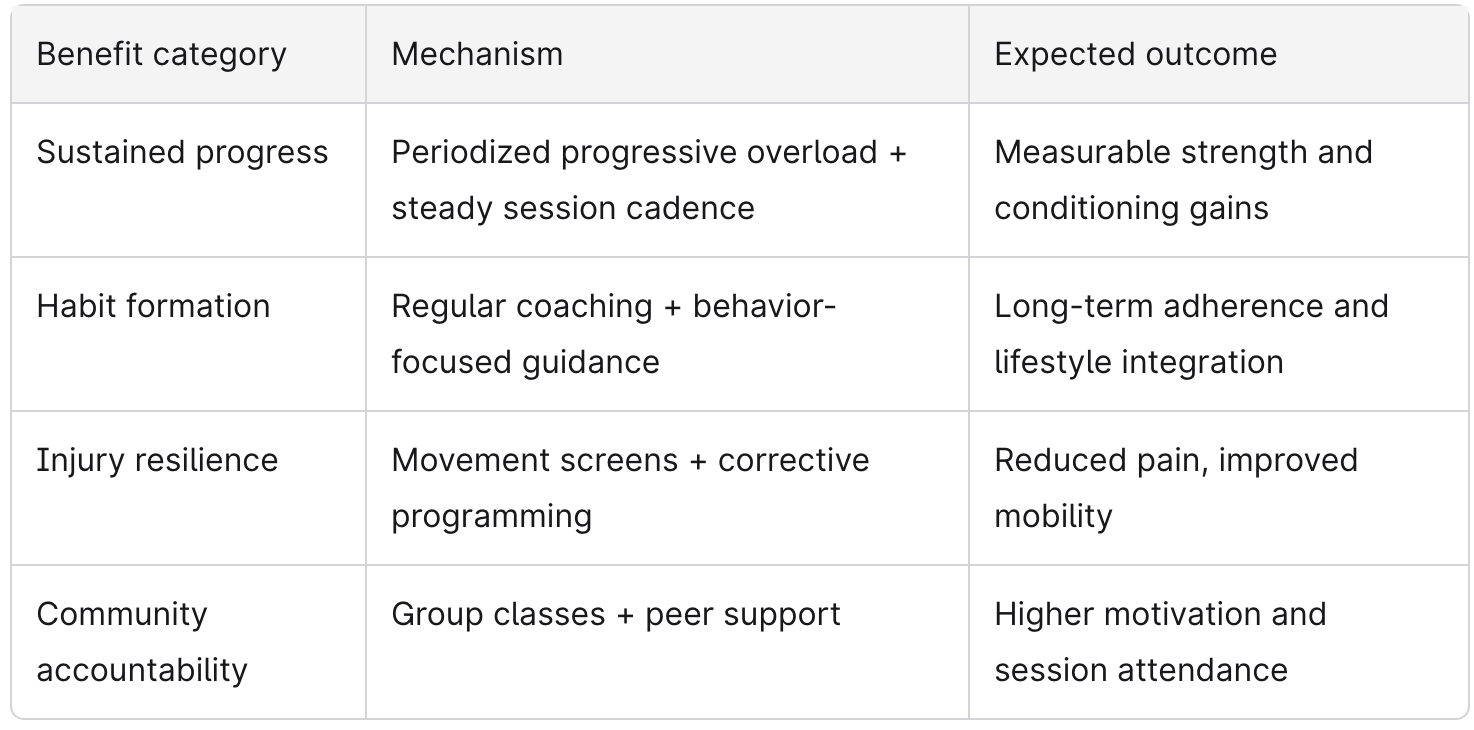
This table links major long-term benefits to the mechanisms that produce them and the outcomes you can expect. The next section shows how those mechanisms are organized in a year-long program.
How is your yearly personal training program structured?
A strong year-long program follows a clear cycle: initial consultation and baseline assessment, program design with scheduled sessions, and recurring quarterly reviews that adjust the plan based on tracked results. The workflow is cyclical — assess → plan → train → review → adjust — which supports steady progress and rapid response when goals or life circumstances change. During the initial consultation, you’ll complete a fitness assessment and fitness tests to determine your current fitness level, including measurements of body composition, flexibility, strength, and cardiovascular endurance. This information is used to create a personalized training plan and workout plan tailored to your goals and needs. An effective workout plan is developed based on these assessments, focusing on proper form, accountability, and education. A predictable cadence — weekly sessions, monthly check-ins, and quarterly performance reviews — gives structure to consistent adaptation. Below we break down intake and review steps so you know what to expect.
Here’s a concise step-by-step summary of the typical year-long workflow — the quick answer to “What should I expect in a year-long personal training program?”
- Initial consultation and baseline assessment : Health history, goal setting, fitness assessment, and fitness tests to establish your current fitness level.
- Program design and scheduling : A personalized training plan and workout plan matched to your availability and goals.
- Regular training and data collection : Sessions, logging, and short weekly check-ins.
- Quarterly review and recalibration : Formal progress reviews and program tweaks.
This timeline outlines the major program stages and leads into the more detailed intake and review descriptions that follow.
What happens during the initial consultation and assessment?
The intake establishes your starting point: health history, movement screening, and baseline performance measures that guide safe, individualized programming. During the initial discussion, your trainer will review your physical activity history, any past injuries, body weight, and assess your cardiovascular endurance to ensure your workout plan is safe and effective. Typical assessments include a goals interview, basic strength and mobility tests, posture and movement screens, and — when available — body-composition or functional performance measures. Mobility drills are often included to evaluate flexibility, range of motion, and movement quality, helping to prevent injuries. Trainers may also integrate data from wearables to adjust workout intensity based on your sleep and recovery metrics. Trainers use those findings to prioritize what to address first, set realistic short-term benchmarks, and design a training cadence that fits your schedule. That initial plan also sets the stage for nutrition conversations and habit coaching that continue throughout the year.
How are quarterly progress reviews and program adjustments managed?
Quarterly reviews formalize progress tracking and keep the program aligned with evolving goals. The review workflow typically looks like this: review objective metrics, reflect on adherence, adjust goals, and redesign the next training phase as needed. Metrics include strength or performance scores, movement-quality observations, session attendance, and subjective measures like energy and recovery. Trainers use each review to set quarter-specific targets and to identify barriers — time, injury, or motivation — that may require behavioral strategies. During these reviews, trainers make necessary adjustments to your training schedule and training sessions based on your progress and any feedback you provide. Providing feedback to your trainer about how you feel during workouts helps them adjust your training plan more effectively, ensuring your program remains tailored to your needs. This cyclical review process keeps programming responsive and focused on achieving year-long outcomes.
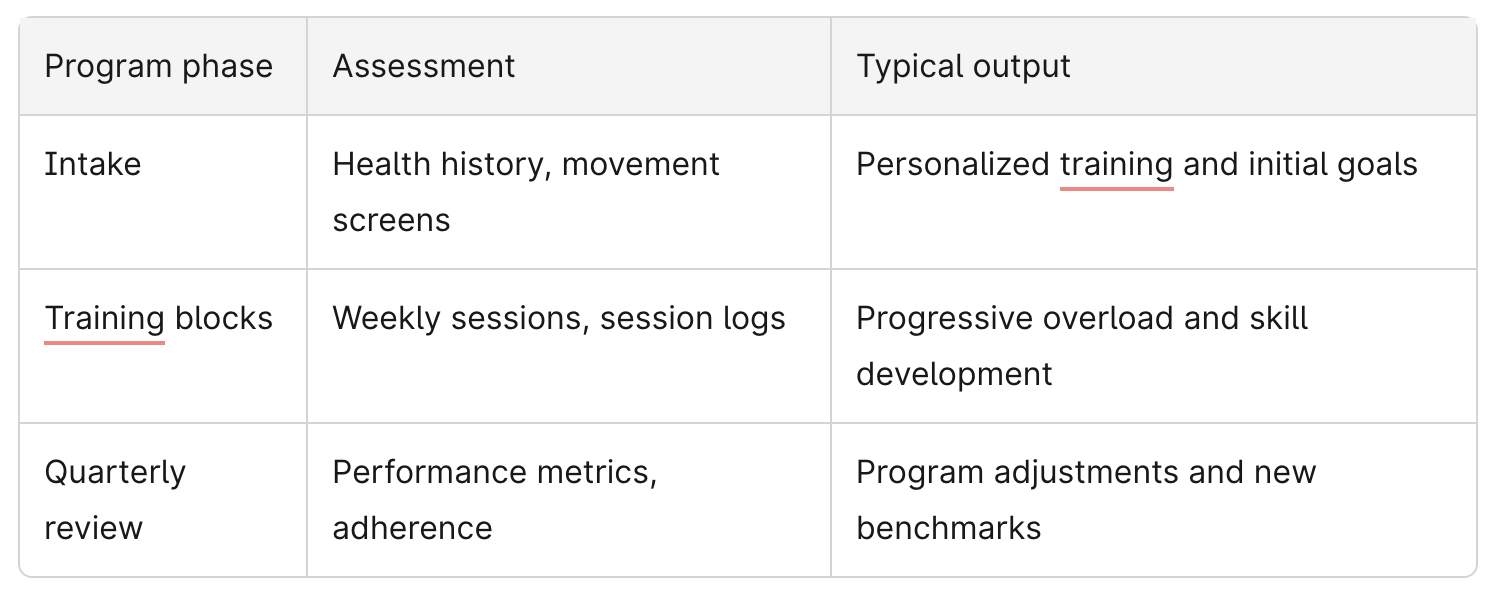
This summary shows the main phases of a year-long program and the outputs you can expect from each stage. Next, we cover costs and membership options you’ll find in Chicago.
What are the costs and membership options for annual personal training in Chicago?
Annual personal training memberships usually fall into three categories: private one-on-one training, semi-private (small group) training, and hybrid plans that mix private sessions with group class access. Each option balances frequency, personalization, and per-session cost: private training gives the most hands-on coaching, semi-private lowers per-person cost while keeping quality, and hybrid plans try to combine the best of both. The key value of an annual plan is predictable cost and generally a lower effective per-session price than buying single sessions, with the trade-off being a longer commitment. Below is a quick comparison of access and value drivers by membership type.
- Private one-on-one memberships deliver the most individualized programming and direct trainer time.
- Semi-private memberships run in small cohorts to lower per-person cost while preserving coaching quality.
- Hybrid memberships pair private sessions with group classes for flexibility and community support.
Use this simple comparison as a starting point for conversations during your consultation; a side-by-side breakdown helps you decide which model matches your goals and budget.
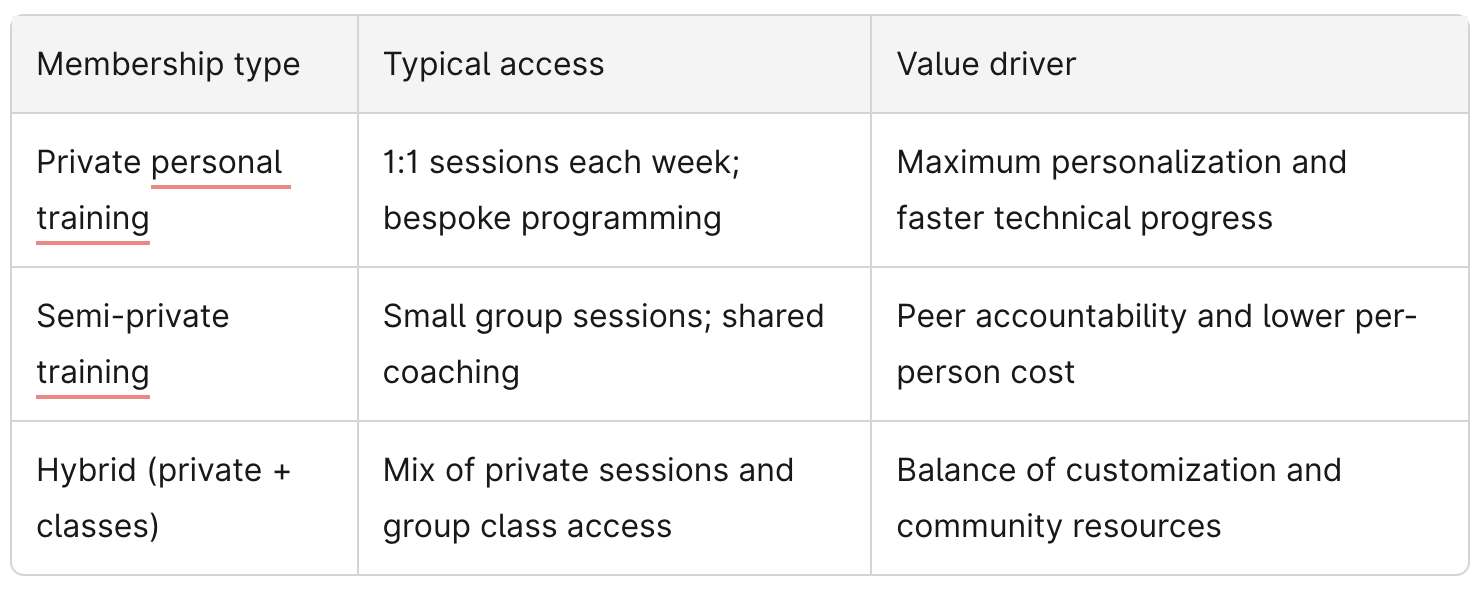
This comparison highlights the features to weigh when choosing an annual option — contact Fit Results for exact pricing and to discuss the best membership for your schedule and goals.
How does annual pricing compare to monthly or package rates?
Annual commitments typically offer better per-session value and more predictable costs than month-to-month or single-session packages. With committed clients, studios can plan periodized programming, reduce administrative churn, and optimize scheduling — those operational efficiencies often translate to savings. Pricing varies by studio and trainer experience, but annual plans usually make the most sense for people who want measurable, sustained results and can keep a consistent cadence. For precise pricing or promotions, schedule a consultation so the studio can tailor rates to your chosen membership and frequency.
What are the payment, cancellation, and freeze policies?
Membership policies commonly include a minimum initial commitment, freeze options, and clear cancellation procedures to protect programming continuity and fair scheduling for trainers. A common local practice is a minimum three-month commitment for new clients before annual terms kick in, which gives enough time to implement and evaluate early adaptations. Freeze policies tend to allow temporary pauses for medical or scheduling reasons, and cancellation terms spell out notice requirements and any prorated adjustments. Ask about freeze length, notice windows, and administrative fees during your consultation so the membership supports your long-term plan without surprises.
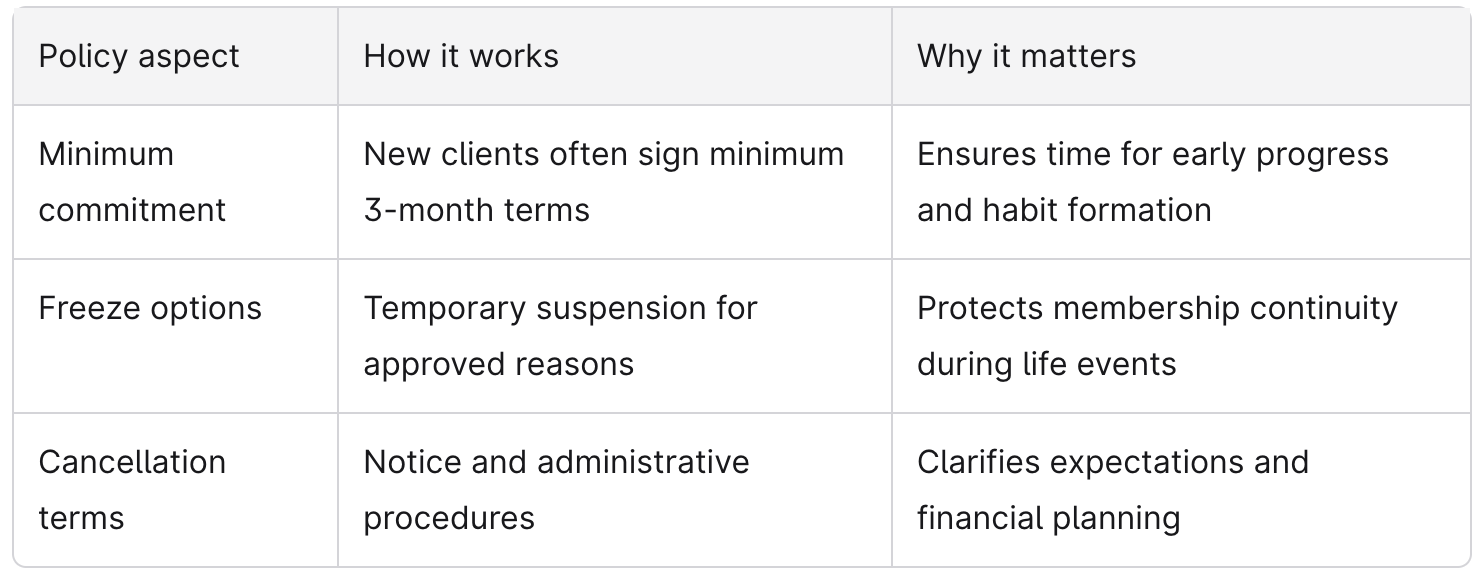
This table summarizes typical policy points — confirm exact terms with Fit Results during your consultation for annual membership options.
Who are the Fit Results personal trainers and how do they support your fitness journey?
Fit Results trainers act as program designers, movement coaches, and accountability partners who turn assessment data into month-to-month plans. Working with a professional trainer who is a certified personal trainer ensures you receive safe and effective guidance tailored to your needs. Coaches specialize across domains — strength, weight loss, rehab, and nutrition support — and work with members to set realistic goals and track progress with objective metrics. A good trainer not only designs effective programs but also monitors your progress, corrects movement issues, and educates you about fitness and health. Fit Results offers private and semi-private options plus group classes that integrate with personal training to boost consistency and community. When choosing a trainer, look for personal trainers who are certified by accredited organizations such as ACE or NASM. Client testimonials can provide valuable insight into a trainer's effectiveness in helping others reach their goals. The next section describes trainer qualifications and how the matching process pairs you with the right coach.
Below are core trainer qualifications and specializations you should expect when choosing a coach:
- Strength & conditioning expertise : Ability to design progressive resistance programs for varied goals.
- Injury rehabilitation awareness : Experience integrating corrective strategies and cooperating with rehab plans.
- Nutrition guidance integration : Practical coaching that aligns training with realistic nutrition changes.
This list captures the common categories of expertise; the next subsection explains certification types and how to verify a trainer’s fit without assuming specific credentials.
What certifications and specializations do our trainers have?
Expect Fit Results trainers to hold recognized personal-training credentials and to maintain specialties that meet common member goals — strength, weight loss, rehab, and nutrition support — without assuming specific named certifications here. Those specializations shape programming choices and the metrics used during quarterly reviews. Trainer bios and profile pages provide more detail on each coach’s background and experience; reviewing those profiles helps you pick a coach whose style and expertise match your needs. That leads into how trainer matching works to maximize compatibility.
How does trainer matching work for your personalized program?
Trainer matching pairs your goals, schedule, injury history, and personality with a trainer’s expertise and availability so programming is both effective and sustainable. Matching starts at intake: trainers assess goal specificity, movement limitations, and coaching-style preferences, then recommend a primary coach or a semi-private cohort that fits. Matching also considers logistics — session times and studio location in Chicago neighborhoods like South Loop and Logan Square — to support consistency. If your needs change, the studio usually supports re-matching to keep you progressing and motivated.
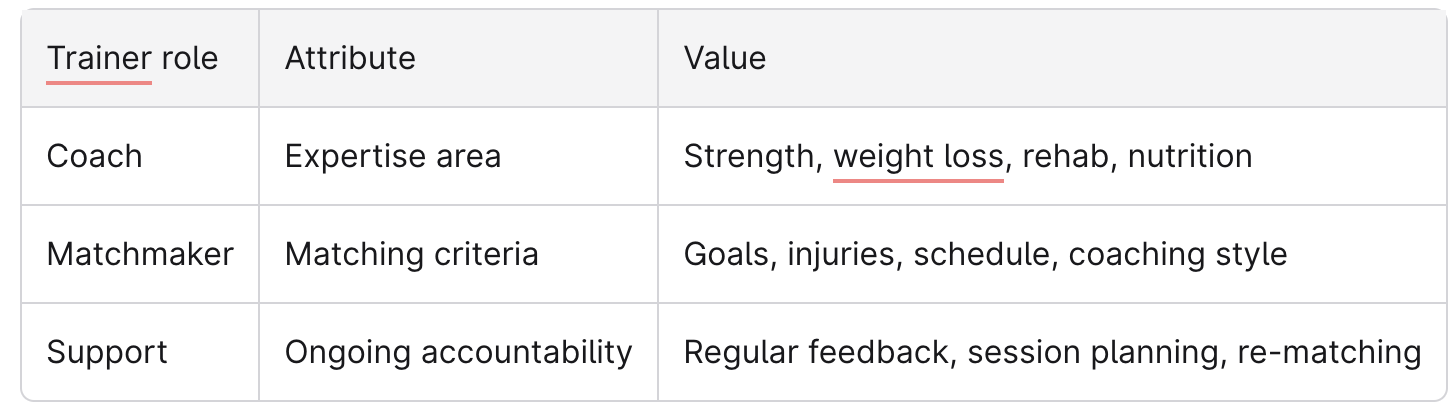
This table shows how trainers, matching criteria, and ongoing support work together to create a personalized experience.
What can you expect month-to-month in a year-long personal training membership?
A year-long membership moves through quarterly phases — foundation, progression, intensification, and maintenance — while month-to-month work stacks into those quarterly goals with clear milestones and measurable check-ins. Each month, your workout routines are tailored to your specific training goals—whether you want to lose weight, build muscle, or improve overall fitness. Your personalized exercise program will incorporate strength training, cardiovascular exercises, and specific exercises using free weights, resistance bands, or body weight, all designed to help you burn calories and achieve your goals. Brisk walking and dynamic stretches are often included as part of the warm-up during a workout session or personal training session to prepare your body and enhance mobility. During each session with a personal trainer, your trainer will demonstrate each exercise and explain the proper form and technique, emphasizing correct form and proper technique for injury prevention and effectiveness. Adequate rest and incorporating stretching into your daily routine are important for recovery and long-term progress. Your first personal training workout session might feel a bit overwhelming, but your trainer is there to support and guide you, and the session will end with a cool-down to help your body recover and reduce muscle soreness. At the end of your first session, your trainer will discuss the next steps in your fitness journey, and if you don't have time for a workout during your first meeting, your next session will start with that. Simple logging and performance metrics keep monthly progress visible, which supports motivation and informed adjustments between reviews. Below is a quarter-by-quarter roadmap to set realistic expectations for the year.
Here’s a practical quarter-by-quarter roadmap to help you plan the year:
- Quarter 1: Foundation — assessments, fundamentals, habit setup, and consistent attendance.
- Quarter 2: Momentum — strength building, skill refinement, and gradual increases in load.
- Quarter 3: Intensification — plateau-busting strategies, higher intensity, and variation.
- Quarter 4: Sustainment — maintenance, lifestyle integration, and renewal planning.
What are the key focus areas each quarter?
Q1 centers on assessment, movement quality, and building consistent habits. Q2 shifts toward progressive overload — adding strength and metabolic work — while refining skill and conditioning. Q3 emphasizes targeted intensification, variation, and interventions to overcome plateaus and reach performance or physique targets. Q4 focuses on consolidation and planning: keeping gains, integrating changes into daily life, and preparing the next cycle. Each quarter includes measurable targets — attendance, strength markers, mobility benchmarks — that guide adjustments at reviews.
Progressive overload — gradually increasing demand on the body — is a core principle that drives continued adaptation and strength gains.
Progressive overload in resistance training design Progressive overload involves increasing training demand over time, commonly by adding load, but also by adjusting repetitions, volume, or intensity. Both load and repetition strategies can produce muscular adaptations, and thoughtful progression keeps results consistent while reducing injury risk. Progressive overload without progressing load? The effects of load or repetition progression on muscular adaptations, D Plotkin, 2022
How is nutrition guidance integrated throughout the year?
Nutrition support starts at the baseline intake and continues with targeted check-ins that line up with training phases. Early months focus on practical habits — consistent meals, protein distribution, and hydration — while later phases dial in calories and macros to support muscle growth, fat loss, or performance goals. Nutrition tweaks are tied to training blocks: as volume or intensity rises, coaches recommend fueling and recovery adjustments; if progress stalls, small dietary changes are trialed and tracked. Integrating nutrition with training creates a coherent plan that drives measurable change across quarters.
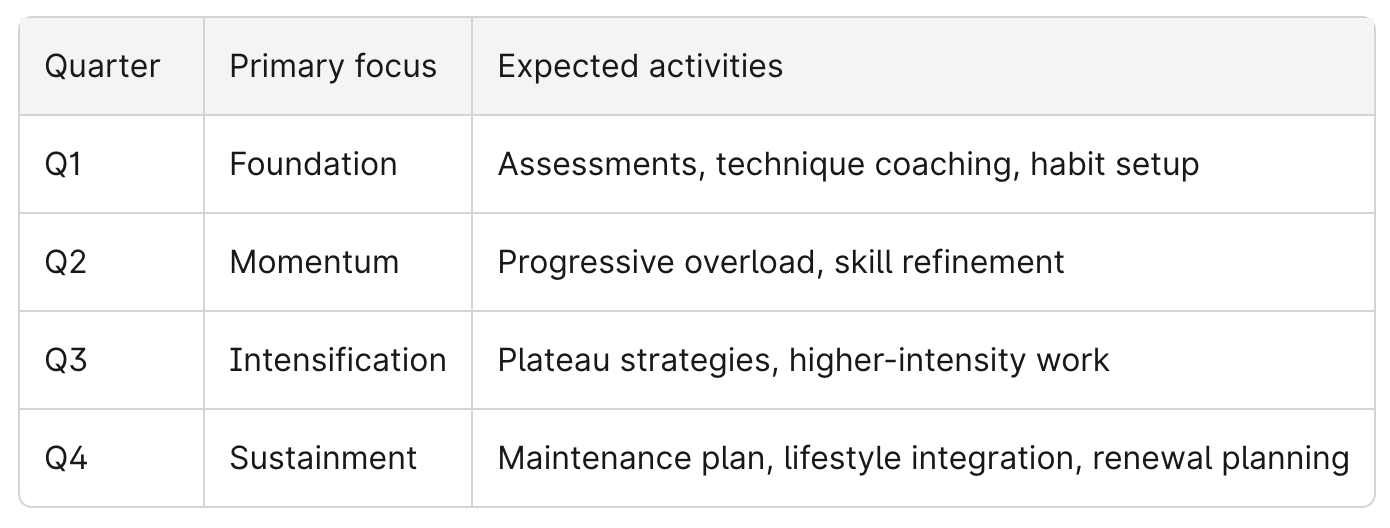
This quarter-by-quarter table clarifies what you’ll do in each phase and how nutrition and training evolve together for lasting results.
How have clients benefited from yearly personal trainer memberships at Fit Results?
Clients who commit to a year of training often see more lasting outcomes because the program addresses both physiological changes and habit formation over time. It's important to understand that meaningful results do not happen overnight—progress takes patience and consistency. Many participants notice shifts in body composition, such as increased muscle tone or reduced body fat, before seeing changes reflected on the scale. Real transformations usually combine strength and body-composition improvements with behavior changes — consistent training routines, improved nutrition, and better recovery — that stick after the membership ends. Fit Results intentionally weaves community features and group classes into memberships so personal training is reinforced by peer support and routine class attendance; that social layer boosts consistency and motivation. The next sections summarize anonymized success themes and explain how our community supports long-term goals.
Common outcome themes across year-long journeys include:
- Measurable strength and fitness gains : Progressive programming produces clear performance improvements.
- Sustained habit change : Coaching turns exercise and nutrition into daily routines.
- Community-driven consistency : Group classes and peer networks reduce drop-off and keep members accountable.
These recurring outcomes help prospective members set realistic expectations and see how individual coaching and community resources work together. Below we offer brief, anonymized story outlines that reflect typical pathways.
What are some inspiring long-term client success stories?
Over 12 months, client stories often share the same pattern: a thorough assessment, steady progress through months 2–6, a focused intensification phase to break plateaus, and a maintenance plan for long-term sustainability. Narratives highlight technical improvements (squat and hinge mechanics), steady strength gains, and nutrition adjustments that change daily energy and performance. This article summarizes common pathways without naming specific testimonials; to see full case studies, review the studio’s success story resources during a consultation.
How does the Fit Results community support your fitness goals?
The Fit Results community — a supportive FitFam-style network — pairs group classes, social events, and peer accountability to reinforce individual progress and lower barriers to consistency. Community tools include classes that complement one-on-one coaching, peer encouragement that sustains attendance, and occasional events that boost motivation and social connection. For members juggling injuries or busy schedules, community options offer flexible ways to stay engaged while keeping accountability high. This social layer amplifies personal training, so coaching is reinforced by shared energy rather than replaced by it.
Ready to take the next step? Fit Results invites you to book a consultation or explore membership options to find the best fit for your goals and schedule. That first conversation turns planning into a personalized annual program.
- Schedule a consultation : Talk through goals, availability, and membership options with our team.
- Choose a membership format : Pick private, semi-private, or hybrid plans that match your preferences and budget.
- Begin the year-long plan : Complete assessments, start training, and plan quarterly reviews.
Frequently asked questions
What should I consider when choosing a personal trainer in Chicago?
Look for a trainer whose qualifications, experience, and specialties align with your goals — strength, weight loss, or rehab, for example. Pay attention to coaching style and communication so the trainer’s approach fits your personality. Meeting a trainer for a consultation helps you gauge rapport and commitment before signing up.
How often should I expect to meet with my personal trainer?
Most clients meet with a trainer one to two times per week, depending on goals and schedule. Consistent sessions build habits and deliver measurable progress. Frequency can be adjusted over time — more sessions during intensification phases or fewer for maintenance — so your plan stays aligned with your needs.
What role does nutrition play in a personal training program?
Nutrition is a core part of results: it affects performance, recovery, and body composition. Trainers integrate practical nutrition guidance starting at intake and during quarterly reviews. The focus is on sustainable habits — meal consistency, protein timing, and sensible calorie and macronutrient adjustments — that support your training phases.
Can I switch trainers if my needs change?
Yes — most studios, including Fit Results, allow re-matching if your needs or preferences evolve. Trainers assess goals and preferences at intake, and if things change, the studio typically helps you find a better fit so your progress continues uninterrupted.
What types of community support are available with a personal training membership?
Memberships often include access to group classes, social events, and peer accountability systems. These community elements complement one-on-one coaching by offering extra training options, social motivation, and flexible ways to stay active when schedules fluctuate.
How do I track my progress throughout the year?
Progress tracking usually combines regular assessments, simple performance metrics, and quarterly reviews. Trainers encourage logging workouts and key nutrition notes so adherence is visible and adjustments can be data-driven. This approach makes progress measurable and keeps momentum focused.
Conclusion
A year-long personal training membership in Chicago gives you the time, structure, and support to make meaningful, lasting change: steady progress, stronger habits, and better movement resilience. With the right membership format and coach, you get a tailored experience that fits your life and goals — backed by a community that helps you keep going. Start by scheduling a consultation with Fit Results and turn planning into a year of consistent progress.
What to Expect from Personal Training: Unlock Your Fitness Journey in Chicago
A yearly personal trainer membership in Chicago is a planned, year-long coaching relationship built to produce clear results, steady habit change, and the added push of community accountability. This guide walks you through what a year of personal training looks like — from the intake and baseline testing, to quarterly check-ins, month-to-month progress, and how membership options and pricing compare locally. You’ll get practical expectations for assessments, program periodization, nutrition support, and how time with one trainer deepens trust and performance. We also cover typical choices you’ll face — private vs. semi-private, how trainer matching works, and the role community classes play — so you can pick the membership that fits your goals. The sections below explain why annual plans work, how a year-long program is organized, cost and policy considerations, trainer qualifications and matching, a quarter-by-quarter roadmap, and examples of client outcomes and community support.
At your first meeting or first session with a personal trainer, you can expect an initial consultation focused on understanding your fitness goals, medical history, and current fitness level. This assessment phase is essential for creating a safe, personalized training plan and is more about planning and evaluation than jumping straight into a workout.
A year-long plan shifts focus from short-term fixes to real lifestyle change — the timetable that makes habits stick.
Sustainable fitness: from short-term wins to long-term change* At Holly Roser Fitness, the emphasis is on building a sustainable fitness routine that fits your life — not a quick overhaul. Expect a steady, coached process that moves you from early wins to lasting habits, with support that keeps progress consistent and enjoyable. From Short-Term Goals to Long-Term Success: A Guide to Sustaining Fitness Habits*
Why choose a yearly personal training membership at Fit Results Chicago?
Fit Results builds on the general case for annual training with studio-level benefits: tailored programs, experienced coaches, a supportive community, and membership policies designed to make steady progress realistic. Those systems — programming, check-ins, and community — are what help annual commitments outperform erratic training bursts. A holistic approach is taken, considering not just your workouts but also lifestyle habits such as nutrition, sleep, and stress management, all of which contribute to your overall well-being.
Below are the primary, research-aligned benefits of committing to a year:
- Sustained progress : Periodized training and consistent sessions add up to measurable strength and conditioning gains.
- Habit formation : Repeated coaching interactions help make exercise and better eating part of your routine.
- Injury resilience : Regular mobility and corrective work cut re-injury risk and support recovery.
- Community accountability : Group classes and peers make it easier to keep showing up.
Regular exercise as part of a personal training program can also lead to reduced stress and improved mood, further supporting your well-being.
Taken together, these benefits explain why many clients see their biggest changes when they commit to a structured year rather than short, stop-start training. The next section outlines the typical 12‑month outcomes you can expect.
What are the long-term benefits of annual personal training?
Over a year you get the time for behavioral, physiological, and skill adaptations to align. Clients experience positive changes in both physical and mental wellbeing, and we encourage everyone to celebrate small victories along the way to stay motivated. Most clients see steady increases in functional strength, improved conditioning, and clearer body-composition shifts from a progressive plan plus nutrition coaching. Coaching also helps consolidate recovery habits and more consistent sleep and meal patterns, so fitness becomes part of daily life instead of occasional effort. Long-term attention to mobility and corrective work also improves movement quality and reduces chronic pain. Achieving success in personal training is a gradual process, and common short-term physical changes include increased energy levels and improved sleep quality within the first few weeks. These layered gains are exactly why a longer commitment deepens the trainer-client relationship — which we cover next.
How does a yearly commitment strengthen the trainer-client relationship?
A 12‑month window gives trainers room to build trust, collect meaningful data, and refine programming in response to real progress. Trainers can periodize — build a base, increase intensity, and peak — while adapting for plateaus, injuries, or schedule shifts. Ongoing check-ins, session debriefs, and quarterly reviews create better communication and make accountability feel like partnership. Open communication between you and your trainer is essential for sharing goals, addressing concerns, and ensuring your program is tailored to your needs. Reflecting on your training sessions helps you communicate your preferences and challenges, allowing your trainer to make more effective adjustments to your program. That ongoing connection helps trainers make thoughtful progressions and timely corrective work rather than guessing from session to session. Next we’ll explain how that personalization is structured through assessments and review workflows.
Research highlights the role of a strong client-trainer bond in sustaining motivation and long-term commitment.
Client-trainer relationship: motivation & commitment* A positive, collaborative relationship between client and trainer supports motivation and sustained exercise behavior. While the detailed mechanisms are a topic of study, the practical takeaway is clear: enjoyable, consistent coaching boosts adherence and results in trainer-led settings. An investigation into the nature and role of the client-trainer relationship in exercise: applying the 3+ 1CS model, 2018*
This table links major long-term benefits to the mechanisms that produce them and the outcomes you can expect. The next section shows how those mechanisms are organized in a year-long program.
How is your yearly personal training program structured?
A strong year-long program follows a clear cycle: initial consultation and baseline assessment, program design with scheduled sessions, and recurring quarterly reviews that adjust the plan based on tracked results. The workflow is cyclical — assess → plan → train → review → adjust — which supports steady progress and rapid response when goals or life circumstances change. During the initial consultation, you’ll complete a fitness assessment and fitness tests to determine your current fitness level, including measurements of body composition, flexibility, strength, and cardiovascular endurance. This information is used to create a personalized training plan and workout plan tailored to your goals and needs. An effective workout plan is developed based on these assessments, focusing on proper form, accountability, and education. A predictable cadence — weekly sessions, monthly check-ins, and quarterly performance reviews — gives structure to consistent adaptation. Below we break down intake and review steps so you know what to expect.
Here’s a concise step-by-step summary of the typical year-long workflow — the quick answer to “What should I expect in a year-long personal training program?”
- Initial consultation and baseline assessment : Health history, goal setting, fitness assessment, and fitness tests to establish your current fitness level.
- Program design and scheduling : A personalized training plan and workout plan matched to your availability and goals.
- Regular training and data collection : Sessions, logging, and short weekly check-ins.
- Quarterly review and recalibration : Formal progress reviews and program tweaks.
This timeline outlines the major program stages and leads into the more detailed intake and review descriptions that follow.
What happens during the initial consultation and assessment?
The intake establishes your starting point: health history, movement screening, and baseline performance measures that guide safe, individualized programming. During the initial discussion, your trainer will review your physical activity history, any past injuries, body weight, and assess your cardiovascular endurance to ensure your workout plan is safe and effective. Typical assessments include a goals interview, basic strength and mobility tests, posture and movement screens, and — when available — body-composition or functional performance measures. Mobility drills are often included to evaluate flexibility, range of motion, and movement quality, helping to prevent injuries. Trainers may also integrate data from wearables to adjust workout intensity based on your sleep and recovery metrics. Trainers use those findings to prioritize what to address first, set realistic short-term benchmarks, and design a training cadence that fits your schedule. That initial plan also sets the stage for nutrition conversations and habit coaching that continue throughout the year.
How are quarterly progress reviews and program adjustments managed?
Quarterly reviews formalize progress tracking and keep the program aligned with evolving goals. The review workflow typically looks like this: review objective metrics, reflect on adherence, adjust goals, and redesign the next training phase as needed. Metrics include strength or performance scores, movement-quality observations, session attendance, and subjective measures like energy and recovery. Trainers use each review to set quarter-specific targets and to identify barriers — time, injury, or motivation — that may require behavioral strategies. During these reviews, trainers make necessary adjustments to your training schedule and training sessions based on your progress and any feedback you provide. Providing feedback to your trainer about how you feel during workouts helps them adjust your training plan more effectively, ensuring your program remains tailored to your needs. This cyclical review process keeps programming responsive and focused on achieving year-long outcomes.
This summary shows the main phases of a year-long program and the outputs you can expect from each stage. Next, we cover costs and membership options you’ll find in Chicago.
What are the costs and membership options for annual personal training in Chicago?
Annual personal training memberships usually fall into three categories: private one-on-one training, semi-private (small group) training, and hybrid plans that mix private sessions with group class access. Each option balances frequency, personalization, and per-session cost: private training gives the most hands-on coaching, semi-private lowers per-person cost while keeping quality, and hybrid plans try to combine the best of both. The key value of an annual plan is predictable cost and generally a lower effective per-session price than buying single sessions, with the trade-off being a longer commitment. Below is a quick comparison of access and value drivers by membership type.
- Private one-on-one memberships deliver the most individualized programming and direct trainer time.
- Semi-private memberships run in small cohorts to lower per-person cost while preserving coaching quality.
- Hybrid memberships pair private sessions with group classes for flexibility and community support.
Use this simple comparison as a starting point for conversations during your consultation; a side-by-side breakdown helps you decide which model matches your goals and budget.
This comparison highlights the features to weigh when choosing an annual option — contact Fit Results for exact pricing and to discuss the best membership for your schedule and goals.
How does annual pricing compare to monthly or package rates?
Annual commitments typically offer better per-session value and more predictable costs than month-to-month or single-session packages. With committed clients, studios can plan periodized programming, reduce administrative churn, and optimize scheduling — those operational efficiencies often translate to savings. Pricing varies by studio and trainer experience, but annual plans usually make the most sense for people who want measurable, sustained results and can keep a consistent cadence. For precise pricing or promotions, schedule a consultation so the studio can tailor rates to your chosen membership and frequency.
What are the payment, cancellation, and freeze policies?
Membership policies commonly include a minimum initial commitment, freeze options, and clear cancellation procedures to protect programming continuity and fair scheduling for trainers. A common local practice is a minimum three-month commitment for new clients before annual terms kick in, which gives enough time to implement and evaluate early adaptations. Freeze policies tend to allow temporary pauses for medical or scheduling reasons, and cancellation terms spell out notice requirements and any prorated adjustments. Ask about freeze length, notice windows, and administrative fees during your consultation so the membership supports your long-term plan without surprises.
This table summarizes typical policy points — confirm exact terms with Fit Results during your consultation for annual membership options.
Who are the Fit Results personal trainers and how do they support your fitness journey?
Fit Results trainers act as program designers, movement coaches, and accountability partners who turn assessment data into month-to-month plans. Working with a professional trainer who is a certified personal trainer ensures you receive safe and effective guidance tailored to your needs. Coaches specialize across domains — strength, weight loss, rehab, and nutrition support — and work with members to set realistic goals and track progress with objective metrics. A good trainer not only designs effective programs but also monitors your progress, corrects movement issues, and educates you about fitness and health. Fit Results offers private and semi-private options plus group classes that integrate with personal training to boost consistency and community. When choosing a trainer, look for personal trainers who are certified by accredited organizations such as ACE or NASM. Client testimonials can provide valuable insight into a trainer's effectiveness in helping others reach their goals. The next section describes trainer qualifications and how the matching process pairs you with the right coach.
Below are core trainer qualifications and specializations you should expect when choosing a coach:
- Strength & conditioning expertise : Ability to design progressive resistance programs for varied goals.
- Injury rehabilitation awareness : Experience integrating corrective strategies and cooperating with rehab plans.
- Nutrition guidance integration : Practical coaching that aligns training with realistic nutrition changes.
This list captures the common categories of expertise; the next subsection explains certification types and how to verify a trainer’s fit without assuming specific credentials.
What certifications and specializations do our trainers have?
Expect Fit Results trainers to hold recognized personal-training credentials and to maintain specialties that meet common member goals — strength, weight loss, rehab, and nutrition support — without assuming specific named certifications here. Those specializations shape programming choices and the metrics used during quarterly reviews. Trainer bios and profile pages provide more detail on each coach’s background and experience; reviewing those profiles helps you pick a coach whose style and expertise match your needs. That leads into how trainer matching works to maximize compatibility.
How does trainer matching work for your personalized program?
Trainer matching pairs your goals, schedule, injury history, and personality with a trainer’s expertise and availability so programming is both effective and sustainable. Matching starts at intake: trainers assess goal specificity, movement limitations, and coaching-style preferences, then recommend a primary coach or a semi-private cohort that fits. Matching also considers logistics — session times and studio location in Chicago neighborhoods like South Loop and Logan Square — to support consistency. If your needs change, the studio usually supports re-matching to keep you progressing and motivated.
This table shows how trainers, matching criteria, and ongoing support work together to create a personalized experience.
What can you expect month-to-month in a year-long personal training membership?
A year-long membership moves through quarterly phases — foundation, progression, intensification, and maintenance — while month-to-month work stacks into those quarterly goals with clear milestones and measurable check-ins. Each month, your workout routines are tailored to your specific training goals—whether you want to lose weight, build muscle, or improve overall fitness. Your personalized exercise program will incorporate strength training, cardiovascular exercises, and specific exercises using free weights, resistance bands, or body weight, all designed to help you burn calories and achieve your goals. Brisk walking and dynamic stretches are often included as part of the warm-up during a workout session or personal training session to prepare your body and enhance mobility. During each session with a personal trainer, your trainer will demonstrate each exercise and explain the proper form and technique, emphasizing correct form and proper technique for injury prevention and effectiveness. Adequate rest and incorporating stretching into your daily routine are important for recovery and long-term progress. Your first personal training workout session might feel a bit overwhelming, but your trainer is there to support and guide you, and the session will end with a cool-down to help your body recover and reduce muscle soreness. At the end of your first session, your trainer will discuss the next steps in your fitness journey, and if you don't have time for a workout during your first meeting, your next session will start with that. Simple logging and performance metrics keep monthly progress visible, which supports motivation and informed adjustments between reviews. Below is a quarter-by-quarter roadmap to set realistic expectations for the year.
Here’s a practical quarter-by-quarter roadmap to help you plan the year:
- Quarter 1: Foundation — assessments, fundamentals, habit setup, and consistent attendance.
- Quarter 2: Momentum — strength building, skill refinement, and gradual increases in load.
- Quarter 3: Intensification — plateau-busting strategies, higher intensity, and variation.
- Quarter 4: Sustainment — maintenance, lifestyle integration, and renewal planning.
What are the key focus areas each quarter?
Q1 centers on assessment, movement quality, and building consistent habits. Q2 shifts toward progressive overload — adding strength and metabolic work — while refining skill and conditioning. Q3 emphasizes targeted intensification, variation, and interventions to overcome plateaus and reach performance or physique targets. Q4 focuses on consolidation and planning: keeping gains, integrating changes into daily life, and preparing the next cycle. Each quarter includes measurable targets — attendance, strength markers, mobility benchmarks — that guide adjustments at reviews.
Progressive overload — gradually increasing demand on the body — is a core principle that drives continued adaptation and strength gains.
Progressive overload in resistance training design Progressive overload involves increasing training demand over time, commonly by adding load, but also by adjusting repetitions, volume, or intensity. Both load and repetition strategies can produce muscular adaptations, and thoughtful progression keeps results consistent while reducing injury risk. Progressive overload without progressing load? The effects of load or repetition progression on muscular adaptations, D Plotkin, 2022
How is nutrition guidance integrated throughout the year?
Nutrition support starts at the baseline intake and continues with targeted check-ins that line up with training phases. Early months focus on practical habits — consistent meals, protein distribution, and hydration — while later phases dial in calories and macros to support muscle growth, fat loss, or performance goals. Nutrition tweaks are tied to training blocks: as volume or intensity rises, coaches recommend fueling and recovery adjustments; if progress stalls, small dietary changes are trialed and tracked. Integrating nutrition with training creates a coherent plan that drives measurable change across quarters.
This quarter-by-quarter table clarifies what you’ll do in each phase and how nutrition and training evolve together for lasting results.
How have clients benefited from yearly personal trainer memberships at Fit Results?
Clients who commit to a year of training often see more lasting outcomes because the program addresses both physiological changes and habit formation over time. It's important to understand that meaningful results do not happen overnight—progress takes patience and consistency. Many participants notice shifts in body composition, such as increased muscle tone or reduced body fat, before seeing changes reflected on the scale. Real transformations usually combine strength and body-composition improvements with behavior changes — consistent training routines, improved nutrition, and better recovery — that stick after the membership ends. Fit Results intentionally weaves community features and group classes into memberships so personal training is reinforced by peer support and routine class attendance; that social layer boosts consistency and motivation. The next sections summarize anonymized success themes and explain how our community supports long-term goals.
Common outcome themes across year-long journeys include:
- Measurable strength and fitness gains : Progressive programming produces clear performance improvements.
- Sustained habit change : Coaching turns exercise and nutrition into daily routines.
- Community-driven consistency : Group classes and peer networks reduce drop-off and keep members accountable.
These recurring outcomes help prospective members set realistic expectations and see how individual coaching and community resources work together. Below we offer brief, anonymized story outlines that reflect typical pathways.
What are some inspiring long-term client success stories?
Over 12 months, client stories often share the same pattern: a thorough assessment, steady progress through months 2–6, a focused intensification phase to break plateaus, and a maintenance plan for long-term sustainability. Narratives highlight technical improvements (squat and hinge mechanics), steady strength gains, and nutrition adjustments that change daily energy and performance. This article summarizes common pathways without naming specific testimonials; to see full case studies, review the studio’s success story resources during a consultation.
How does the Fit Results community support your fitness goals?
The Fit Results community — a supportive FitFam-style network — pairs group classes, social events, and peer accountability to reinforce individual progress and lower barriers to consistency. Community tools include classes that complement one-on-one coaching, peer encouragement that sustains attendance, and occasional events that boost motivation and social connection. For members juggling injuries or busy schedules, community options offer flexible ways to stay engaged while keeping accountability high. This social layer amplifies personal training, so coaching is reinforced by shared energy rather than replaced by it.
Ready to take the next step? Fit Results invites you to book a consultation or explore membership options to find the best fit for your goals and schedule. That first conversation turns planning into a personalized annual program.
- Schedule a consultation : Talk through goals, availability, and membership options with our team.
- Choose a membership format : Pick private, semi-private, or hybrid plans that match your preferences and budget.
- Begin the year-long plan : Complete assessments, start training, and plan quarterly reviews.
Frequently asked questions
What should I consider when choosing a personal trainer in Chicago?
Look for a trainer whose qualifications, experience, and specialties align with your goals — strength, weight loss, or rehab, for example. Pay attention to coaching style and communication so the trainer’s approach fits your personality. Meeting a trainer for a consultation helps you gauge rapport and commitment before signing up.
How often should I expect to meet with my personal trainer?
Most clients meet with a trainer one to two times per week, depending on goals and schedule. Consistent sessions build habits and deliver measurable progress. Frequency can be adjusted over time — more sessions during intensification phases or fewer for maintenance — so your plan stays aligned with your needs.
What role does nutrition play in a personal training program?
Nutrition is a core part of results: it affects performance, recovery, and body composition. Trainers integrate practical nutrition guidance starting at intake and during quarterly reviews. The focus is on sustainable habits — meal consistency, protein timing, and sensible calorie and macronutrient adjustments — that support your training phases.
Can I switch trainers if my needs change?
Yes — most studios, including Fit Results, allow re-matching if your needs or preferences evolve. Trainers assess goals and preferences at intake, and if things change, the studio typically helps you find a better fit so your progress continues uninterrupted.
What types of community support are available with a personal training membership?
Memberships often include access to group classes, social events, and peer accountability systems. These community elements complement one-on-one coaching by offering extra training options, social motivation, and flexible ways to stay active when schedules fluctuate.
How do I track my progress throughout the year?
Progress tracking usually combines regular assessments, simple performance metrics, and quarterly reviews. Trainers encourage logging workouts and key nutrition notes so adherence is visible and adjustments can be data-driven. This approach makes progress measurable and keeps momentum focused.
Conclusion
A year-long personal training membership in Chicago gives you the time, structure, and support to make meaningful, lasting change: steady progress, stronger habits, and better movement resilience. With the right membership format and coach, you get a tailored experience that fits your life and goals — backed by a community that helps you keep going. Start by scheduling a consultation with Fit Results and turn planning into a year of consistent progress.
.png)