
December 13, 2025

Do You Lose Weight During Body Recomp? A Complete Guide

Luis Centeno
|
27
mins read
Do You Lose Weight During Body Recomp? A Complete Guide
Table of Contents

Do You Lose Weight During Body Recomp? A Complete Guide

Introduction

Do you lose weight during body recomp? It’s not a simple yes or no. It depends on where you’re starting, your training experience, and how you approach it. Body recomposition means losing fat and gaining muscle at the same time. Because muscle weighs more than fat by volume, the scale might drop slowly, stay the same, or even go up a bit — all while your body looks leaner and fitter. Many people get confused when their clothes fit better but the scale doesn’t budge much.

What You’ll Get From This Guide

This article cuts through the confusion around body recomp and scale weight. You’ll learn what to expect from your weight during recomposition, why the scale isn’t the whole story, and how to track your progress beyond just numbers. We’ll cover practical timelines and simple strategies to help you lose fat, build muscle, and get that lean, toned look without stressing over every pound. This isn’t a detailed workout or diet plan, but a clear overview to help you understand how body recomp really works and what you need to do for lasting results.

Who This Is For

This guide is designed for people starting a body recomp in 2025, especially beginners lifting weights for the first time or returning after a long break, individuals with high body fat percentage who want to get leaner without crash dieting, and recreational lifters wondering why their physique is changing but their weight isn’t dropping significantly.

Why This Matters

Obsessing over scale weight can derail a successful body recomposition—many people slash calories too aggressively when weight doesn’t drop, inadvertently preventing muscle growth and slowing fat loss. Understanding how body composition changes during recomp helps you focus on what matters: building muscle mass, losing fat, and achieving that lean and toned look while supporting long-term health and strength. A well-structured body recomposition plan not only improves appearance but can also enhance athletic performance.

What You’ll Learn:

  • How body recomposition can transform your appearance without significant weight loss
  • When you’re likely to lose weight during recomp—and when you’re not
  • How to tell if your body recomp is working even when the scale stays stuck
  • How to set calorie intake, protein targets, and training protocols that support both fat loss and muscle gain
  • How to choose between body recomposition, cutting, and bulking based on your current physique and fitness goals

Understanding Body Recomposition and Scale Weight

Body recomposition is all about changing what your total body weight actually consists of—swapping fat mass for lean muscle mass instead of just focusing on the number on the scale. Your total body weight is made up of body fat and fat-free mass, which includes muscle, bone, and water. The goal here is to improve your body composition by reducing body fat percentage while preserving or even increasing lean body mass. This can lead to dramatic visual changes that typical weight loss plans often miss. Keep in mind, body recomposition is a gradual journey that usually takes months or even years, depending on your unique situation.

What Is Body Recomposition, Exactly?

Body composition refers to the proportions of fat mass versus lean mass in your body, including muscle tissue, bones, organs, and water. Body recomposition means losing fat while gaining or preserving muscle at the same time—a process that can happen while your total body weight is decreasing slowly, staying roughly stable, or even increasing slightly if you’re very lean and adding significant muscle mass.

This dual process explains why “do you lose weight during body recomp?” doesn’t have a straightforward answer. Someone might lose 2 kg of fat mass while gaining 1.5 kg of lean muscle mass, resulting in only 0.5 kg of total weight loss despite dramatic improvements in body composition and appearance.

How Muscle and Fat Differ in Weight and Volume

While 1 kg of muscle tissue and 1 kg of fat mass weigh exactly the same, muscle is much denser and takes up less space in your body. Think about it this way: someone weighing 70 kg at 30% body fat will look completely different from someone weighing the same 70 kg but at 18% body fat. The leaner person will appear smaller, more defined, and fit into smaller clothing sizes—even though the scale shows the same number.

This density difference creates the visual magic of body recomposition: clothes fit looser around the waist while feeling tighter around the shoulders and glutes, your toned appearance improves dramatically, and your body measurements shrink—even when the scale barely moves. It’s easy to underestimate your progress if you’re only watching the number on the scale, but these changes tell the real story of your transformation.

Energy Balance vs. Weight on the Scale

Energy balance—the relationship between calories consumed and calories burned—drives fat loss through a caloric deficit over time. However, muscle growth requires resistance training plus adequate protein intake and sufficient energy to support muscle recovery and repair. Consuming enough calories is crucial to maintain proper metabolic function and support muscle growth, even when aiming for fat loss. Getting enough protein is essential for muscle repair and growth during body recomposition. Proper nutrition, including sufficient calories and protein, supports muscle repair and helps support muscle growth even during a calorie deficit. You can maintain a small calorie deficit, lose body fat, gain lean mass, and see minimal net weight change while achieving significant improvements in body composition.

Now that we understand these fundamentals, let’s examine how weight typically behaves during body recomposition in different scenarios.

Do You Actually Lose Weight During Body Recomp?

The likelihood of losing weight during body recomposition largely depends on your starting body fat percentage, training experience, and how aggressively you structure your caloric deficit. Let’s break down what to expect in different situations.

Scenario 1: Overweight Beginners Starting Recomp

People with high body fat percentage who are new to lifting weights are most likely to lose weight during body recomposition. This group typically experiences moderate scale weight reduction—around 0.25–0.75 kg (0.5–1.5 lb) per week initially—while simultaneously gaining muscle mass through “newbie gains.”

The pattern usually shows noticeable fat loss combined with steady muscle growth, though early weeks (first 2–4 weeks) often display faster weight changes due to water retention shifts and glycogen storage adjustments before settling into a more consistent trend.

Scenario 2: “Skinny Fat” or Moderate Body Fat Levels

Individuals with normal body mass index but higher body fat percentage and low lean muscle mass—often called “skinny fat”—typically see minimal weight changes during body recomposition. Their scale weight may barely move or decrease very slowly while waist and hip measurements drop noticeably faster.

This represents successful body recomposition because muscle gain offsets fat mass reduction on the scale, even though body composition is improving dramatically. The lean and toned look develops gradually while total body mass remains relatively stable.

Scenario 3: Already Lean and Trained Individuals

When someone already maintains low body fat percentage (males under 12–13%, females under 20–22%) and possesses reasonable strength, body recomposition progress becomes much slower. Their weight often stays stable or increases slightly while adding small amounts of lean mass and losing minimal fat mass.

For this population, “do you lose weight during body recomp?” usually means “not much, and that’s perfectly normal.” The focus shifts to subtle body composition improvements rather than significant weight reduction.

Key Points About Weight Change During Recomp:

  • Your starting body fat percentage and training experience largely determine whether the scale drops
  • Significant fat loss with simultaneous muscle gain usually produces slower weight loss than aggressive cutting
  • Short-term scale fluctuations reflect water, glycogen, and digestion changes rather than just fat and muscle
  • Successful body recomposition can involve slight weight loss, stable weight, or slight weight gain depending on your starting point and goals

Understanding these patterns helps set realistic expectations for your body recomposition journey.

How to Set Up a Recomp If You Want to Lose Some Weight

If your goal includes seeing downward movement on the scale alongside improved body composition, you’ll need to structure your approach with a modest caloric deficit while prioritizing muscle growth through proper training and nutrition. It’s important to follow a body recomposition plan that combines personalized nutrition and resistance training strategies to build muscle mass and lose fat simultaneously. The goal is not just weight loss, but also increasing muscle mass for better metabolic health and long-term results. When tracking your progress, remember to measure body recomposition using methods beyond the scale, such as circumference measurements or body fat percentage, to accurately assess changes in muscle and fat.

Choosing the Right Calorie Target

Start by estimating your maintenance calories using an online calculator or tracking app, then create a modest energy deficit of approximately 200–500 calories below maintenance per day. Choose the lower end of this range if you already have relatively low body fat percentage, or the higher end if starting with more fat mass to lose.

Burning more calories than you consume is necessary for fat loss, but it's important to ensure you are still eating enough calories to avoid metabolic slowdown and support muscle maintenance. Aggressive caloric deficits exceeding 500–700 calories make muscle gain during body recomposition extremely difficult, as insufficient energy hampers muscle recovery and growth while potentially leading to muscle loss instead of the desired muscle gain.

Setting Protein, Carbs, and Fats for Recomp

Prioritize protein intake at 1.6–2.2 grams per kilogram of body weight daily—this high protein diet supports muscle growth while preserving lean body mass during your caloric deficit. Consuming enough protein is essential for muscle repair, muscle protein synthesis, and sustainability of results during body recomposition. Complex carbohydrates fuel training performance and muscle recovery, while healthy fats support hormone production and overall health.

A practical approach involves focusing on high protein intake first, then filling remaining calories with moderate carbohydrates and healthy fats rather than obsessing over precise macro percentages. This balanced diet rich in whole foods provides the foundation for successful body recomposition.

Training for Fat Loss and Muscle Gain at the Same Time

Resistance training forms the non-negotiable foundation of effective body recomposition. Structure your workout regimen around 2–4 strength training sessions per week, emphasizing compound movements like squats, presses, rows, deadlifts, and pull-ups that target multiple muscle groups efficiently.

Implement progressive overload by gradually increasing weight, repetitions, or sets every 1–2 weeks to stimulate ongoing muscle growth—progressive overload is essential for muscle growth during strength training. Include 2–3 cardiovascular exercise sessions weekly for heart health and additional calorie burning, but avoid excessive high-intensity cardio that might interfere with muscle recovery and growth when combined with a caloric deficit.

Proper recovery is crucial for muscle repair and to support muscle growth. Ensure you get adequate rest and nutrition, including sufficient protein intake, to facilitate the rebuilding of muscle tissue after workouts.

Key Points:

  • A small caloric deficit enables gradual weight loss while allowing muscle gain
  • High protein intake helps preserve and build lean mass during energy deficit
  • Progressive resistance training drives body recomposition; nutrition fine-tunes the results
  • Balance cardio for health benefits without compromising muscle growth

This foundation sets you up to track meaningful progress beyond just scale weight.

How to Tell If Your Body Recomp Is Working (Even If Weight Barely Changes)

Relying solely on the bathroom scale during body recomposition provides an incomplete and often misleading picture of your progress. To accurately measure body recomposition, it's important to track changes in body fat percentage and fat-free mass, which includes muscle, bone, and water. Multiple metrics reveal the true effectiveness of your body recomposition program.

Tracking More Than Just Scale Weight

Monitor these specific metrics every 1–4 weeks: waist, hip, and thigh circumference using a tape measure at consistent locations; progress photos taken in identical lighting, angles, and clothing; and strength performance on key lifts such as 5-rep or 8–12-rep maximums on squats, presses, and rows.

Optional body composition assessment methods include smart scales, skinfold calipers, or DEXA scans for body fat percentage estimates, though these have limitations and shouldn’t be your primary progress indicators during body recomposition.

Recognizing Positive Recomp Signs

Clear indicators your body recomposition is working include clothes fitting looser around the waist but tighter around shoulders, glutes, or thighs; the mirror showing increased muscle definition and reduced “softness” around the midsection; work sets feeling easier at the same weight or lifting heavier loads than a month ago; and body weight remaining stable or trending down slowly while body measurements decrease consistently.

These changes reflect successful fat loss and muscle gain occurring simultaneously, even when total body mass doesn’t change dramatically. Gaining more muscle while losing fat is a key indicator of successful body recomposition, as it leads to a leaner, more toned physique. Your toned physique develops through this process regardless of scale fluctuations.

Understanding Short-Term Fluctuations

Day-to-day weight swings of 0.5–2 kg (1–4 lb) typically result from water retention after salty meals or high-carbohydrate days, glycogen storage changes following hard workouts or refeed days, and normal digestion and bowel content variations rather than actual fat or muscle changes.

Focus on weekly averages and multi-week trends instead of individual weigh-ins to see true body recomposition progress. This longer-term perspective reveals meaningful changes that daily fluctuations often mask.

Body Recomp vs. Cut vs. Bulk: Which Is Right If You Care About Weight Loss?

Body recomposition offers a slow, balanced approach to physique improvement, contrasting with more aggressive fat-loss phases (“cutting”) or dedicated muscle-building periods (“bulking”). Unlike a traditional weight loss program, which typically focuses on rapid fat loss through calorie restriction and cardio, body recomposition emphasizes simultaneous fat loss and muscle gain through a structured combination of strength training and nutrition.

Maintaining healthy muscle mass and a healthy muscle-to-fat ratio is crucial—not only does it improve physical appearance and boost metabolism, but it also reduces the risk of chronic health conditions. Your choice depends on your priorities and timeline.

When Recomp Makes the Most Sense

Body recomposition typically works best for beginners wanting to get stronger and leaner simultaneously; people in the healthy-to-slightly-overweight range who prioritize long-term muscle gain over rapid weight loss; and those preferring steady progress without extreme dietary restrictions or large body weight fluctuations.

Weight changes will be gradual, but visual improvements and strength gains can be substantial over time. This approach supports sustainable exercise habits and long-term adherence while delivering significant health benefits.

When a Dedicated Cut Is Better

A “cut” involves a larger caloric deficit focused on faster fat loss, typically benefiting individuals with high body fat percentage who primarily need substantial weight reduction for health improvements; people meeting specific weight-class requirements or medical targets by certain dates; and those willing to prioritize rapid fat loss over muscle gain.

Proper protein intake and weight training can preserve lean muscle mass during cutting, but large energy deficits severely limit muscle growth potential compared to body recomposition approaches.

When a Focused Bulk Is Appropriate

“Bulking” means intentionally eating in a caloric surplus to maximize muscle growth while accepting some fat gain. This strategy suits very lean individuals struggling to gain muscle during caloric deficits; intermediate and advanced lifters pursuing specific strength or size goals; and people prioritizing rapid muscle growth over maintaining low body fat percentage.

Total body weight increases during bulking, and body recomposition (simultaneous fat loss and muscle gain) isn’t the primary objective.

Comparison: Recomp vs. Cut
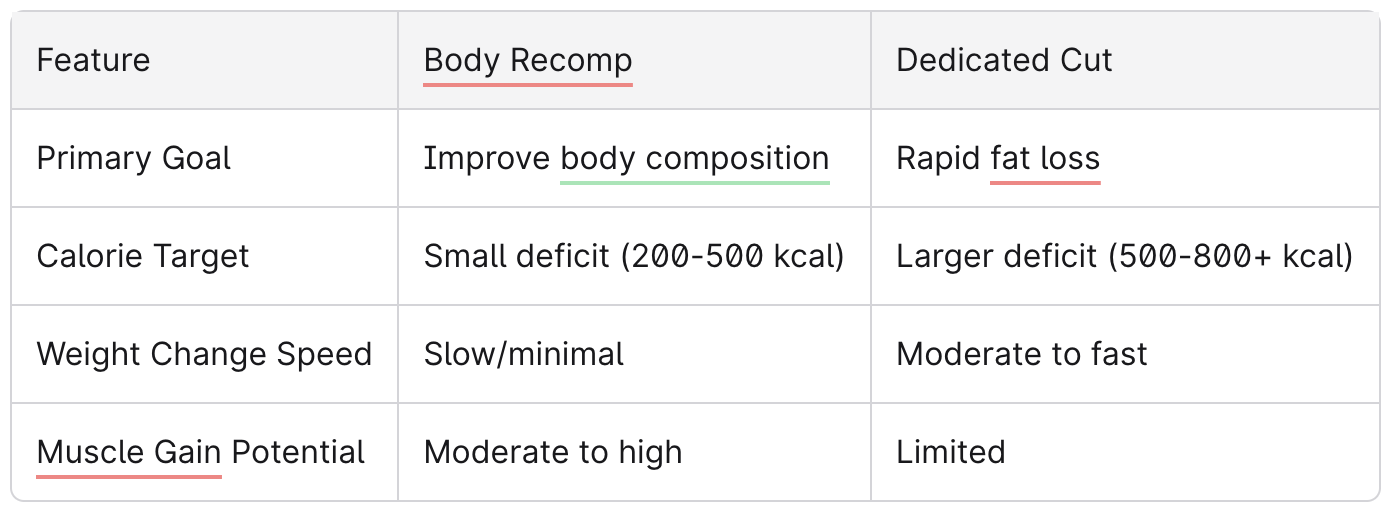
Comparison Chart Between Recomposition vs Cut
Comparison Chart between Recomp vs Cut

Choose body recomposition if building muscle mass while losing fat matters more than speed of weight loss; select cutting if rapid fat reduction takes priority over preserving or gaining lean mass.

Common Challenges and Solutions

Many people abandon successful body recomposition programs due to misinterpreting scale feedback or making preventable mistakes that slow progress.

Body recomposition work requires consistent effort and patience, as it involves both losing fat and gaining muscle through balanced nutrition and strength training. It's important to understand that body recomposition is a gradual process—body recomposition take can span several months to years depending on individual factors such as genetics, training intensity, and dietary habits.

When setting expectations, remember that most people can expect to see body recomposition progress within about 10 weeks, but significant changes in physique and body composition typically take longer. Recognizing the gradual nature of this journey can help you stay motivated and avoid common pitfalls.

Challenge 1: The Scale Isn’t Moving—Am I Failing?

The emotional frustration of seeing identical weight week after week leads many to question their body recomposition plan’s effectiveness, even when body composition is improving dramatically.

Solution: Reframe progress around body measurements, progress photos, and strength performance; analyze 4–8 week trends instead of daily weigh-ins. Use methods to measure body recomposition, such as tracking body fat percentage, muscle measurements, or advanced tools like DEXA or BIA scans, to get a clearer picture of fat loss and muscle gain. Set non-scale goals like adding 10 kg to your deadlift in three months or reducing waist circumference by 5 cm by a specific date.

Challenge 2: Eating Too Little and Killing Muscle Gains

Fear of not losing weight drives some people to drastically reduce caloric intake below what supports muscle recovery and growth, sabotaging their body recomposition goals.

Solution: Make sure you are consuming enough calories to support your metabolism and enough protein to promote muscle repair and growth. Maintain your modest caloric deficit with adequate protein intake while monitoring strength performance to ensure proper fueling. Increase calories if strength, energy, and muscle recovery consistently suffer, as this indicates insufficient energy for optimal body recomposition.

Challenge 3: Inconsistent Training and Sleep

Body recomposition progresses slowly, making inconsistent habits nearly impossible to evaluate effectively. Sporadic training and poor sleep disrupt both fat loss and muscle growth processes.

Solution: Commit to minimum 2–3 quality resistance training sessions weekly, aim for approximately 7 hours of sleep most nights, and maintain reasonable daily activity levels. Consistent training and adequate sleep are necessary to support muscle growth during body recomposition. Sleep, stress management, and consistent training significantly influence both fat loss and muscle growth during body recomposition.

Challenge 4: Expecting “Transformation” Speed Results

Unrealistic expectations created by 8–12 week challenge marketing and social media transformations lead to premature program abandonment when body recomposition doesn’t deliver dramatic changes quickly.

Solution: Set realistic timeframes—visible body recomposition changes typically emerge over 3–6 months for beginners and 6–12+ months for trained individuals with consistent effort. Focus on building sustainable exercise habits and balanced diet practices instead of pursuing extreme short-term transformations.

Conclusion and Next Steps

During body recomposition, you may or may not lose significant weight, but substantial fat loss and muscle gain can occur regardless of scale changes. The quality of your body weight—how much consists of lean muscle mass versus fat mass—matters far more than the quantity of total body mass lost. Increasing muscle mass not only improves your appearance but also boosts your basal metabolic rate (BMR), helping you burn more energy at rest.

To Get Started:

  1. Estimate your maintenance calories and create a small caloric deficit if weight loss is among your goals
  2. Set a daily protein target and plan 2–4 strength training sessions per week emphasizing compound movements
  3. Begin tracking body weight, body measurements, progress photos, and key lift performance every 1–4 weeks

Related Topics to Explore:

How long body recomposition typically takes for beginners versus experienced lifters; differences between “newbie gains” and long-term muscle growth patterns; how to transition from body recomposition into focused cutting or bulking phases; and the role of cardiovascular exercise in body recomposition-focused workout regimens.

FAQ: Do You Lose Weight During Body Recomp?

This section addresses specific, common questions about weight changes during body recomposition.

Can You Recomp Without Losing Any Weight at All?

Yes, you can maintain roughly the same total body weight while significantly changing your physique and body fat percentage. This is most common for people eating near maintenance calories with adequate protein intake and consistent resistance training, where muscle gain perfectly offsets fat loss.

How Much Weight Should You Expect to Lose on a Recomp Per Week?

Expect 0–0.5% of body weight loss per week during body recomposition, with slower rates being normal and often preferable for preserving lean muscle mass. Some successful body recomposition phases show virtually no weekly weight changes—focus on 2–3 month trends rather than weekly fluctuations.

How Long Before You See Visible Changes If the Scale Is Stuck?

Beginners typically notice clear visual differences within 6–12 weeks of consistent effort, while more trained individuals may require 3–6+ months for subtle body recomposition changes to become apparent. Progress photos and body measurements often reveal changes before they’re obvious in the mirror.

Should You Be Worried If Weight Goes Up During Recomp?

Weight increases during the first 2–4 weeks of new training often reflect water retention, glycogen storage, and initial muscle growth rather than fat gain. Concern is warranted if waist circumference grows rapidly, clothes tighten consistently, and strength performance doesn’t improve—these may indicate excessive caloric intake.

Do You Need Special Supplements to Lose Weight During Recomp?

Most body recomposition progress comes from proper resistance training, appropriate caloric intake, and adequate protein consumption rather than supplements. Evidence-based basics like whey protein powder, creatine, and caffeine may provide modest benefits but aren’t necessary for successful body recomposition.

Do You Lose Weight During Body Recomp? A Complete Guide

Introduction

Do you lose weight during body recomp? It’s not a simple yes or no. It depends on where you’re starting, your training experience, and how you approach it. Body recomposition means losing fat and gaining muscle at the same time. Because muscle weighs more than fat by volume, the scale might drop slowly, stay the same, or even go up a bit — all while your body looks leaner and fitter. Many people get confused when their clothes fit better but the scale doesn’t budge much.

What You’ll Get From This Guide

This article cuts through the confusion around body recomp and scale weight. You’ll learn what to expect from your weight during recomposition, why the scale isn’t the whole story, and how to track your progress beyond just numbers. We’ll cover practical timelines and simple strategies to help you lose fat, build muscle, and get that lean, toned look without stressing over every pound. This isn’t a detailed workout or diet plan, but a clear overview to help you understand how body recomp really works and what you need to do for lasting results.

Who This Is For

This guide is designed for people starting a body recomp in 2025, especially beginners lifting weights for the first time or returning after a long break, individuals with high body fat percentage who want to get leaner without crash dieting, and recreational lifters wondering why their physique is changing but their weight isn’t dropping significantly.

Why This Matters

Obsessing over scale weight can derail a successful body recomposition—many people slash calories too aggressively when weight doesn’t drop, inadvertently preventing muscle growth and slowing fat loss. Understanding how body composition changes during recomp helps you focus on what matters: building muscle mass, losing fat, and achieving that lean and toned look while supporting long-term health and strength. A well-structured body recomposition plan not only improves appearance but can also enhance athletic performance.

What You’ll Learn:

  • How body recomposition can transform your appearance without significant weight loss
  • When you’re likely to lose weight during recomp—and when you’re not
  • How to tell if your body recomp is working even when the scale stays stuck
  • How to set calorie intake, protein targets, and training protocols that support both fat loss and muscle gain
  • How to choose between body recomposition, cutting, and bulking based on your current physique and fitness goals

Understanding Body Recomposition and Scale Weight

Body recomposition is all about changing what your total body weight actually consists of—swapping fat mass for lean muscle mass instead of just focusing on the number on the scale. Your total body weight is made up of body fat and fat-free mass, which includes muscle, bone, and water. The goal here is to improve your body composition by reducing body fat percentage while preserving or even increasing lean body mass. This can lead to dramatic visual changes that typical weight loss plans often miss. Keep in mind, body recomposition is a gradual journey that usually takes months or even years, depending on your unique situation.

What Is Body Recomposition, Exactly?

Body composition refers to the proportions of fat mass versus lean mass in your body, including muscle tissue, bones, organs, and water. Body recomposition means losing fat while gaining or preserving muscle at the same time—a process that can happen while your total body weight is decreasing slowly, staying roughly stable, or even increasing slightly if you’re very lean and adding significant muscle mass.

This dual process explains why “do you lose weight during body recomp?” doesn’t have a straightforward answer. Someone might lose 2 kg of fat mass while gaining 1.5 kg of lean muscle mass, resulting in only 0.5 kg of total weight loss despite dramatic improvements in body composition and appearance.

How Muscle and Fat Differ in Weight and Volume

While 1 kg of muscle tissue and 1 kg of fat mass weigh exactly the same, muscle is much denser and takes up less space in your body. Think about it this way: someone weighing 70 kg at 30% body fat will look completely different from someone weighing the same 70 kg but at 18% body fat. The leaner person will appear smaller, more defined, and fit into smaller clothing sizes—even though the scale shows the same number.

This density difference creates the visual magic of body recomposition: clothes fit looser around the waist while feeling tighter around the shoulders and glutes, your toned appearance improves dramatically, and your body measurements shrink—even when the scale barely moves. It’s easy to underestimate your progress if you’re only watching the number on the scale, but these changes tell the real story of your transformation.

Energy Balance vs. Weight on the Scale

Energy balance—the relationship between calories consumed and calories burned—drives fat loss through a caloric deficit over time. However, muscle growth requires resistance training plus adequate protein intake and sufficient energy to support muscle recovery and repair. Consuming enough calories is crucial to maintain proper metabolic function and support muscle growth, even when aiming for fat loss. Getting enough protein is essential for muscle repair and growth during body recomposition. Proper nutrition, including sufficient calories and protein, supports muscle repair and helps support muscle growth even during a calorie deficit. You can maintain a small calorie deficit, lose body fat, gain lean mass, and see minimal net weight change while achieving significant improvements in body composition.

Now that we understand these fundamentals, let’s examine how weight typically behaves during body recomposition in different scenarios.

Do You Actually Lose Weight During Body Recomp?

The likelihood of losing weight during body recomposition largely depends on your starting body fat percentage, training experience, and how aggressively you structure your caloric deficit. Let’s break down what to expect in different situations.

Scenario 1: Overweight Beginners Starting Recomp

People with high body fat percentage who are new to lifting weights are most likely to lose weight during body recomposition. This group typically experiences moderate scale weight reduction—around 0.25–0.75 kg (0.5–1.5 lb) per week initially—while simultaneously gaining muscle mass through “newbie gains.”

The pattern usually shows noticeable fat loss combined with steady muscle growth, though early weeks (first 2–4 weeks) often display faster weight changes due to water retention shifts and glycogen storage adjustments before settling into a more consistent trend.

Scenario 2: “Skinny Fat” or Moderate Body Fat Levels

Individuals with normal body mass index but higher body fat percentage and low lean muscle mass—often called “skinny fat”—typically see minimal weight changes during body recomposition. Their scale weight may barely move or decrease very slowly while waist and hip measurements drop noticeably faster.

This represents successful body recomposition because muscle gain offsets fat mass reduction on the scale, even though body composition is improving dramatically. The lean and toned look develops gradually while total body mass remains relatively stable.

Scenario 3: Already Lean and Trained Individuals

When someone already maintains low body fat percentage (males under 12–13%, females under 20–22%) and possesses reasonable strength, body recomposition progress becomes much slower. Their weight often stays stable or increases slightly while adding small amounts of lean mass and losing minimal fat mass.

For this population, “do you lose weight during body recomp?” usually means “not much, and that’s perfectly normal.” The focus shifts to subtle body composition improvements rather than significant weight reduction.

Key Points About Weight Change During Recomp:

  • Your starting body fat percentage and training experience largely determine whether the scale drops
  • Significant fat loss with simultaneous muscle gain usually produces slower weight loss than aggressive cutting
  • Short-term scale fluctuations reflect water, glycogen, and digestion changes rather than just fat and muscle
  • Successful body recomposition can involve slight weight loss, stable weight, or slight weight gain depending on your starting point and goals

Understanding these patterns helps set realistic expectations for your body recomposition journey.

How to Set Up a Recomp If You Want to Lose Some Weight

If your goal includes seeing downward movement on the scale alongside improved body composition, you’ll need to structure your approach with a modest caloric deficit while prioritizing muscle growth through proper training and nutrition. It’s important to follow a body recomposition plan that combines personalized nutrition and resistance training strategies to build muscle mass and lose fat simultaneously. The goal is not just weight loss, but also increasing muscle mass for better metabolic health and long-term results. When tracking your progress, remember to measure body recomposition using methods beyond the scale, such as circumference measurements or body fat percentage, to accurately assess changes in muscle and fat.

Choosing the Right Calorie Target

Start by estimating your maintenance calories using an online calculator or tracking app, then create a modest energy deficit of approximately 200–500 calories below maintenance per day. Choose the lower end of this range if you already have relatively low body fat percentage, or the higher end if starting with more fat mass to lose.

Burning more calories than you consume is necessary for fat loss, but it's important to ensure you are still eating enough calories to avoid metabolic slowdown and support muscle maintenance. Aggressive caloric deficits exceeding 500–700 calories make muscle gain during body recomposition extremely difficult, as insufficient energy hampers muscle recovery and growth while potentially leading to muscle loss instead of the desired muscle gain.

Setting Protein, Carbs, and Fats for Recomp

Prioritize protein intake at 1.6–2.2 grams per kilogram of body weight daily—this high protein diet supports muscle growth while preserving lean body mass during your caloric deficit. Consuming enough protein is essential for muscle repair, muscle protein synthesis, and sustainability of results during body recomposition. Complex carbohydrates fuel training performance and muscle recovery, while healthy fats support hormone production and overall health.

A practical approach involves focusing on high protein intake first, then filling remaining calories with moderate carbohydrates and healthy fats rather than obsessing over precise macro percentages. This balanced diet rich in whole foods provides the foundation for successful body recomposition.

Training for Fat Loss and Muscle Gain at the Same Time

Resistance training forms the non-negotiable foundation of effective body recomposition. Structure your workout regimen around 2–4 strength training sessions per week, emphasizing compound movements like squats, presses, rows, deadlifts, and pull-ups that target multiple muscle groups efficiently.

Implement progressive overload by gradually increasing weight, repetitions, or sets every 1–2 weeks to stimulate ongoing muscle growth—progressive overload is essential for muscle growth during strength training. Include 2–3 cardiovascular exercise sessions weekly for heart health and additional calorie burning, but avoid excessive high-intensity cardio that might interfere with muscle recovery and growth when combined with a caloric deficit.

Proper recovery is crucial for muscle repair and to support muscle growth. Ensure you get adequate rest and nutrition, including sufficient protein intake, to facilitate the rebuilding of muscle tissue after workouts.

Key Points:

  • A small caloric deficit enables gradual weight loss while allowing muscle gain
  • High protein intake helps preserve and build lean mass during energy deficit
  • Progressive resistance training drives body recomposition; nutrition fine-tunes the results
  • Balance cardio for health benefits without compromising muscle growth

This foundation sets you up to track meaningful progress beyond just scale weight.

How to Tell If Your Body Recomp Is Working (Even If Weight Barely Changes)

Relying solely on the bathroom scale during body recomposition provides an incomplete and often misleading picture of your progress. To accurately measure body recomposition, it's important to track changes in body fat percentage and fat-free mass, which includes muscle, bone, and water. Multiple metrics reveal the true effectiveness of your body recomposition program.

Tracking More Than Just Scale Weight

Monitor these specific metrics every 1–4 weeks: waist, hip, and thigh circumference using a tape measure at consistent locations; progress photos taken in identical lighting, angles, and clothing; and strength performance on key lifts such as 5-rep or 8–12-rep maximums on squats, presses, and rows.

Optional body composition assessment methods include smart scales, skinfold calipers, or DEXA scans for body fat percentage estimates, though these have limitations and shouldn’t be your primary progress indicators during body recomposition.

Recognizing Positive Recomp Signs

Clear indicators your body recomposition is working include clothes fitting looser around the waist but tighter around shoulders, glutes, or thighs; the mirror showing increased muscle definition and reduced “softness” around the midsection; work sets feeling easier at the same weight or lifting heavier loads than a month ago; and body weight remaining stable or trending down slowly while body measurements decrease consistently.

These changes reflect successful fat loss and muscle gain occurring simultaneously, even when total body mass doesn’t change dramatically. Gaining more muscle while losing fat is a key indicator of successful body recomposition, as it leads to a leaner, more toned physique. Your toned physique develops through this process regardless of scale fluctuations.

Understanding Short-Term Fluctuations

Day-to-day weight swings of 0.5–2 kg (1–4 lb) typically result from water retention after salty meals or high-carbohydrate days, glycogen storage changes following hard workouts or refeed days, and normal digestion and bowel content variations rather than actual fat or muscle changes.

Focus on weekly averages and multi-week trends instead of individual weigh-ins to see true body recomposition progress. This longer-term perspective reveals meaningful changes that daily fluctuations often mask.

Body Recomp vs. Cut vs. Bulk: Which Is Right If You Care About Weight Loss?

Body recomposition offers a slow, balanced approach to physique improvement, contrasting with more aggressive fat-loss phases (“cutting”) or dedicated muscle-building periods (“bulking”). Unlike a traditional weight loss program, which typically focuses on rapid fat loss through calorie restriction and cardio, body recomposition emphasizes simultaneous fat loss and muscle gain through a structured combination of strength training and nutrition.

Maintaining healthy muscle mass and a healthy muscle-to-fat ratio is crucial—not only does it improve physical appearance and boost metabolism, but it also reduces the risk of chronic health conditions. Your choice depends on your priorities and timeline.

When Recomp Makes the Most Sense

Body recomposition typically works best for beginners wanting to get stronger and leaner simultaneously; people in the healthy-to-slightly-overweight range who prioritize long-term muscle gain over rapid weight loss; and those preferring steady progress without extreme dietary restrictions or large body weight fluctuations.

Weight changes will be gradual, but visual improvements and strength gains can be substantial over time. This approach supports sustainable exercise habits and long-term adherence while delivering significant health benefits.

When a Dedicated Cut Is Better

A “cut” involves a larger caloric deficit focused on faster fat loss, typically benefiting individuals with high body fat percentage who primarily need substantial weight reduction for health improvements; people meeting specific weight-class requirements or medical targets by certain dates; and those willing to prioritize rapid fat loss over muscle gain.

Proper protein intake and weight training can preserve lean muscle mass during cutting, but large energy deficits severely limit muscle growth potential compared to body recomposition approaches.

When a Focused Bulk Is Appropriate

“Bulking” means intentionally eating in a caloric surplus to maximize muscle growth while accepting some fat gain. This strategy suits very lean individuals struggling to gain muscle during caloric deficits; intermediate and advanced lifters pursuing specific strength or size goals; and people prioritizing rapid muscle growth over maintaining low body fat percentage.

Total body weight increases during bulking, and body recomposition (simultaneous fat loss and muscle gain) isn’t the primary objective.

Comparison: Recomp vs. Cut

Comparison Chart Between Recomposition vs Cut
Comparison Chart between Recomp vs Cut

Choose body recomposition if building muscle mass while losing fat matters more than speed of weight loss; select cutting if rapid fat reduction takes priority over preserving or gaining lean mass.

Common Challenges and Solutions

Many people abandon successful body recomposition programs due to misinterpreting scale feedback or making preventable mistakes that slow progress.

Body recomposition work requires consistent effort and patience, as it involves both losing fat and gaining muscle through balanced nutrition and strength training. It's important to understand that body recomposition is a gradual process—body recomposition take can span several months to years depending on individual factors such as genetics, training intensity, and dietary habits.

When setting expectations, remember that most people can expect to see body recomposition progress within about 10 weeks, but significant changes in physique and body composition typically take longer. Recognizing the gradual nature of this journey can help you stay motivated and avoid common pitfalls.

Challenge 1: The Scale Isn’t Moving—Am I Failing?

The emotional frustration of seeing identical weight week after week leads many to question their body recomposition plan’s effectiveness, even when body composition is improving dramatically.

Solution: Reframe progress around body measurements, progress photos, and strength performance; analyze 4–8 week trends instead of daily weigh-ins. Use methods to measure body recomposition, such as tracking body fat percentage, muscle measurements, or advanced tools like DEXA or BIA scans, to get a clearer picture of fat loss and muscle gain. Set non-scale goals like adding 10 kg to your deadlift in three months or reducing waist circumference by 5 cm by a specific date.

Challenge 2: Eating Too Little and Killing Muscle Gains

Fear of not losing weight drives some people to drastically reduce caloric intake below what supports muscle recovery and growth, sabotaging their body recomposition goals.

Solution: Make sure you are consuming enough calories to support your metabolism and enough protein to promote muscle repair and growth. Maintain your modest caloric deficit with adequate protein intake while monitoring strength performance to ensure proper fueling. Increase calories if strength, energy, and muscle recovery consistently suffer, as this indicates insufficient energy for optimal body recomposition.

Challenge 3: Inconsistent Training and Sleep

Body recomposition progresses slowly, making inconsistent habits nearly impossible to evaluate effectively. Sporadic training and poor sleep disrupt both fat loss and muscle growth processes.

Solution: Commit to minimum 2–3 quality resistance training sessions weekly, aim for approximately 7 hours of sleep most nights, and maintain reasonable daily activity levels. Consistent training and adequate sleep are necessary to support muscle growth during body recomposition. Sleep, stress management, and consistent training significantly influence both fat loss and muscle growth during body recomposition.

Challenge 4: Expecting “Transformation” Speed Results

Unrealistic expectations created by 8–12 week challenge marketing and social media transformations lead to premature program abandonment when body recomposition doesn’t deliver dramatic changes quickly.

Solution: Set realistic timeframes—visible body recomposition changes typically emerge over 3–6 months for beginners and 6–12+ months for trained individuals with consistent effort. Focus on building sustainable exercise habits and balanced diet practices instead of pursuing extreme short-term transformations.

Conclusion and Next Steps

During body recomposition, you may or may not lose significant weight, but substantial fat loss and muscle gain can occur regardless of scale changes. The quality of your body weight—how much consists of lean muscle mass versus fat mass—matters far more than the quantity of total body mass lost. Increasing muscle mass not only improves your appearance but also boosts your basal metabolic rate (BMR), helping you burn more energy at rest.

To Get Started:

  1. Estimate your maintenance calories and create a small caloric deficit if weight loss is among your goals
  2. Set a daily protein target and plan 2–4 strength training sessions per week emphasizing compound movements
  3. Begin tracking body weight, body measurements, progress photos, and key lift performance every 1–4 weeks

Related Topics to Explore:

How long body recomposition typically takes for beginners versus experienced lifters; differences between “newbie gains” and long-term muscle growth patterns; how to transition from body recomposition into focused cutting or bulking phases; and the role of cardiovascular exercise in body recomposition-focused workout regimens.

FAQ: Do You Lose Weight During Body Recomp?

This section addresses specific, common questions about weight changes during body recomposition.

Can You Recomp Without Losing Any Weight at All?

Yes, you can maintain roughly the same total body weight while significantly changing your physique and body fat percentage. This is most common for people eating near maintenance calories with adequate protein intake and consistent resistance training, where muscle gain perfectly offsets fat loss.

How Much Weight Should You Expect to Lose on a Recomp Per Week?

Expect 0–0.5% of body weight loss per week during body recomposition, with slower rates being normal and often preferable for preserving lean muscle mass. Some successful body recomposition phases show virtually no weekly weight changes—focus on 2–3 month trends rather than weekly fluctuations.

How Long Before You See Visible Changes If the Scale Is Stuck?

Beginners typically notice clear visual differences within 6–12 weeks of consistent effort, while more trained individuals may require 3–6+ months for subtle body recomposition changes to become apparent. Progress photos and body measurements often reveal changes before they’re obvious in the mirror.

Should You Be Worried If Weight Goes Up During Recomp?

Weight increases during the first 2–4 weeks of new training often reflect water retention, glycogen storage, and initial muscle growth rather than fat gain. Concern is warranted if waist circumference grows rapidly, clothes tighten consistently, and strength performance doesn’t improve—these may indicate excessive caloric intake.

Do You Need Special Supplements to Lose Weight During Recomp?

Most body recomposition progress comes from proper resistance training, appropriate caloric intake, and adequate protein consumption rather than supplements. Evidence-based basics like whey protein powder, creatine, and caffeine may provide modest benefits but aren’t necessary for successful body recomposition.

Luis Centeno

Luis Centeno is the Founder, Owner + Lead Trainer at FIT RESULTS ®️ Second Chance turned entrepreneur Changing lives through fitness. Master Trainer Certified (Personal Training, Strength Training Specialist, Nutrition Specialist, Endurance Specialist, Nutrition Coach, S + C Coach. Passionate about helping others reach their personal goals. The more lives I can help change, the better I feel about the big task that is at hand to make the world a better place.

looking for a gym
In the chicago area?

GET A FREE CONSULTATION